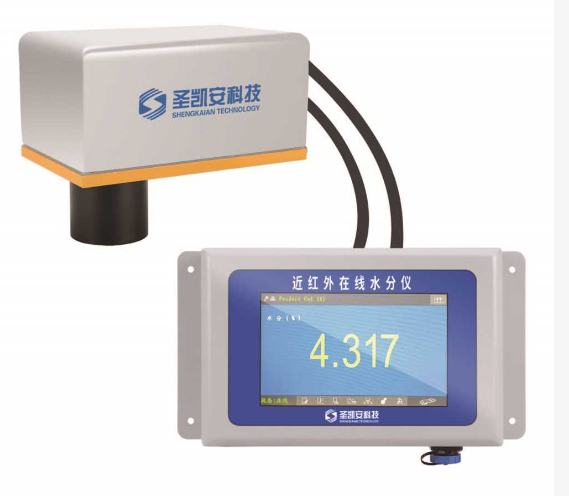
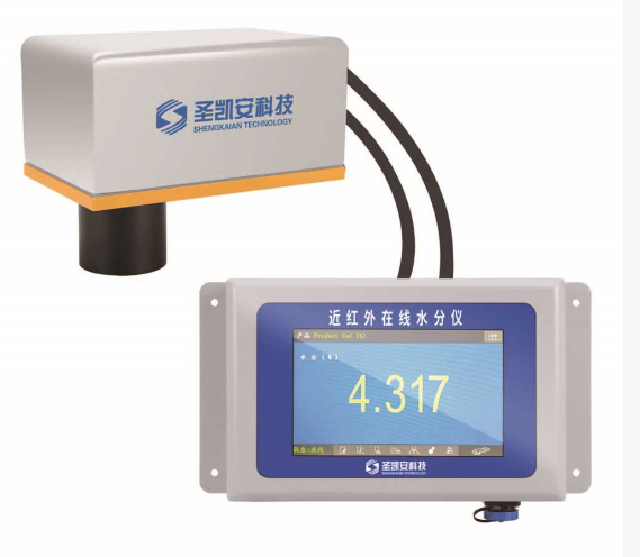
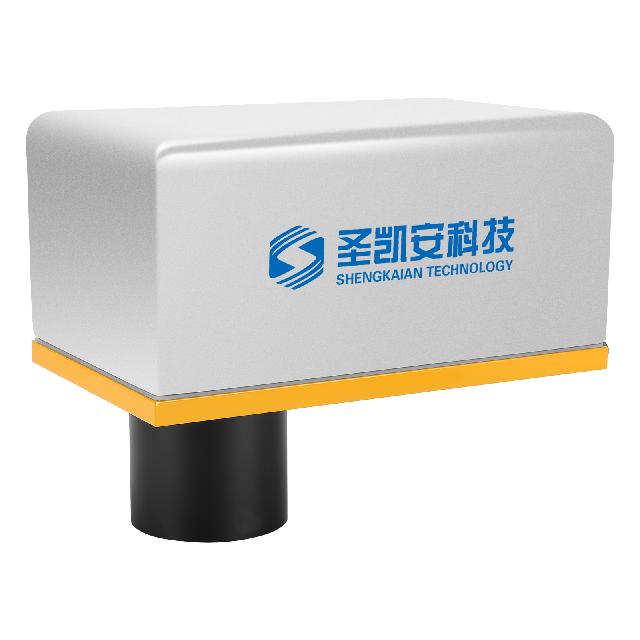
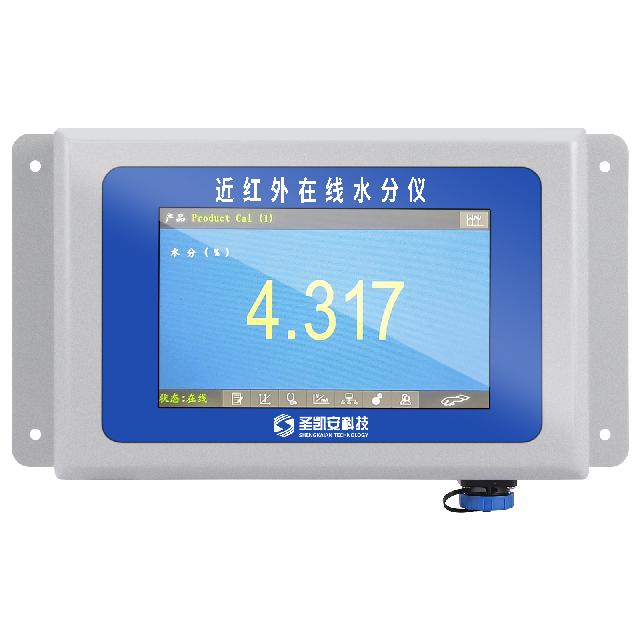
Monitor de Umidade de Chá Detecção por Medidor de Umidade de Infravermelho Próximo - AMT/SFY-HW
An infrared moisture meter is an instrument that uses the principle that water molecules have strong absorption characteristics for infrared light of specific wavelengths to quickly and non-contact measure the moisture content of materials
Introdução do produto
Monitor de Umidade de Chá Detecção por Medidor de Umidade de Infravermelho Próximo
O medidor de umidade on-line por infravermelho próximo adota o princípio mais avançado internacionalmente de reflexão difusa por infravermelho próximo de três bandas e seis feixes, permitindo medição rápida e contínua do teor de umidade de materiais em esteiras transportadoras, sem contato com o material medido, realizando monitoramento dinâmico em tempo real do teor de umidade do material, com tempo de resposta de apenas5ms, alcançando monitoramento e feedback rápidos em tempo real do teor de umidade do produto, atendendo amplamente aos requisitos rigorosos de gerenciamento de umidade do produto. Devido ao método de medição sem contato, não causa nenhum dano ao material medido, fornecendo assim uma solução precisa e eficiente para o controle de umidade no processo de produção.
An infrared moisture meter is an instrument that uses the principle that water molecules have strong absorption characteristics for infrared light of specific wavelengths to quickly and non-contact measure the moisture content of materials-1-4. It is widely used in industrial production lines as a real-time quality control and process optimization tool-1-5。
💡 Working principle
Its core is based on near-infrared spectroscopy technology: near-infrared light of specific wavelengths (such as1.94μm) irradiates the material, it is absorbed by water molecules, and the reflected light energy is correspondingly weakened-2-4. The instrument calculates the moisture content of the material by analyzing the energy loss of reflected light-1. Common three-wavelength or eight-beam technology can eliminate interference from non-moisture factors such as material color and structure, making measurement more accurate-1-3。
✨ Core advantages
Non-contact measurement: No contact with the material, causing no wear or pollution, suitable for high-speed production lines-1-6-5。
Real-time online detection: It can provide data continuously and quickly (response time can reach millisecond level), facilitating timely process adjustment-2-6-11。
No frequent maintenance needed: Compared with manual oven drying method or electrode method, it does not require frequent calibration, has no wearing parts, and has low usage and maintenance costs-1-4。
High measurement accuracy: Typical measurement accuracy can reachBetween 0.1% and 0.5%-2-5。
- Monitor de Umidade de Chá Detecção por Medidor de Umidade de Infravermelho Próximo
🏭 Application fields
The application range of infrared moisture meters is very wide, covering almost all industries that need moisture control-1-3:
| Industry |
Application examples |
| Tobacco industry |
Detect the moisture content of tobacco leaves, cut tobacco, and tobacco stems to ensure taste and combustibility-3-4。 |
| Grain and food |
Detect the moisture content of grains, flour, biscuits, feed, and other raw and finished materials-2-6。 |
| Wood processing |
Online detection of moisture in particleboard, density board raw materials, and semi-finished products-3-4。 |
| Chemical and pharmaceutical industries |
Measure the moisture content of fertilizers, plastic pellets, chemical powders, and pharmaceutical granules-1-8。 |
| Steel and metallurgy |
Measure the moisture content of sintering mixtures, mineral powder, concentrate, and other raw materials, which is a key monitoring point in the sintering process-3-4。 |
| Building materials |
Detect the moisture content of quartz sand, ceramic powder, gypsum board, and other materials-3-8。 |
📊 Key technical parameters
Parameters of different infrared moisture meter models may vary; the following are some typical parameter ranges for your reference-2-5-11:
| Parameter item |
Typical indicators |
| Measurement range |
0% ~ 60% or 0% ~ 95% |
| 测量精度 |
±0.1% ~ ±0.5% (depending on the material) |
| 分辨率 |
0.01% or 0.001% |
| Measurement distance |
Generally 150mm ~ 400mm |
| 响应时间 |
Up to0.0125 seconds to 1 second |
| Communication interface |
RS485 (Modbus), 4-20mA, RS232, Ethernet, etc. |
| Grau de proteção |
Industrial grade is usuallyIP65 to IP67 |
Monitor de Umidade de Chá Detecção por Medidor de Umidade de Infravermelho Próximo
🔍 How to choose
Clarify requirements: First, determine whether it is used forOnline production linesOrLaboratory sampling inspection. Online types need a sturdy shell and real-time communication capability, while laboratory benchtop types focus more on high accuracy and sample adaptability-9-10。
Evaluate the material: Different materials (such as dark powders, lump ores, transparent films) have different reflection characteristics for infrared light; it is necessary to confirm whether the equipment can effectively measure your material-1-8。
Consider the environment: If the installation environment has high dust, high humidity, or high temperature, choose a model with good sealing, cooling, and protection functions-5-8。
What kind of material do you mainly want to detect? Is it for real-time monitoring on the production line or laboratory testing? Tell me the specific application scenario, and I can help you analyze a more suitable selection solution.