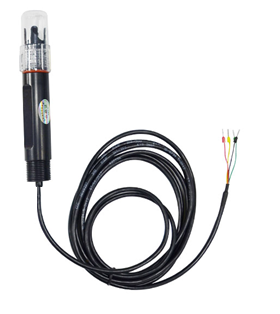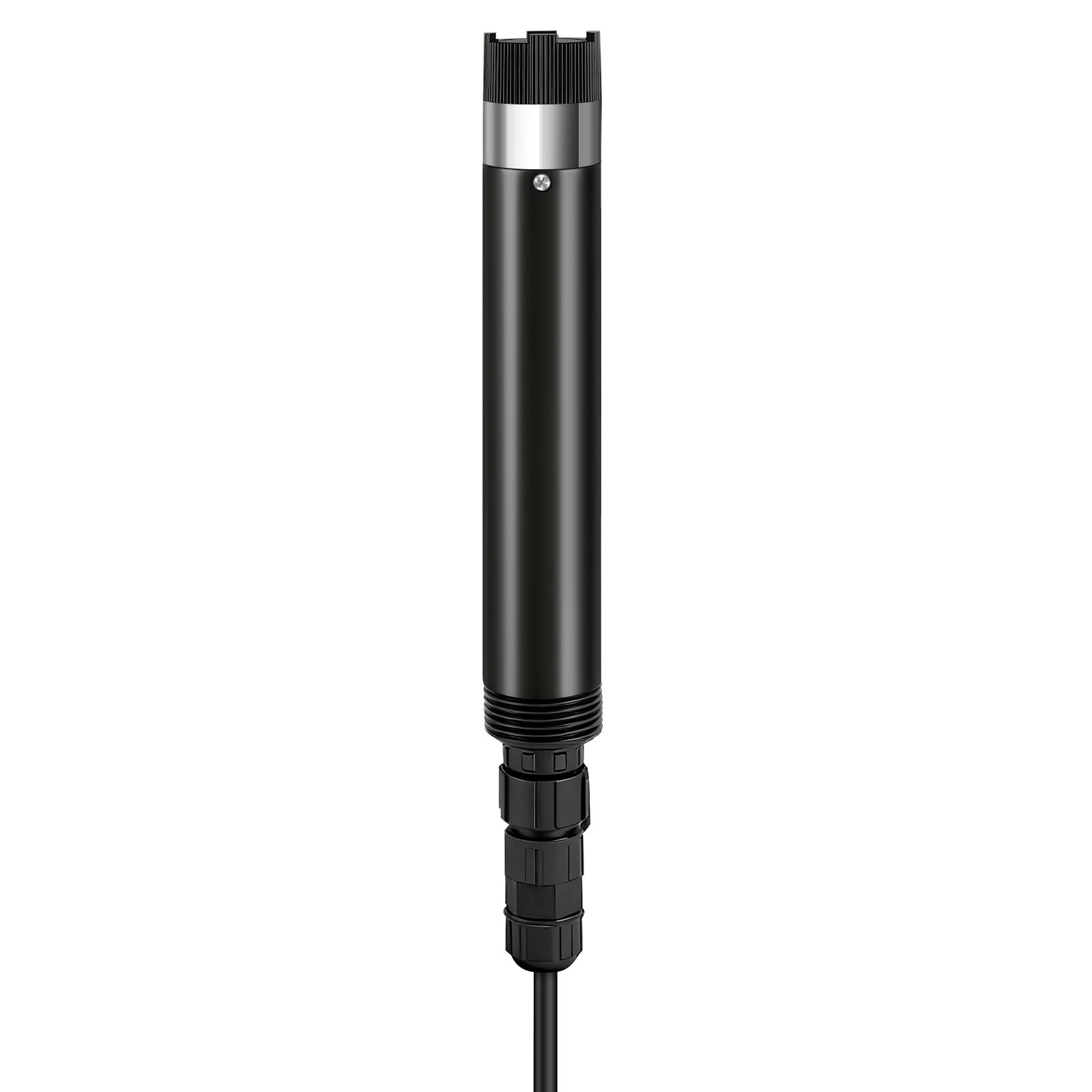
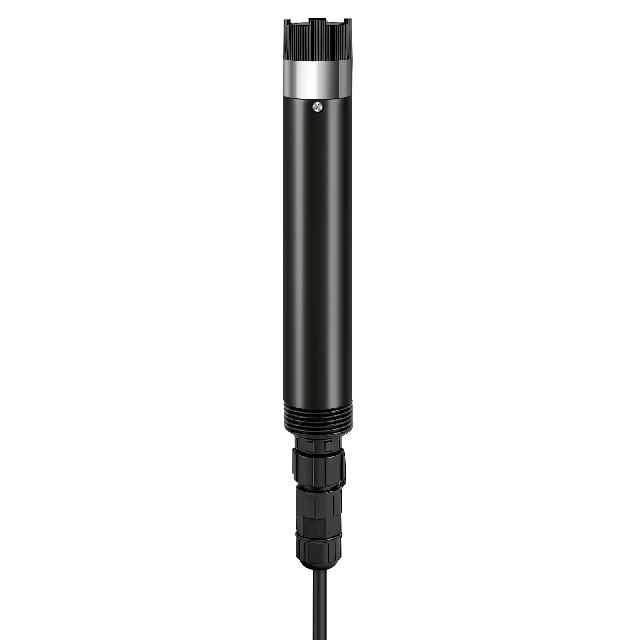
AMT/DO Dissolved Oxygen Sensor AMT/DO
AMT/DO Dissolved Oxygen Sensor

AMT/DO Dissolved Oxygen Sensor - AMT/DO

The following are key technical specifications for dissolved oxygen sensors:

* **Measurement Range and Units**: Varies greatly by application requirements, units are typically **mg/L** (milligrams per liter, equivalent to **ppm**) or **% saturation**.
* **Conventional Water Quality**: The most common range is **0-20 mg/L** (0-200% saturation).
* **High Range**: Some sensors can reach **0-50 mg/L** or even **0-60 mg/L**.
* **Trace/Micro**: Used in scenarios such as boiler water and semiconductor ultrapure water, with extremely low ranges, e.g., **0-2000 ppb** (1 ppm = 1000 ppb).

* **Accuracy and Resolution**:
* **Resolution**: Conventional online sensors are mostly **0.01 mg/L**. Trace-level sensors can achieve a resolution of **0.1 ppb**.
* **Accuracy**: Usually expressed as **±X% of reading** or **±Y mg/L**, whichever is greater.
* **High Precision**: In low concentration ranges (e.g., 0-8 mg/L), accuracy can reach **±0.1 mg/L**.
* **Conventional Industrial Grade**: Accuracy is mostly **±1% ~ ±3%** of reading, or **±0.3 mg/L**.
 

Número do modelo: AMT/DO

Introdução do produto

Fluorescence-based dissolved oxygen sensors are designed based on the physical principle of quenching of excited fluorescence by specific substances. When
Excitation light irradiates the fluorescent substance on the surface of the fluorescent membrane cap, the fluorescent substance is excited and emits fluorescence, and the quenching of the fluorescence
The time is affected by the oxygen molecule concentration on the surface of the fluorescent membrane cap. By detecting the phase difference between fluorescence and excitation light,
And compared with the internal calibration curve, thereby calculating the oxygen molecule concentration, and outputting the final value after temperature and salinity compensation.
1. Working Principle
2. Technical Parameters and Dimensions
Dissolved Oxygen
Optical components
Optical components
dissolved oxygen
Microprocessor
microprocessor
Digital signal output
Detector
detector
Temperature
temperature
Salinity
salinity
No electrolyte required, no polarization
No oxygen consumption, unaffected by flow rate
Built-in temperature sensor, automatic temperature compensation
Built-in salinity compensation, flexible parameter settings
Unaffected by chemical substances such as sulfides
Low drift, fast response, more accurate measurement
Longer service life, lower usage cost
Fluorescent membrane cap easy to replace, simple maintenance
RS-485 interface, Modbus/RTU protocol
Low power consumption and anti-interference design