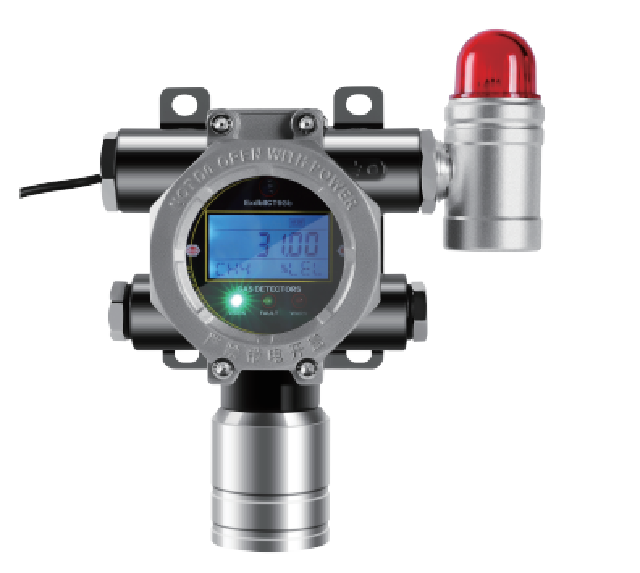
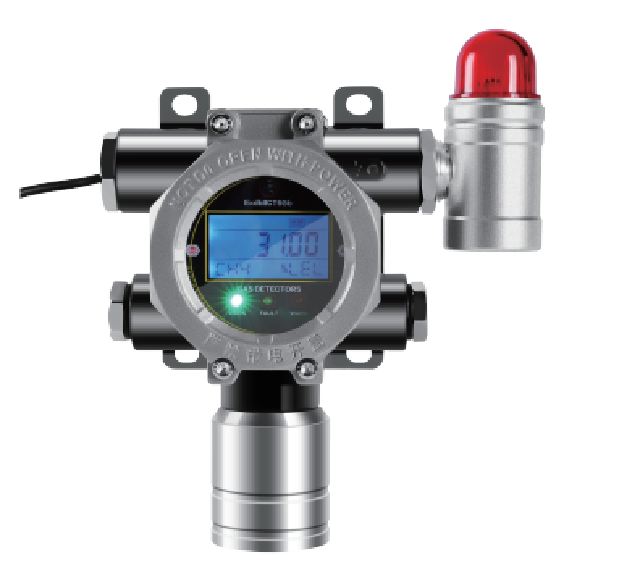
What gas detector should be chosen for cold chain workshops? Freon alarms are stable and reliable - SKA/NE-301(R 134 a)
Mainstream adoptionNDIR non-dispersive infrared sensor(Most commonly used industrial fixed type): Freon absorbs infrared light at a specific wavelength, and the sensor detects changes in light intensity to convert it into gas concentration, with high accuracy, resistance to water vapor, and long service life;
Product Introduction
What gas detector should be chosen for cold chain workshops? Freon alarms are stable and reliable
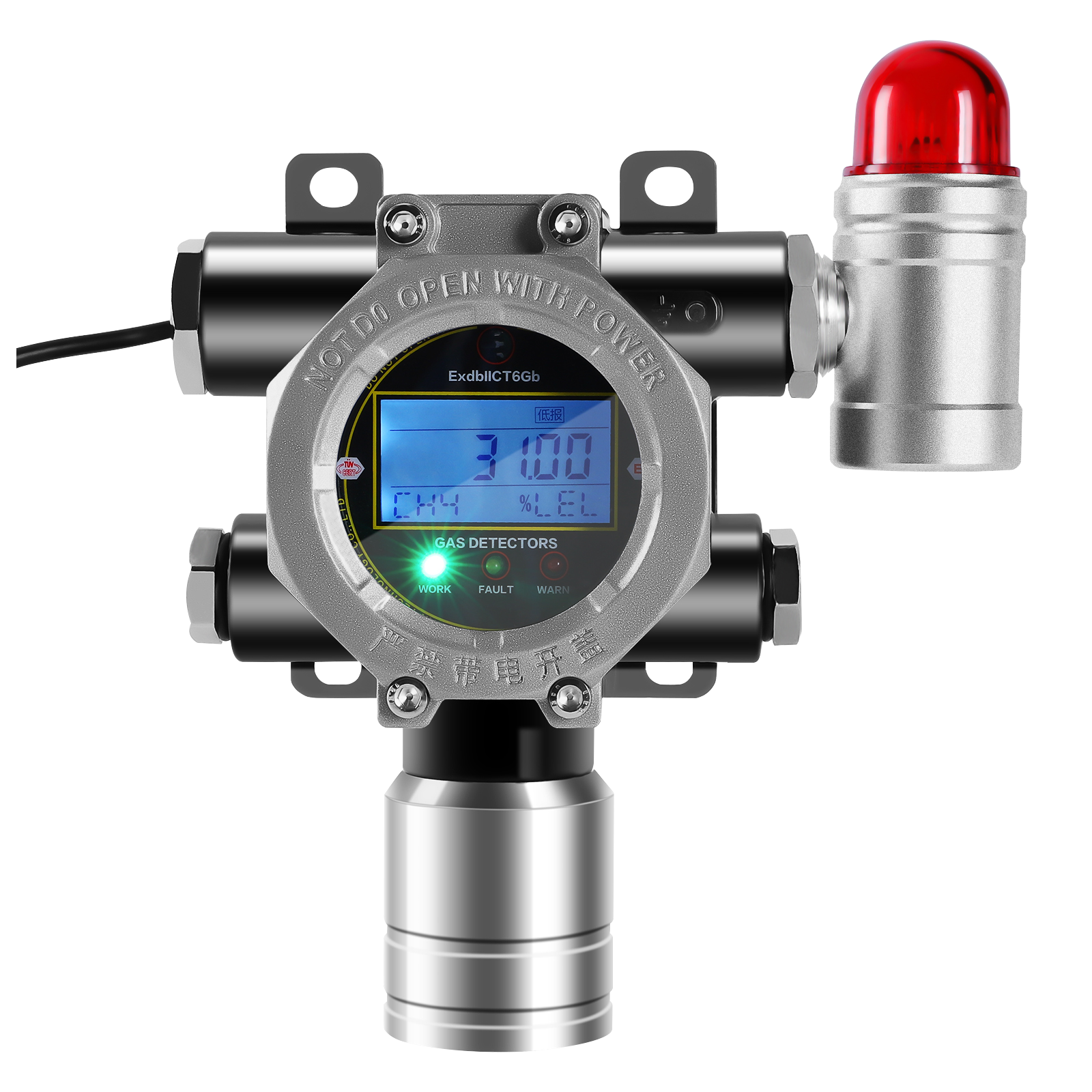
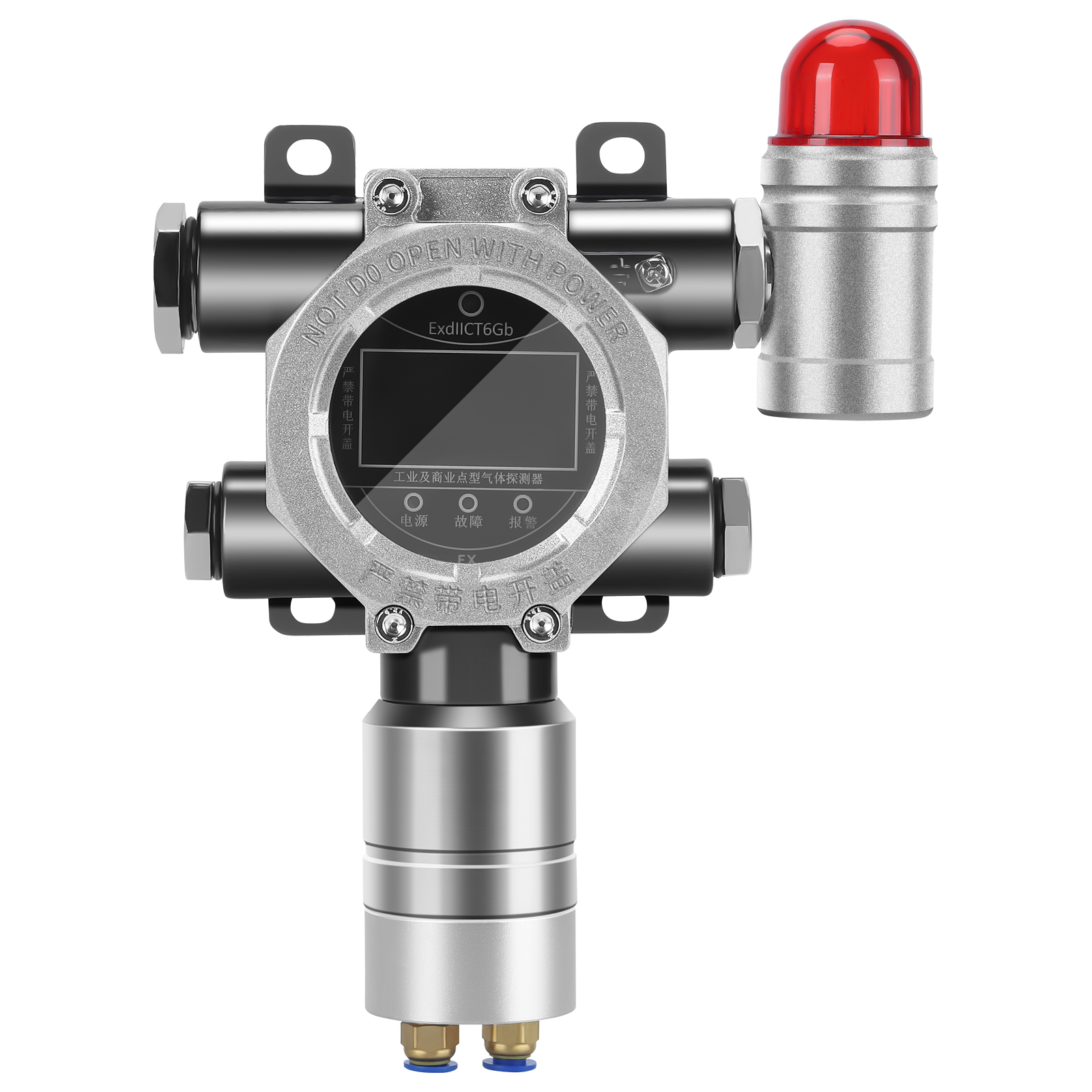
Freon alarm, also called refrigerant/ Refrigerant detector, specifically used to detect the leakage concentration of Freon (R22/R134a/R404A/R410A/R32, etc.) in the air. Freon is colorless and odorless, and the human eye cannot directly detect leaks. After leakage, it is likely to causepersonnel hypoxia and suffocation;Refrigerants such as R32 are also flammable and pose an explosion risk when exposed to open flameswhile also causing refrigerant loss and environmental pollution. Therefore, cold storage, refrigeration machine rooms, and central air conditioning machine rooms need to install monitoring.
Mainstream adoptionNDIR non-dispersive infrared sensor(Most commonly used industrial fixed type): Freon absorbs infrared light at a specific wavelength, and the sensor detects changes in light intensity to convert it into gas concentration, with high accuracy, resistance to water vapor, and long service life;
What gas detector should be chosen for cold chain workshops? Freon alarms are stable and reliable
Freon alarm (refrigerant leakage alarm)
Freon alarm, also called refrigerant/ refrigerant detector, specifically used to detect the leakage concentration of Freon (R22/R134a/R404A/R410A/R32, etc.) in the air. Freon is colorless and odorless, and the human eye cannot directly detect leaks. After leakage, it can easily cause personnel hypoxia and suffocation; refrigerants such as R32 are also flammable and pose an explosion risk when encountering open flames, while also causing refrigerant loss and environmental pollution. Therefore, cold storage, refrigeration rooms, and central air-conditioning rooms need to install monitoring.
✅ Working principle
Mainstream adoptionNDIR non-dispersive infrared sensor (most commonly used in industrial fixed installations): Freon absorbs infrared light at specific wavelengths, and the sensor detects changes in light intensity to convert into gas concentration, with high accuracy, resistance to moisture, and long service life;
Also semiconductor/ halogen heated diode, mostly used in handheld leak detectors, suitable for on-site leak location;
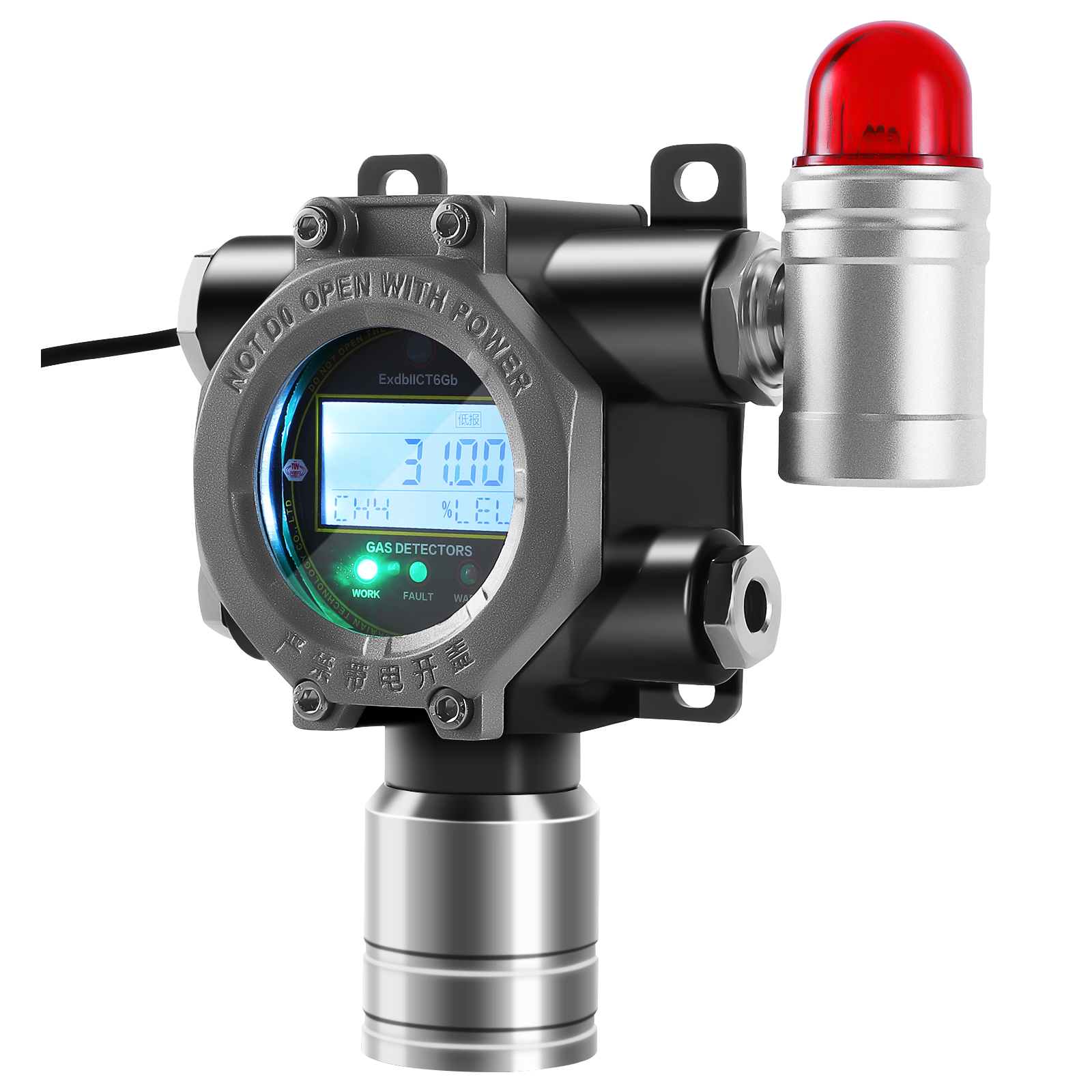
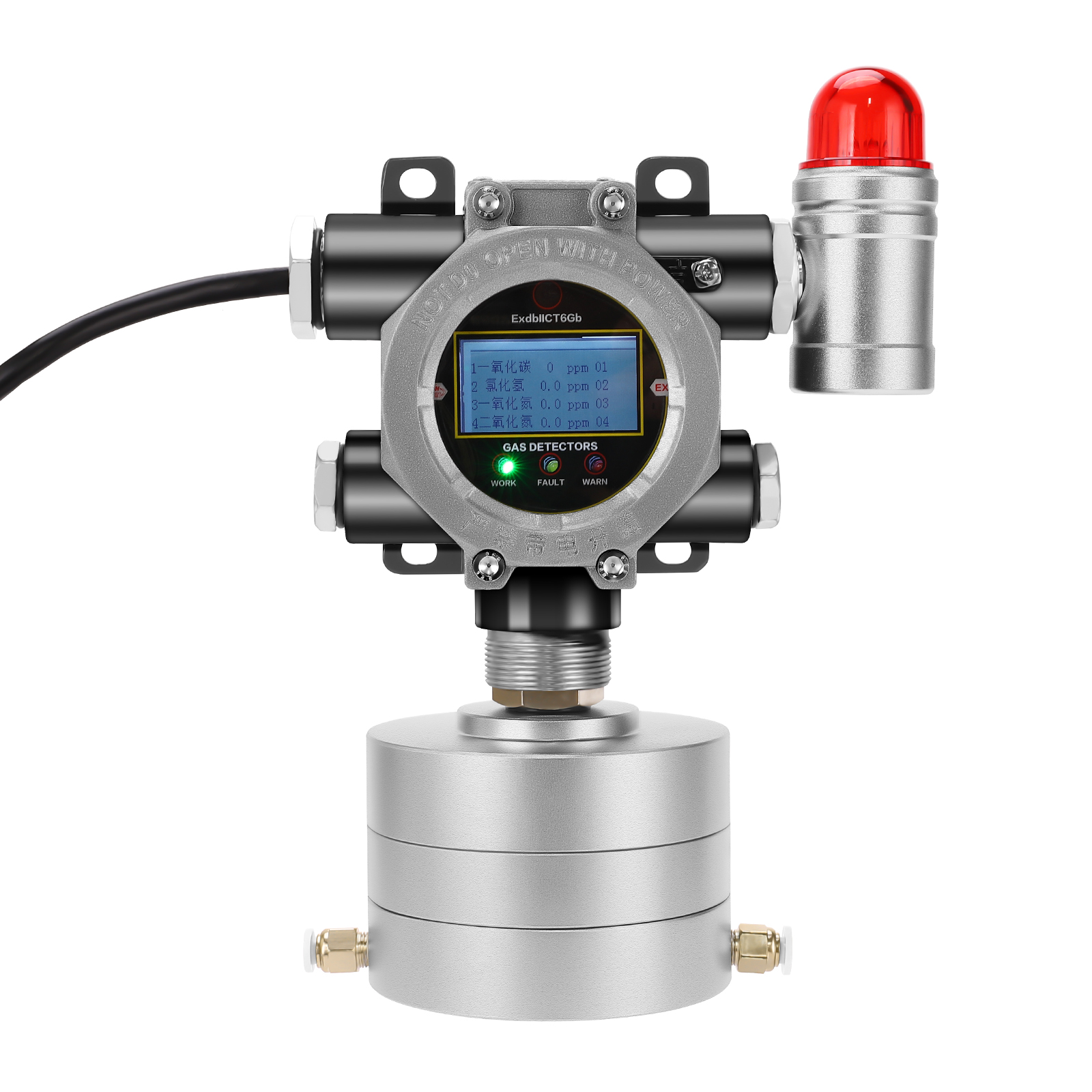
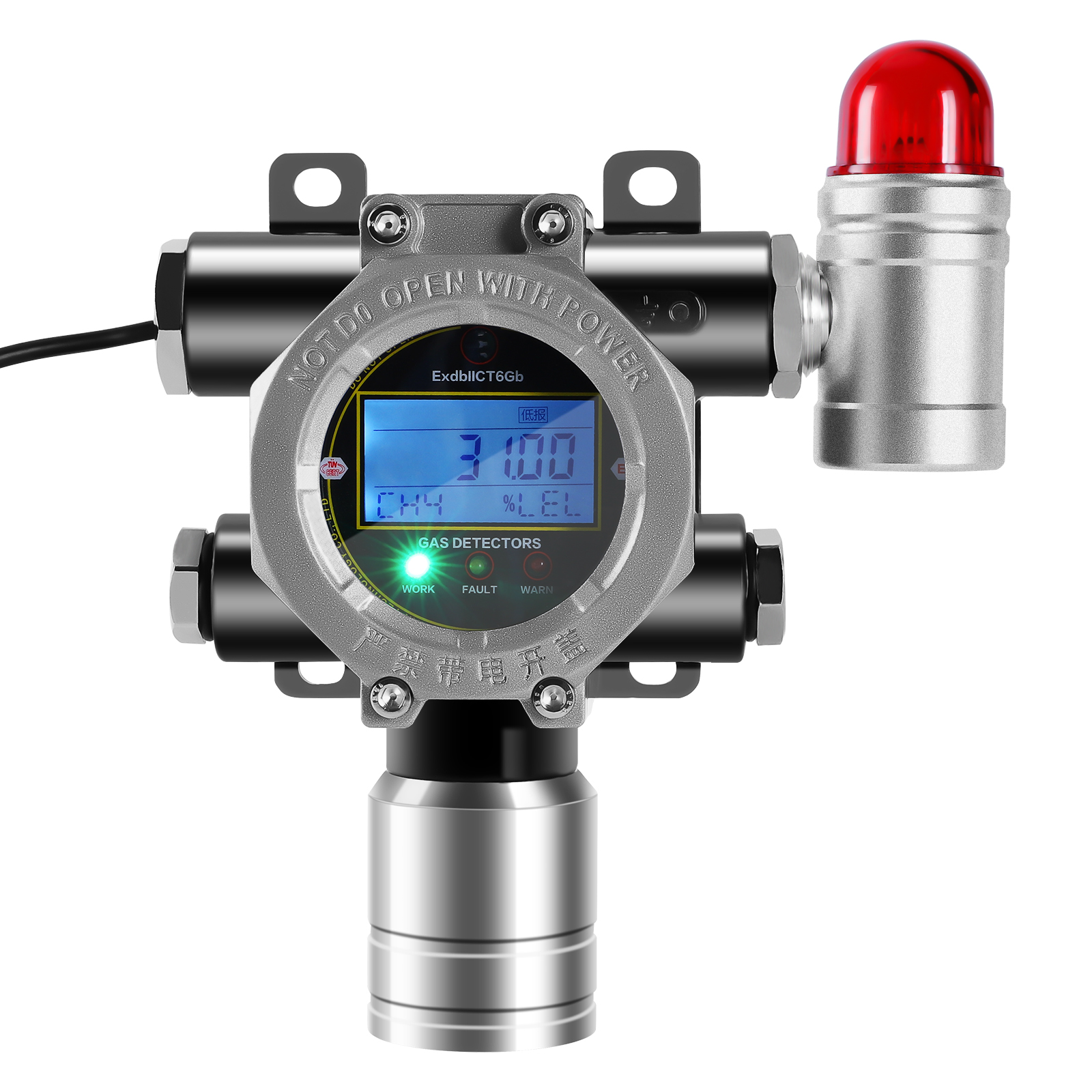
The fixed complete set consists of a detector (on-site probe)+ alarm controller (main unit); the detector collects concentration signals and transmits them to the main unit; when concentration reaches low alarm and high alarm thresholds, the main unit triggers sound and light alarms, and can link to exhaust ventilation, cut off the refrigerant solenoid valve, and shut down the refrigeration unit; some support remote mobile phone / monitoring room alarms.
📌 Product Categories
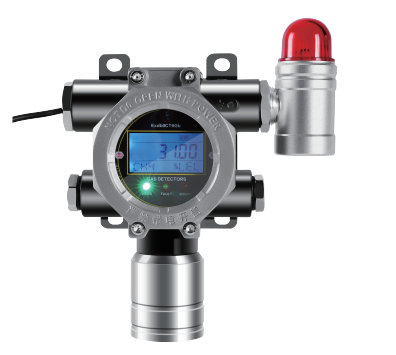
Fixed Freon alarm (industrial mainstream)
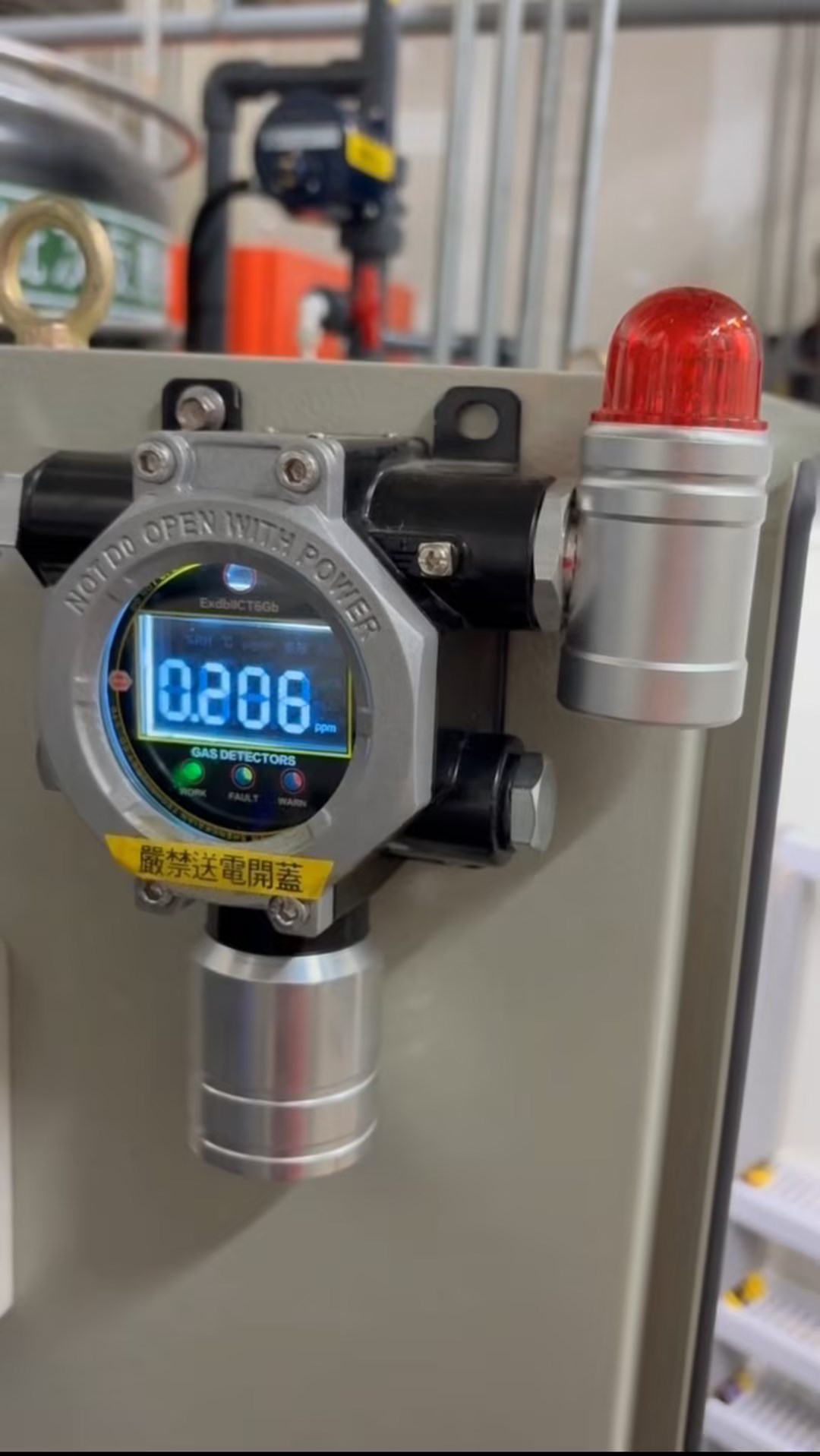
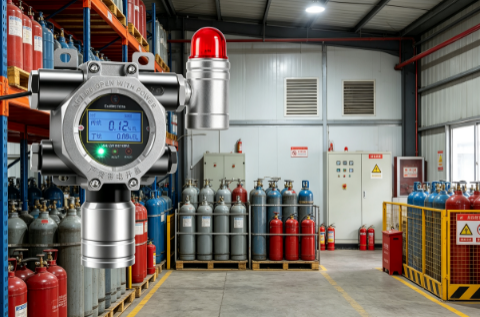
24-hour online continuous monitoring, wall-mounted installation, used in cold storage, refrigeration rooms, data center air-conditioning rooms, large supermarket cold cabinet rooms; supports 4-20mA, RS485 signal access to PLC / fire protection systems, explosion-proof models used in hazardous areas.
Portable handheld leak detector
With a flexible gooseneck probe, used by maintenance personnel for inspections and leak detection; used to find tiny leaks in pipeline valves and flanges, not for long-term online monitoring.
Standalone simple alarm
Plug and play, with built-in sound and light, simple monitoring for small machine rooms and small air-conditioning machine rooms.
🧪 Detectable refrigerants
R22, R134a, R404A, R407C, R410A, R507, R32 and other halogenated hydrocarbon refrigerants (Freon-type refrigerants).
📍 Installation points (very critical)
Freon has different densities, so installation heights differ:
R22, R404A (heavier than air): detector 0.3~0.6m above the ground, sensor facing downward;
R410A, R134a, R32 (lighter than air): the detector is installed 0.3~0.6m below the ceiling;
Probes should preferably be arranged near compressors, valves, flanges, pipe joints, and other locations most prone to leakage;
The controller (main unit) is installed in the duty room, about [distance] above the ground1.5 meters, convenient for personnel to inspect.
What gas detector should be chosen for cold chain workshops? Freon alarms are stable and reliable
⚠️ Main function
Safety warning: sound and light alarm when leakage exceeds the standard, preventing hypoxia and suffocation in enclosed spaces;R32 flammable refrigerant can prevent explosion risks;
Linkage control: automatically turn on exhaust fans, cut off the refrigerant pipeline solenoid valve, and shut down the machine to reduce leakage;
Reduce economic losses: early leak detection avoids massive refrigerant loss and refrigeration unit damage;
Main Application Areas
- Cold Storage Facilities — Monitor refrigerant leaks in cold storage warehouses to prevent oxygen depletion and ensure worker safety.
- Refrigeration Machine Rooms — Detect Freon leaks in industrial refrigeration systems to avoid equipment damage and environmental harm.
- Central Air Conditioning Plants — Continuous monitoring of refrigerant levels in HVAC systems to prevent leaks and maintain efficiency.
- Food Processing Plants — Ensure safety in food processing areas where refrigeration is critical, preventing contamination and health risks.
- Chemical and Pharmaceutical Storage — Protect temperature-sensitive materials by detecting refrigerant leaks in storage environments.
Keywords:freon gas alarm, refrigerant leak detector, R134a detector, NDIR gas sensor, cold storage gas monitor, industrial gas detector, freon leak alarm, refrigeration safety