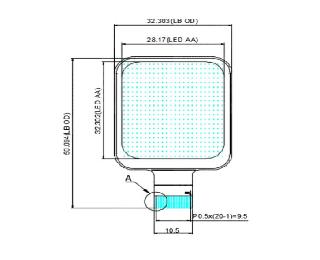
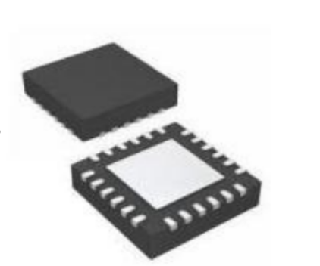
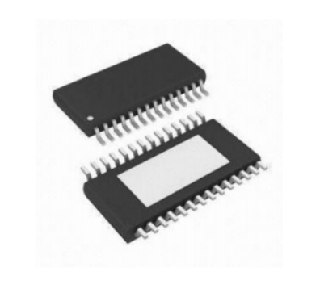
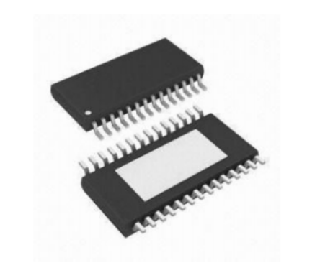
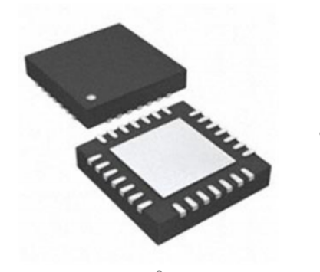
MiniLED backlight refers to an advanced direct-lit backlight display technology and product that uses MiniLED chips (flip-chip) or LED packaging devices (using front-mounted or flip-chip) with local dimming capability.
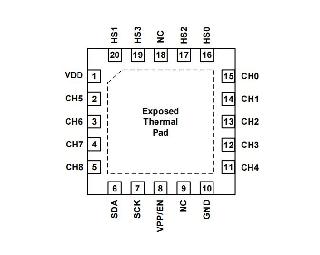
WH5097D is a 4-channel mini LED driver designed for driving 2D backlight displays, supporting 12-bit PWM.
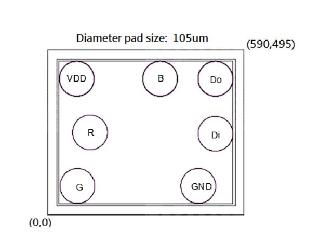
WH3803D is a dedicated RGB LED driver circuit with 3 output channels.
U1R32D is a receiver chip for wireless audio transmission, paired with a wireless transmitter chip for high-quality wireless audio transmission.
U1T32A is a transmitter chip for wireless audio transmission, paired with a wireless receiver chip for high-quality wireless audio transmission.
RF298 is a low-cost, highly integrated 2.4GHz wireless transceiver chip.
APT32F1104 is a 32-bit high-performance, low-cost microcontroller developed by APT based on the T-Head Microsystems CPU core.
APT32F1103 is a 32-bit high-performance, low-cost microcontroller developed by APT based on the T-Head Microsystems CPU core.
APT32F1101 is a 32-bit high-performance, low-cost microcontroller developed by APT based on the T-Head Microsystems CPU core.
APT32F1023 is a 32-bit high-performance, low-cost microcontroller developed by APT Microelectronics based on the T-HEAD Semiconductor CPU core.
APT32F1102 is a 32-bit high-performance, low-cost microcontroller developed by APT based on the T-Head Microsystems CPU core.
The APT32S003 interrupt controller is interface logic that collects interrupt requests from multiple interrupt sources, arbitrates them based on priority, and submits them to the CPU.
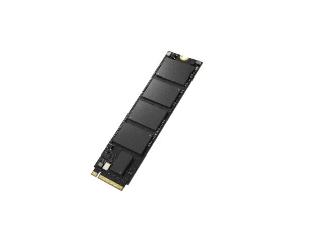
Leveraging Hikvision's security background, we are committed to developing four major businesses: solid-state drives, memory cards, dedicated network drives, and mobile storage, with a complete supply chain system and comprehensive after-sales service.
Specifications and performance of the Hikvision PTS11 series SSD.
MS5351M is a general-purpose frequency synthesizer chip that can generate any clock output from 2.5kHz to 200MHz via I2C configuration.
MS1022 is a high-precision time-to-digital converter (TDC) circuit, an upgraded product of MS1002, fully pin-compatible with MS1002 and compatible with all MS1002 functions.
MS5350 is a high-precision time measurement circuit with high precision, high stability, and high efficiency.
MS1030 is a high-precision measurement circuit for ultrasonic flow, featuring high precision, high stability, and high efficiency.
MS1004 is a high-precision time-to-digital converter (TDC) circuit. Compared to MS1002, it offers higher precision and a smaller package, suitable for high-precision, small-package applications.
MS1003 is a high-precision time-to-digital converter (TDC) circuit. Compared to MS1002, it offers higher precision and a smaller package, suitable for high-precision, small-package applications.
MS2510 is an 8-bit, 20MSPS analog-to-digital converter (ADC) using a half-flash architecture.
MS5510 is an 8-bit, 20MSPS analog-to-digital converter (ADC) using a half-flash architecture.
MS9280 is a single-chip, single-supply, 10-bit, 50MSPS ADC with an integrated sample-and-hold amplifier and voltage reference.
MS9281 is a single-chip, single-supply, 10-bit, 80MSPS ADC with an integrated sample-and-hold amplifier and voltage reference.
MS1549 is a 10-bit switched-capacitor successive-approximation ADC.
MS5175 is a high-precision, continuous-conversion ADC with 4 single-ended input channels and up to 16-bit resolution, featuring an integrated 2.048V reference and I2C-compatible interface.
MS5192T/MS5193T are low-power, low-noise, three-channel differential-input 16-bit/24-bit ADCs suitable for high-precision measurement applications.
MS5194T/MS5195T are low-power, low-noise, six-channel differential-input 24-bit/16-bit ADCs suitable for high-precision measurement applications.
MS5198T/MS5199T are low-power, low-noise, three-channel differential-input 16-bit/24-bit ADCs suitable for high-precision measurement applications.
MS7705/MS7706 are ADCs for low-frequency measurements, using Σ-Δ conversion technology to achieve 16-bit no-missing-code output.
MS5213T is an ADC for low-frequency measurements, using Σ-Δ conversion technology to achieve 16-bit no-missing-code precision.
MS1242/MS1243 are high-precision, wide dynamic range Σ-Δ ADCs with an operating voltage of 2.7V to 5.25V, achieving 24-bit no-missing-code conversion and an effective precision of up to 21 bits.
MS1112 is a high-precision, continuous-conversion self-calibrating ADC with 2 differential or 3 single-ended input channels and up to 16-bit resolution. The integrated 2.048V reference allows a differential input range of ±2.048V.
MS1100 is a high-precision, continuous-conversion self-calibrating ADC with up to 16-bit resolution. The integrated 2.048V reference allows a differential input range of ±2.048V.
MS2351M is a logarithmic amplifier chip mainly used for received signal strength indication (RSSI) and power amplifier control, with an operating frequency range of 100M to 2500MHz and a typical dynamic range of 45dB. It can be used in various handheld devices and other wireless equipment.
MS3988/MS3988N is a four-channel DMOS full-bridge driver that can drive two stepper motors or four DC motors. Each full bridge can operate up to 1.2A at 36V supply.
MS3989/MS3989N is a four-channel DMOS full-bridge driver that can drive two stepper motors or four DC motors. Each full bridge can operate up to 1.2A at 36V supply.
MS3999 is a four-channel programmable current DMOS full-bridge driver that can drive two stepper motors or four DC motors. Each full bridge can operate up to 1.2A at 36V supply.
MS35775 is a high-precision, low-noise two-phase stepper motor driver chip. It integrates fast mode and quiet mode to meet different applications at high and low speeds. The chip has built-in power MOSFETs, with an average current of 1.4A and peak current of 2A for long-term operation.
MS41908M is a lens driver chip for network cameras and surveillance cameras. It has a built-in aperture control function and achieves ultra-low noise micro-stepping via voltage driving and torque ripple correction technology.
MS41969 is a dual-channel 12V stepper motor driver chip that achieves ultra-low noise micro-stepping via current-subdivided voltage driving and torque ripple correction technology. It also includes a DC motor driver.
MS41959 is a four-channel stepper motor driver chip, with two channels driven by 12V and two channels by 5V, capable of driving four stepper motors simultaneously.
MS41949 is a four-channel low-voltage 5V stepper motor driver chip that can drive four stepper motors. It achieves ultra-low noise micro-stepping via current-subdivided voltage driving and torque ripple correction technology.
MS41939 is a single-channel 5V low-voltage stepper motor driver chip that achieves ultra-low noise micro-stepping via current-subdivided voltage driving and torque ripple correction technology.
MS41929 is a dual-channel 5V low-voltage stepper motor driver chip that achieves ultra-low noise micro-stepping via current-subdivided voltage driving and torque ripple correction technology.
MS41928M is a lens driver chip for network cameras and surveillance cameras. It has a built-in aperture control function and achieves ultra-low noise micro-stepping via voltage driving and torque ripple correction technology.
MS41919 is a dual-channel 5V low-voltage stepper motor driver chip that achieves ultra-low noise micro-stepping via current-subdivided voltage driving and torque ripple correction technology.
MS41918M is a lens driver chip for network cameras and surveillance cameras. It has a built-in aperture control function and achieves ultra-low noise micro-stepping via voltage driving and torque ripple correction technology.
MS41909 is a lens driver chip for network cameras and surveillance cameras. It achieves ultra-low noise micro-stepping via voltage driving and torque ripple correction technology.
MS35009 is a lens driver system chip. Due to its micro-stepping characteristics, it can meet complex, delicate, and low-noise lens drive systems. The micro-stepping drive function control module is integrated into the chip, greatly reducing CPU power consumption.
MS32006 is a multi-channel motor driver chip, including two stepper motor drivers and one DC motor driver. Each channel has a high current of 1.0A and supports two-phase four-wire and four-phase five-wire stepper motors.
MS4998 is a bipolar micro-stepping motor driver chip with a built-in 8-bit DAC, supporting full-step, 1/2, 1/4, 1/8, 1/16, 1/64, 1/128, and 1/256 step modes. It has a large driving capability of 35V and ±1.5A.
MS4989 is a bipolar micro-stepping motor driver chip with a built-in 4-bit DAC, supporting full-step, 1/2, 1/16, and 1/64 step modes. It has a large driving capability of 35V and ±1.5A.
MS4988 is a bipolar micro-stepping motor driver chip with a built-in 4-bit DAC, supporting full-step, 1/2, 1/4, 1/8, and 1/16 step modes. It has a large driving capability of 35V and ±1.5A.