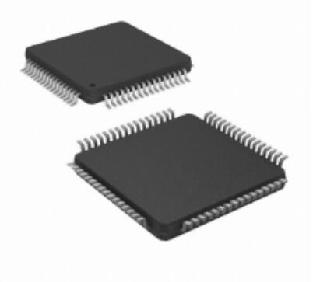
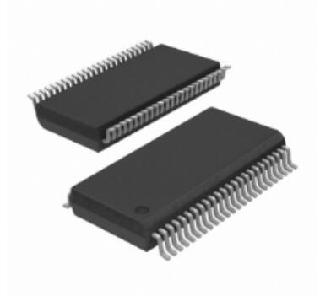
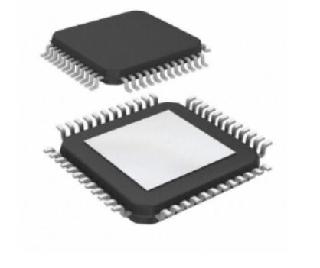
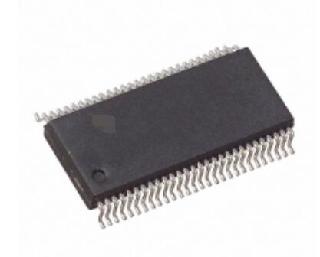
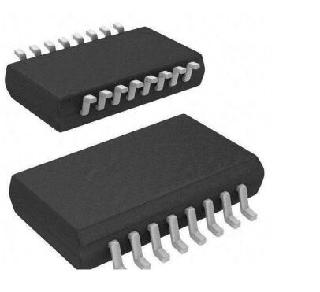
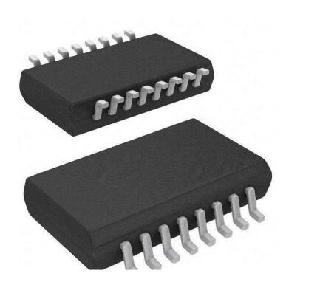
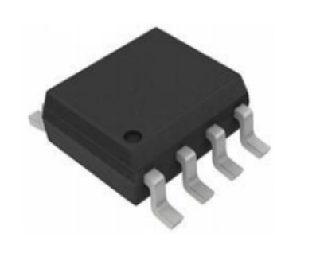
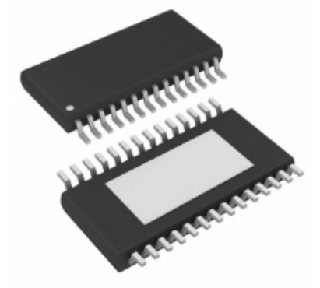
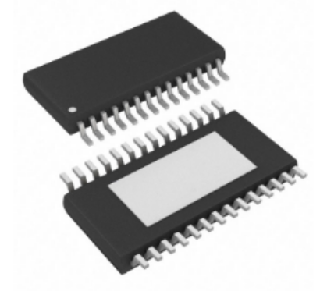
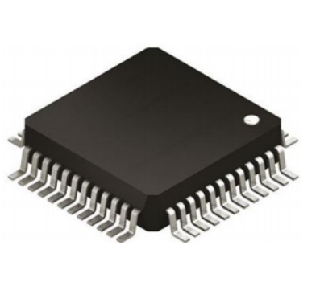
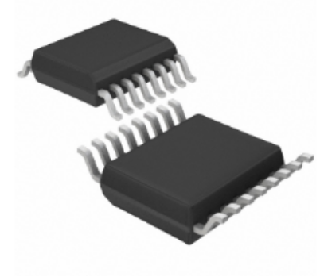
MS1192 is an adapter chip compliant with the HBS bus specification (Japan Electronics Industry Association), featuring data transmission and reception functions. It uses AMI encoding in the transceiver unit and can interconnect via twisted pair cables with differential signal transmission.
The MS90C104 chip converts 5-channel LVDS signals into 35-bit TTL data.
The MS90C365 chip converts 18-bit TTL data into 3-channel LVDS signals.
The MS90C366 chip converts 3-channel LVDS signals into 21-bit TTL data.
The MS90C385B chip converts 28-bit TTL data into 4-channel LVDS signals.
The MS90C385G chip converts 28-bit TTL data into 4-channel LVDS signals.
The MS90C386 chip converts 4-channel LVDS signals into 28-bit TTL data.
MS2652D is a low-power, high-data-rate two-channel CMOS differential LVDS signal bus driver chip, supporting data reception rates exceeding 155.5 Mbps (77.7 MHz).
MS90C032/MS90C032T is a low-power, high-data-rate four-channel CMOS differential LVDS signal receiver chip.
MS90C031 is a low-power, high-data-rate four-channel CMOS differential LVDS signal bus driver chip, supporting data reception rates exceeding 155.5 Mbps (77.7 MHz).
The MS2374 series devices are quad complementary output line drivers that meet the requirements of ANSI TIA/EIA-422-B and ITU (formerly CCITT) Recommendation V.11.
MS2576/MS2576T is a low-power quad differential line driver chip for balanced or unbalanced digital data transmission.
MS2575/MS2575T is a low-power quad differential line receiver chip for balanced or unbalanced digital data transmission.
MS3585 is a half-duplex, adaptive bus polarity, ±20kV ESD transceiver chip for RS-485 communication systems, with transmission and reception rates up to 10 Mbps.
MS3485/MS3485M/MS3485D is a half-duplex, ±20kV ESD transceiver chip for RS-485 communication systems, with transmission and reception rates up to 10 Mbps.
MS2591 is a low-power, high-ESD RS485 communication interface circuit; in receive mode, its power consumption is only about 365uA, and in shutdown mode, it does not exceed 1uA.
MS2583/MS2583M is a low-power, 5Mbps, high-ESD RS422 communication interface circuit; in receive mode, its power consumption is only about 0.3mA; A/B terminal ESD withstand voltage is up to ±15kV.
MS2581/MS2581M is a low-power, high-ESD RS422 communication interface circuit; in receive mode, its power consumption is only about 120uA; A/B terminal ESD withstand voltage is up to ±15kV.
MS2561 is a low-power, high-ESD RS485 communication interface circuit; in receive mode, its power consumption is only about 120uA, and in shutdown mode, it does not exceed 1uA.
The MS2375 series chips are quad differential line receivers suitable for balanced or unbalanced digital signal transmission systems.
MS1585/MS1585M/MS1585D is a half-duplex, adaptive bus polarity, ±20kV ESD transceiver chip for RS-485 communication systems, with transmission and reception rates up to 10 Mbps.
MS1285/MS1285M/MS1285D is a half-duplex, ±20kV ESD transceiver chip for RS-485 communication systems, with transmission and reception rates up to 10 Mbps.
The MS913/MS914 chipset is a 25MHz~100MHz 10-bit/12-bit FPD-Link III SER/DES (serializer/deserializer) that provides a high-speed FPD-Link III interface and a high-speed forward channel as well as a bidirectional control channel for data transmission over differential pairs.
The MS1023 serializer and MS1224 deserializer are a pair of 10-bit parallel-to-serial/serial-to-parallel converter chips used for transmitting and receiving serial data at parallel word rates of 10MHz to 80MHz over LVDS differential backplanes.
MS2201 is a Gigabit Ethernet transceiver circuit that enables ultra-high-speed full-duplex data transmission.
The MS9218 digital video serial-to-parallel converter deserializes a total of 27 bits of data during data and control cycles.
MS721 is a monolithic transceiver circuit developed for applications of the M-Bus standard (EN1434-3).
MS726 is a monolithic transceiver circuit developed for applications of the M-Bus standard (EN1434-3).