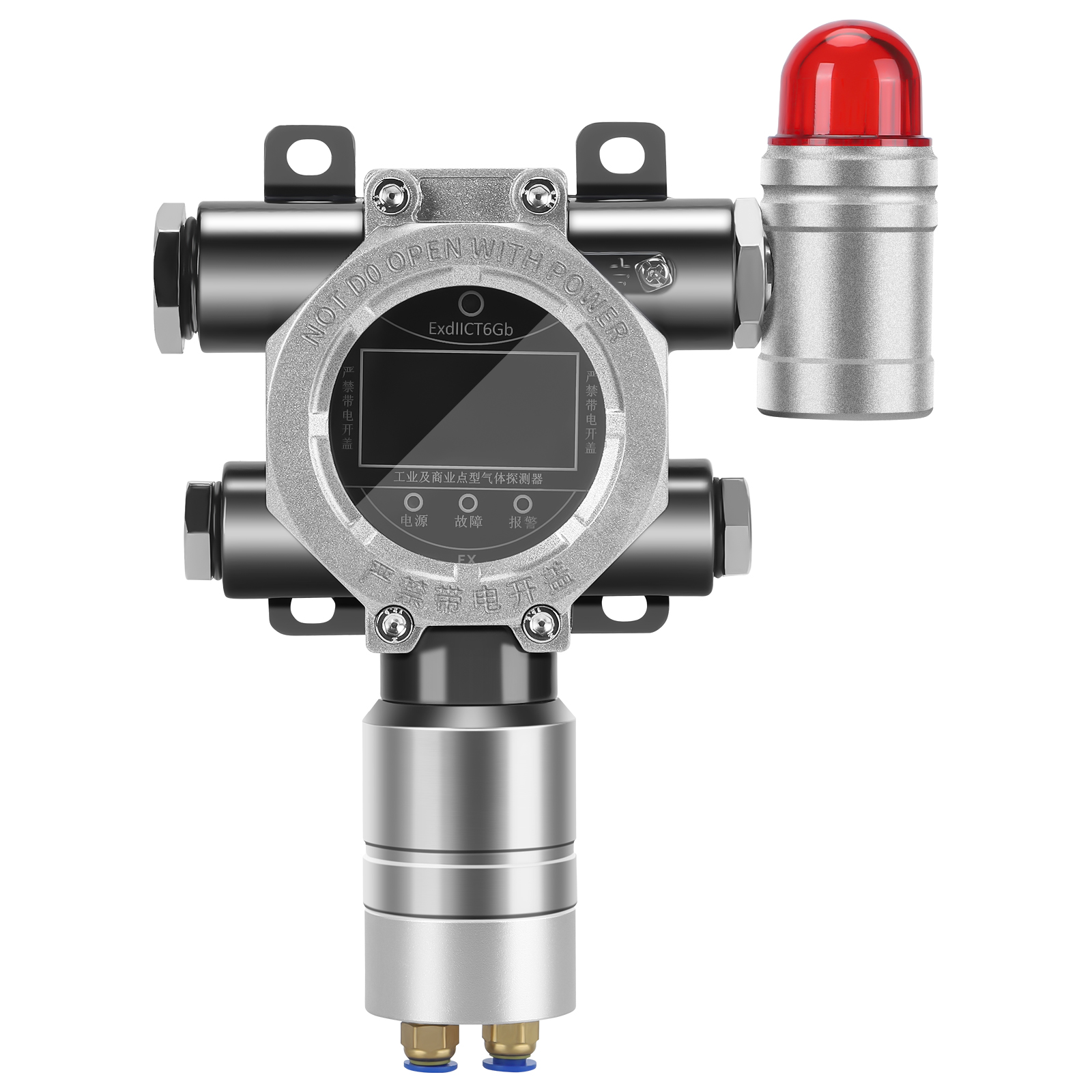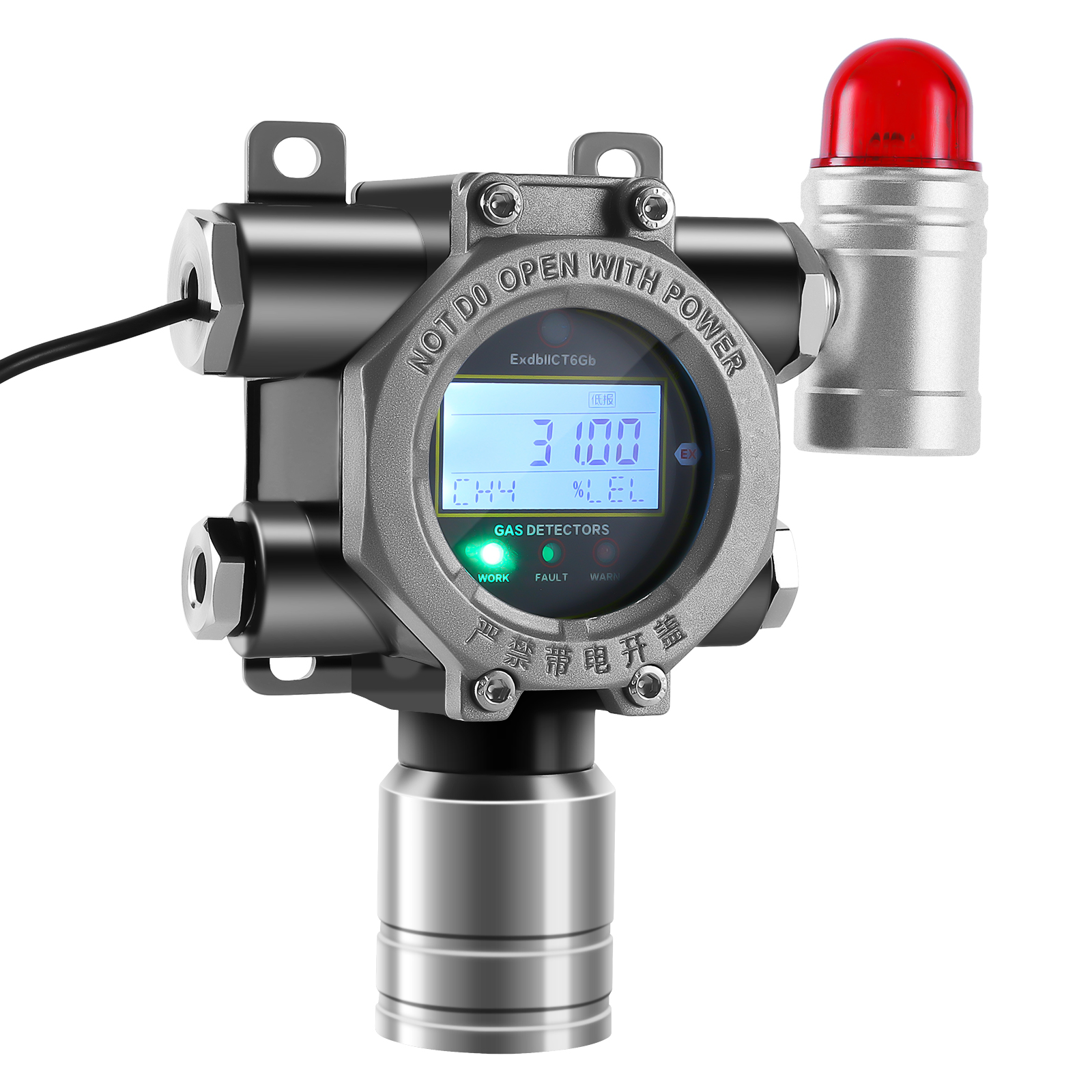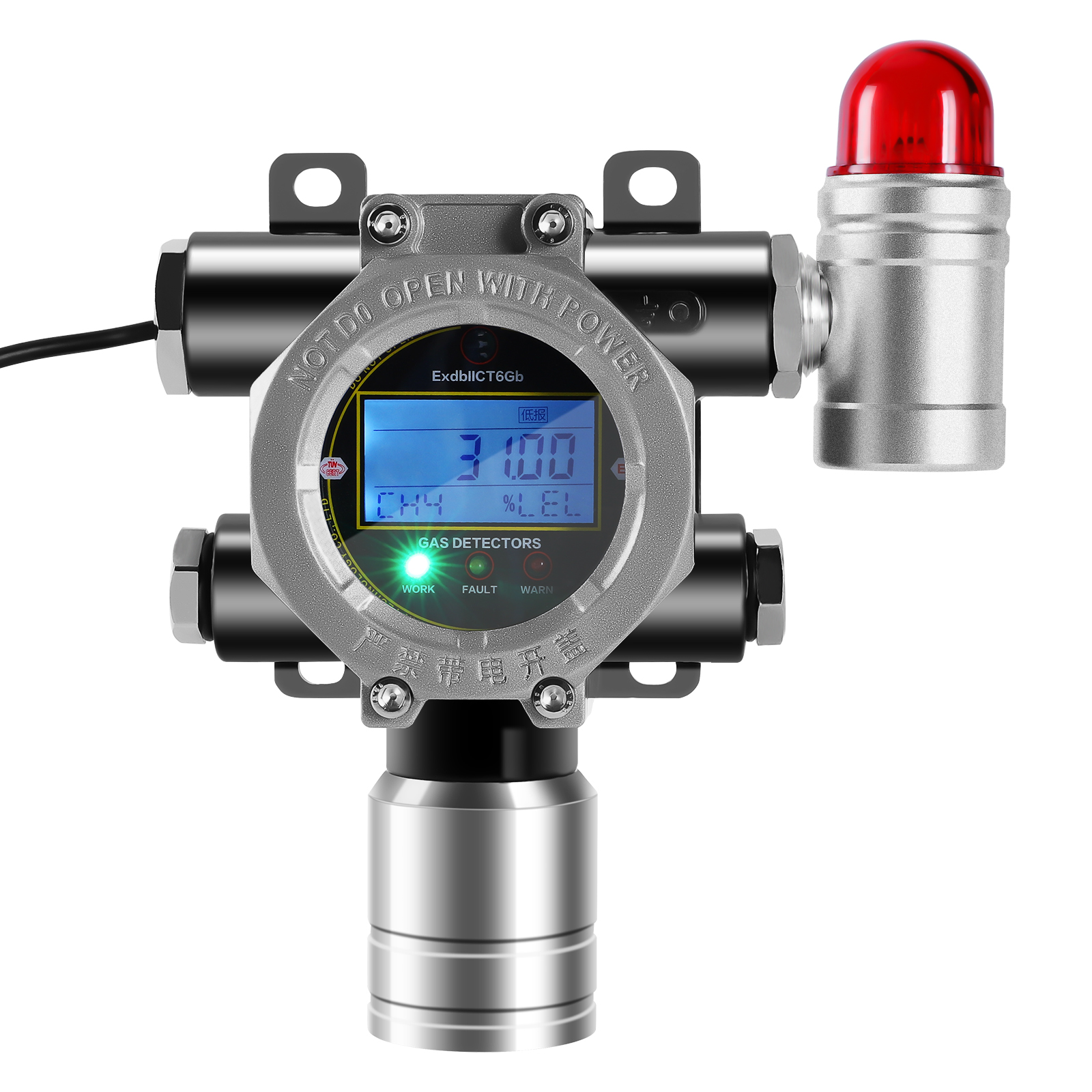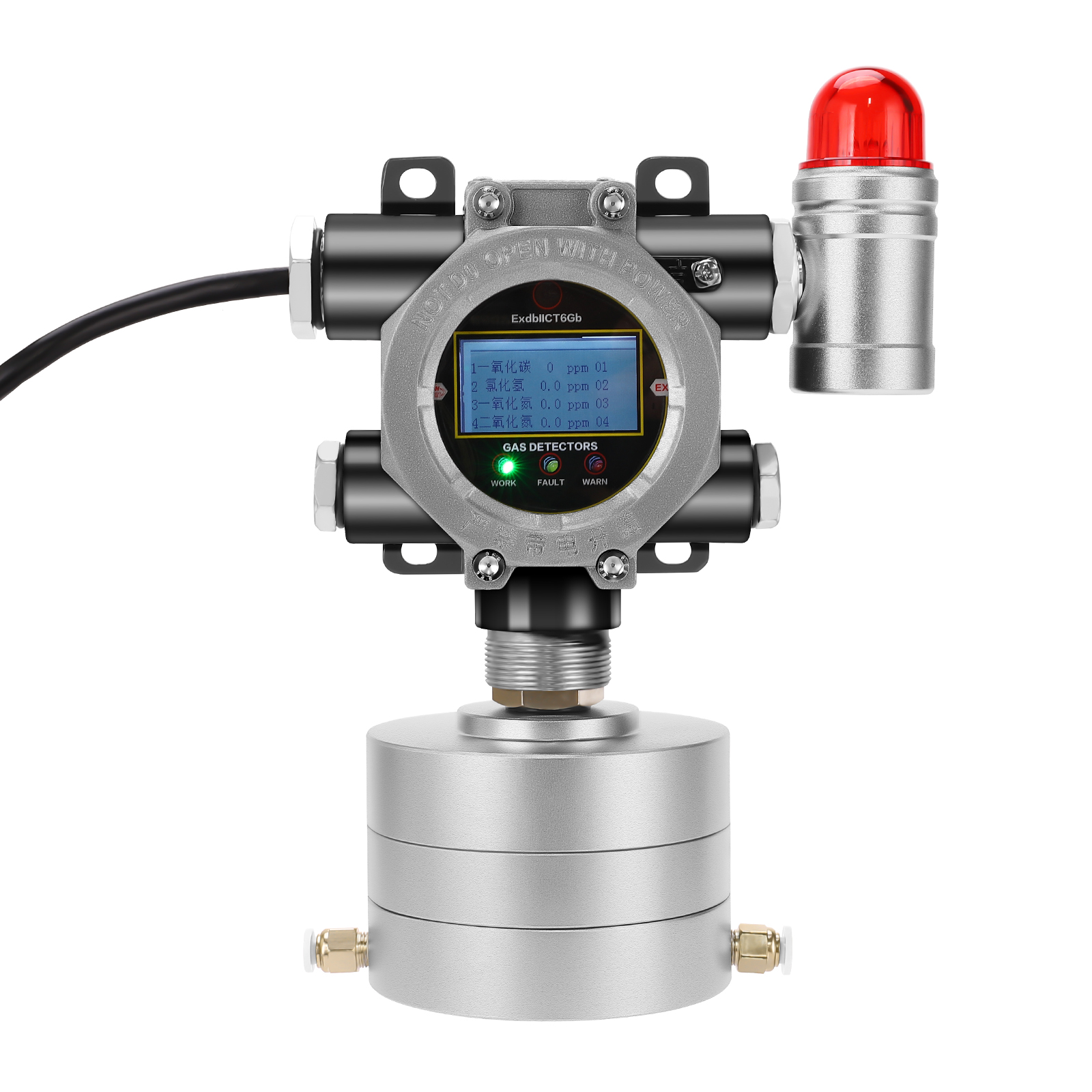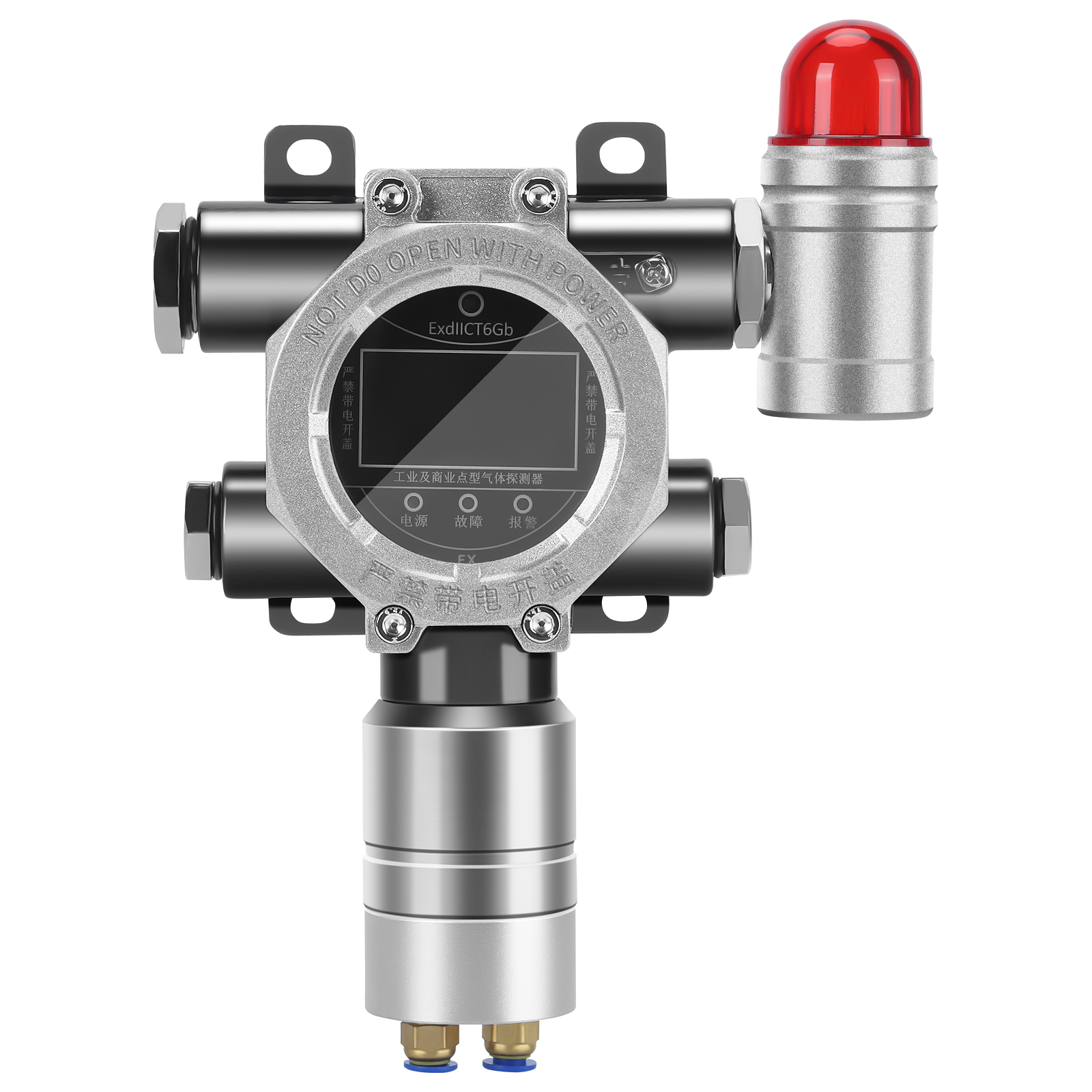
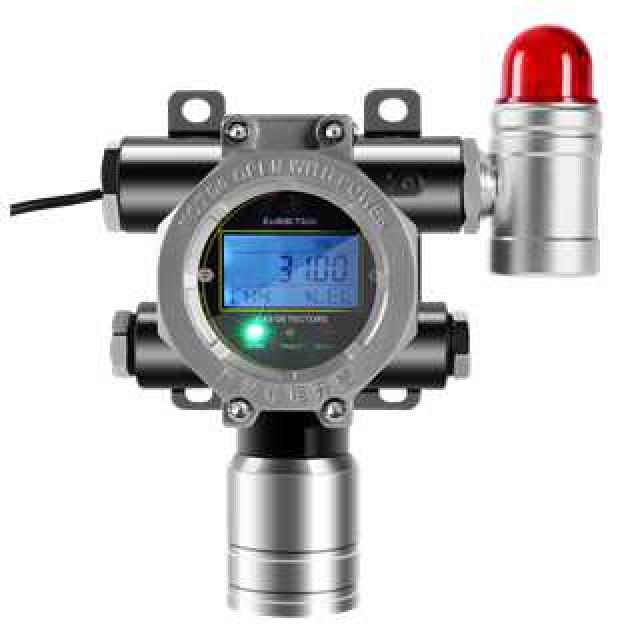
Freon Secondary Refrigerant Area Monitoring Terminal Fixed Safety Monitoring for Industrial Secondary Refrigerant Systems - SKA/FLA-BJQ
• Detected gas: Freon (refrigerant, R22/R134a/R410A optional)
• Measuring range: 0~1000ppm
• Resolution: 1ppm
• Alarm point: 500ppm (customizable)
• Accuracy: ±3%FS
• Response time: T90 ≤30s
• Zero drift: ≤±2%FS/year
Product Introduction
Freon Secondary Refrigerant Area Monitoring Terminal Fixed Safety Monitoring for Industrial Secondary Refrigerant Systems - Product Overview
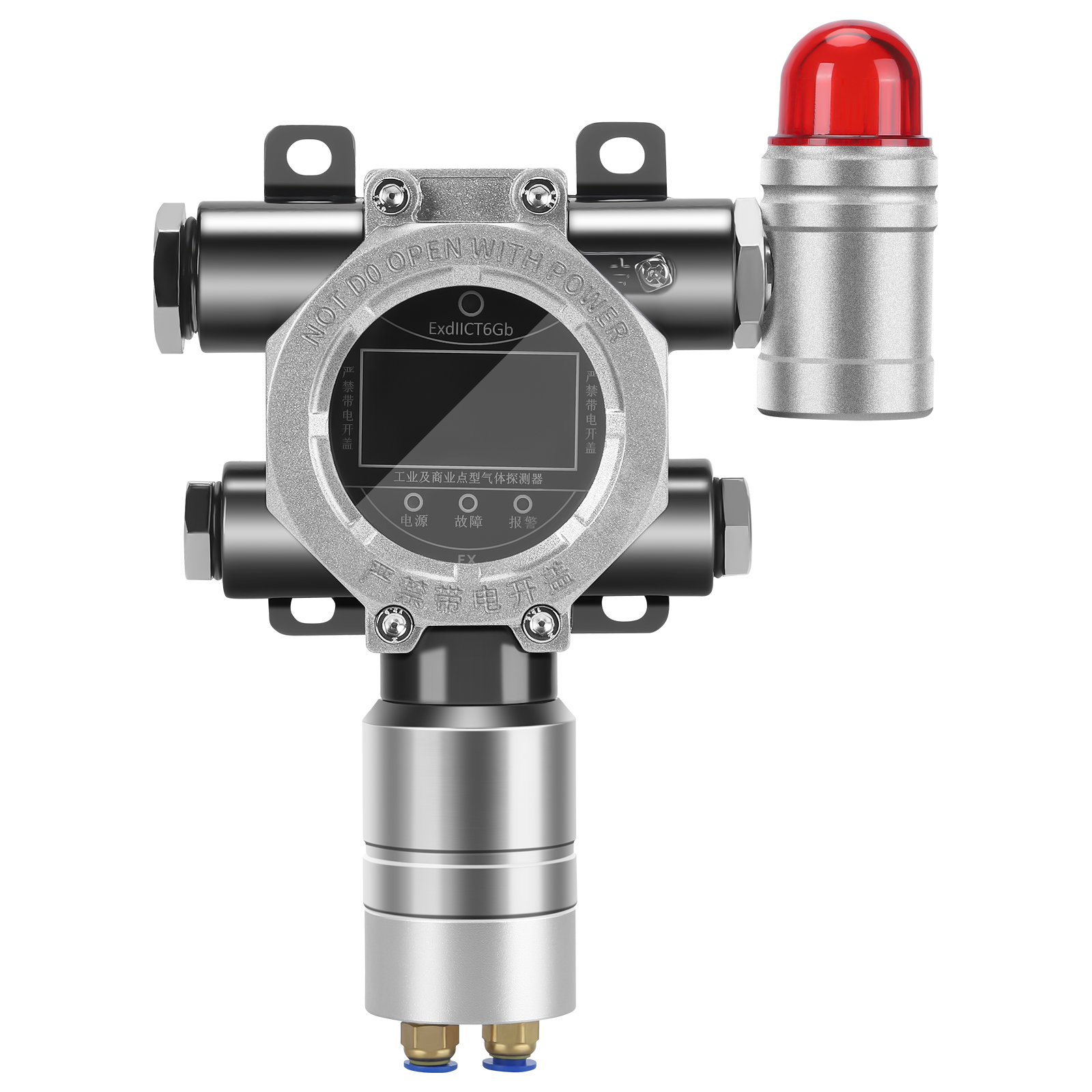
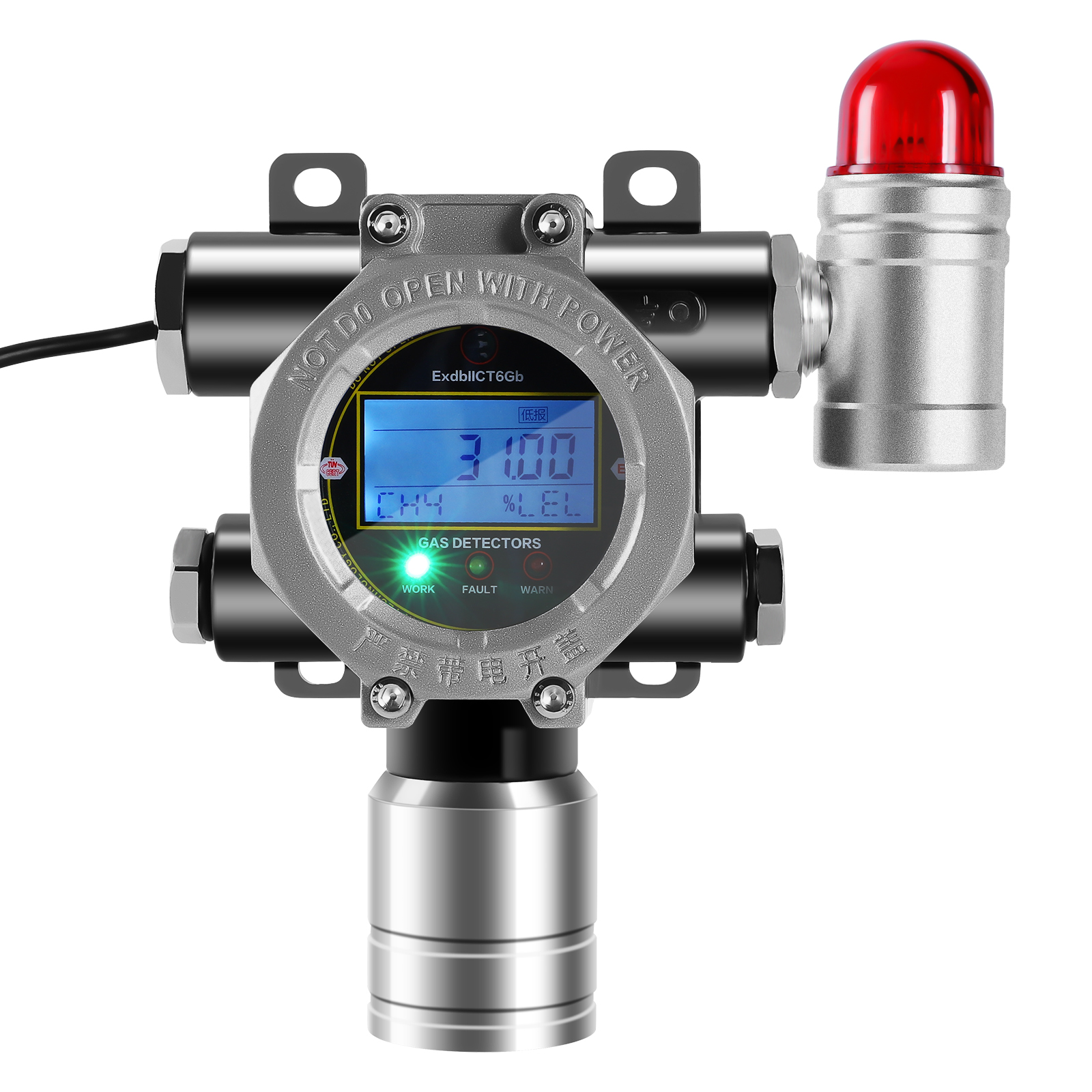
The Freon secondary refrigerant area monitoring terminal is a gas detection terminal device used for fixed safety monitoring of industrial secondary refrigerant systems. Search keywords: Freon secondary refrigerant area monitoring terminal, fixed safety monitoring for industrial secondary refrigerant systems, Freon alarm. The terminal is fixedly installed in the secondary refrigerant area and can continuously detect Freon concentration. When the concentration exceeds the set value, it emits audible and visual alarms and outputs linkage signals to control ventilation and shut-off equipment. In fixed safety monitoring for industrial secondary refrigerant systems, the Freon secondary refrigerant area monitoring terminal can reflect in real time the leakage risks of secondary refrigerant pumps, heat exchangers, and pipeline valves, ensuring the safety of personnel and facilities.
Freon Secondary Refrigerant Area Monitoring Terminal Fixed Safety Monitoring for Industrial Secondary Refrigerant Systems - Working Principle
The Freon secondary refrigerant area monitoring terminal uses semiconductor sensors or infrared sensors to output electrical signals by detecting Freon concentration, which are processed by a microprocessor to determine whether to alarm. In fixed safety monitoring for industrial secondary refrigerant systems, the Freon secondary refrigerant area monitoring terminal supports RS485, 4-20mA, and Modbus outputs, and can be connected to PLC, DCS, and gas alarm control systems. The terminal is fixedly installed near secondary refrigerant pumps or heat exchangers, features an explosion-proof housing and high protection rating, and is suitable for low-temperature and explosion-proof environments in secondary refrigerant systems.
Freon Secondary Refrigerant Area Monitoring Terminal Fixed Safety Monitoring for Industrial Secondary Refrigerant Systems - Application Scenarios
The Freon secondary refrigerant area monitoring terminal is widely used in secondary refrigerant pump, heat exchanger, storage tank, and pipeline valve areas of industrial secondary refrigerant systems. In fixed safety monitoring for industrial secondary refrigerant systems, the Freon secondary refrigerant area monitoring terminal can be fixedly installed near secondary refrigerant pumps, pipeline valves, and personnel inspection passages. The terminal can be linked with exhaust fans, shut-off valves, and fire protection systems to achieve automatic handling. For large secondary refrigerant systems, the Freon secondary refrigerant area monitoring terminal can also form a multi-point monitoring network and upload data uniformly to a control center.
Freon Secondary Refrigerant Area Monitoring Terminal Fixed Safety Monitoring for Industrial Secondary Refrigerant Systems - Technical Advantages
The Freon secondary refrigerant area monitoring terminal offers advantages such as easy installation, continuous monitoring, and flexible linkage. In fixed safety monitoring for industrial secondary refrigerant systems, the Freon secondary refrigerant area monitoring terminal adopts industrial-grade sensors and explosion-proof design, making it suitable for long-term operation. The terminal supports audible and visual alarms, fault self-diagnosis, and remote output, ensuring convenient maintenance. When selecting a Freon secondary refrigerant area monitoring terminal, attention should be paid to detection range, accuracy, response time, explosion-proof rating, and output method to ensure reliable and effective fixed safety monitoring for industrial secondary refrigerant systems.