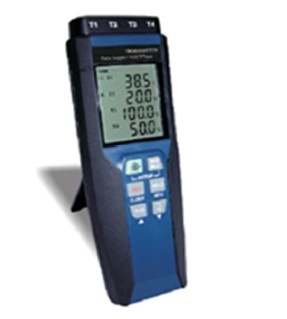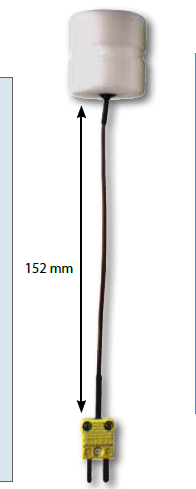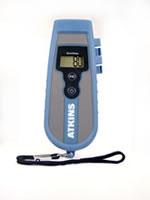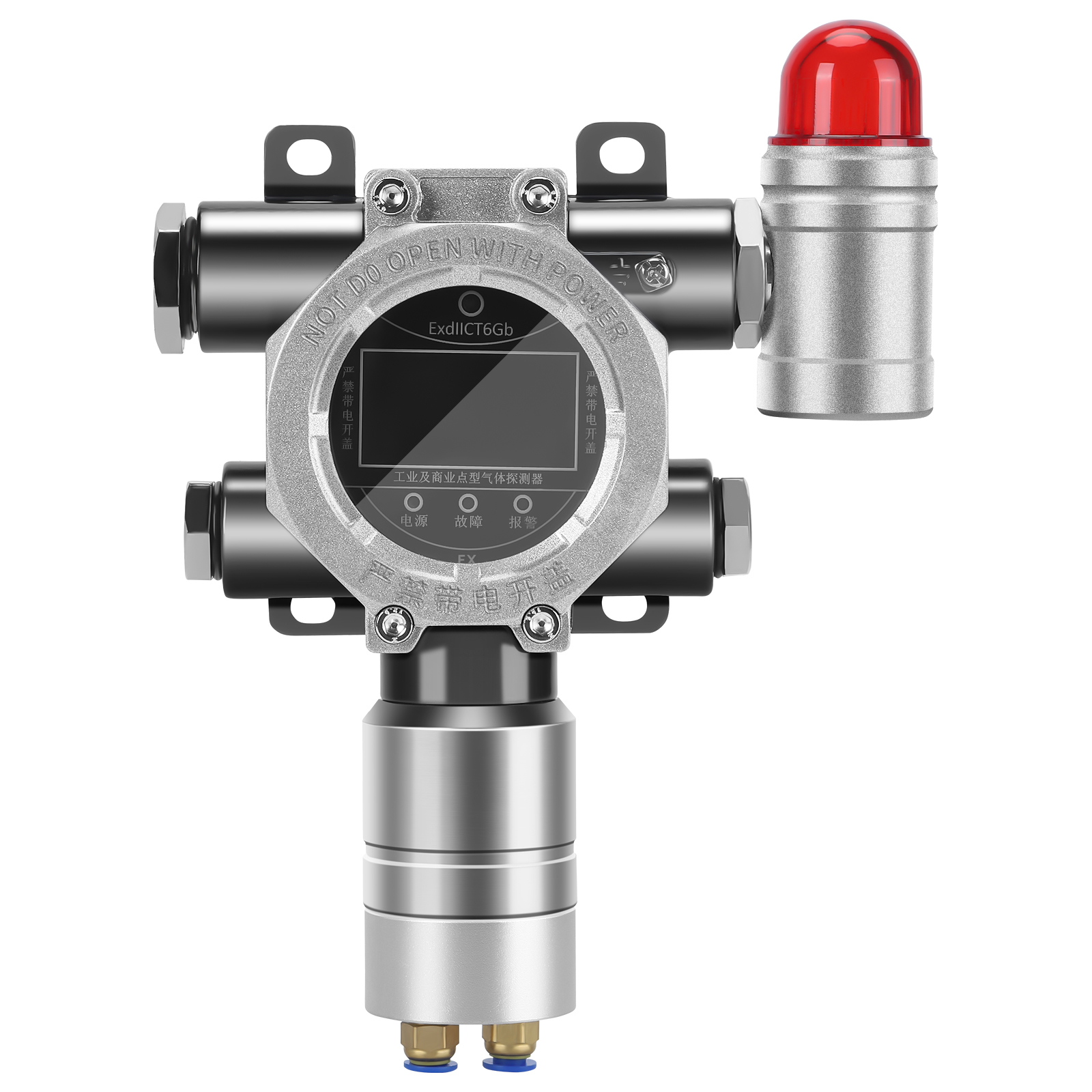
Data Center Freon Gas Alarm - SKA/NE-301 (R134a)
Freon Gas Alarm (Refrigerant Leak Alarm)
Freon alarms are used to detect leaks of refrigerants such as R22, R134a, R410A, R507; most Freon gases are heavier than air, settle on the ground after leakage, high concentrations can causeAsphyxiation risk, some refrigerants (R32, R290) are also flammable China Building Science... The entire system consists ofDetector (probe) + alarm controllerComposition, can provide audible and visual alarms, link exhaust fans, shut down refrigeration units, and upload alarm signals to the duty room.
I. Sensor Principle Comparison (Selection Key)
Table
| Sensors | Features | Applicable scenarios |
|---|---|---|
| NDIR infrared (priority recommendation) | Strong anti-interference, lifespan over 5 years, not easily poisoned or drifted, high accuracy | Cold storage, refrigeration rooms, high humidity condensation industrial sites |
| Semiconductor | Low price, high sensitivity; susceptible to interference from moisture and other gases causing false alarms | Simple ventilation ordinary computer room, non-high reliability scenario |
| Electrochemical | Not suitable for Freon detection, short lifespan, high drift | Try to avoid selecting |
R32/R290 combustible refrigerants: must chooseCatalytic combustion + explosion-proofDetector, also considering combustible detection.
Product Introduction
Freon Gas Alarm (Refrigerant Leak Alarm)
Freon alarms are used to detect leaks of refrigerants such as R22, R134a, R410A, R507; most Freon gases are heavier than air, settle on the ground after leakage, high concentrations can causeAsphyxiation risk, some refrigerants (R32, R290) are also flammable China Building Science... The entire system consists ofDetector (probe) + alarm controllerComposition, can provide audible and visual alarms, link exhaust fans, shut down refrigeration units, and upload alarm signals to the duty room.
I. Sensor Principle Comparison (Selection Key)
Table
| Sensors | Features | Applicable scenarios |
|---|---|---|
| NDIR infrared (priority recommendation) | Strong anti-interference, lifespan over 5 years, not easily poisoned or drifted, high accuracy | Cold storage, refrigeration rooms, high humidity condensation industrial sites |
| Semiconductor | Low price, high sensitivity; susceptible to interference from moisture and other gases causing false alarms | Simple ventilation ordinary computer room, non-high reliability scenario |
| Electrochemical | Not suitable for Freon detection, short lifespan, high drift | Try to avoid selecting |
R32/R290 combustible refrigerants: must chooseCatalytic combustion + explosion-proofDetector, also considering combustible detection.
II. Main Technical Parameters (Common Industry)
- Range: 0-1000ppm / 0-5000ppm (R22/R134a); combustible refrigerants 0-100% LEL
- Two-level alarm:
- R22/R134a: Level 1 low alarm1000ppm, secondary high alarm3000ppm, low alarm activates exhaust, high alarm shuts down and warns
- R32/R290 combustible refrigerants: Level 1 25% LEL, Level 2 50% LEL
- Signal output: 4-20mA, RS485; optional 4G/NB-IoT IoT remote monitoring
- Explosion-proof: industrial rooms must haveExd IIC T6Explosion-proof certification; protection level IP65/IP66 (cold storage)
III. Installation Specifications (National Standards GB50072-2021, GB/T50493-2019) China Building Science...
- Installation height: 0.3-0.6m from the ground(Freon is heavier than air, sinks and accumulates);Prohibited from installation at high ceiling locations。
- Placement points: around compressors, valves and flanges, below liquid storage tanks, pipe joints, ventilation dead corners, trench entrances.
- Avoid: direct airflow from outlets, high-temperature heat sources, dripping condensation direct spray locations.
- Controller installed in duty room, can receive alarm signals, link exhaust fans, relay output.
- Sealed cold storage, low-lying trenches need additional probes.
IV. Equipment Types
- Fixed type (industrial mainstream): Probe installed on site, controller centralized monitoring in duty room, can link fan shutdown, mandatory configuration for cold storage and refrigeration rooms.
- Portable handheld detector: for maintenance and leak detection, pump suction type, inspection and leak detection.
V. Maintenance and Calibration
- Infrared sensor: recommendedCalibrate once a yearLifespan over 5 years.
- Semiconductor: calibrate every six months, lifespan 1-2 years, high false alarm probability.
- Regularly check probe dust covers, clean oil and dust; focus inspections in humid cold storage environments.
VI. Compliance Key Points
Refrigeration rooms and cold storage must be equipped with refrigerant leak alarms according to national standards, alarms must link emergency exhaust fans, alarm signals transmitted to duty locations; equipment must have explosion-proof certificates, metrology-related certifications, and household alarms cannot replace industrial explosion-proof models.
If you need, I can help you organize oneSelection list templateClarify which sensor, alarm values, and point count estimation to choose for different refrigerants.
Main Application Areas
- Cold Storage Facilities — Monitors refrigerant leaks in cold storage rooms to prevent asphyxiation risks and protect stored goods.
- HVAC Systems — Detects Freon leaks in commercial and industrial HVAC systems, ensuring safe operation and compliance.
- Refrigeration Equipment Rooms — Provides continuous monitoring in machine rooms housing chillers and refrigeration units, triggering alarms and ventilation.
- Industrial Processing Plants — Used in facilities with large refrigeration systems to detect leaks early, minimizing downtime and safety hazards.
Keywords:freon gas alarm, refrigerant leak detector, R134a gas monitor, R22 gas alarm, R410A leak sensor, R507 refrigerant detector, HVAC gas alarm, cold room gas detector