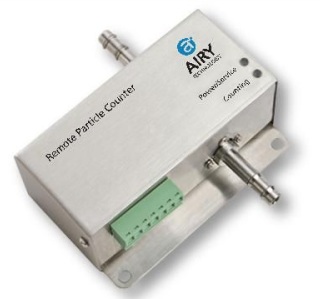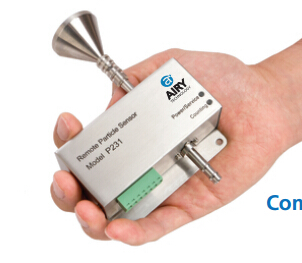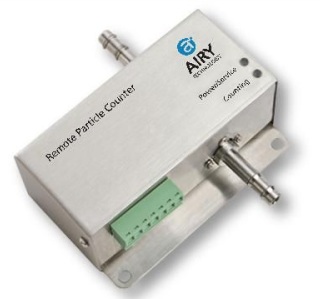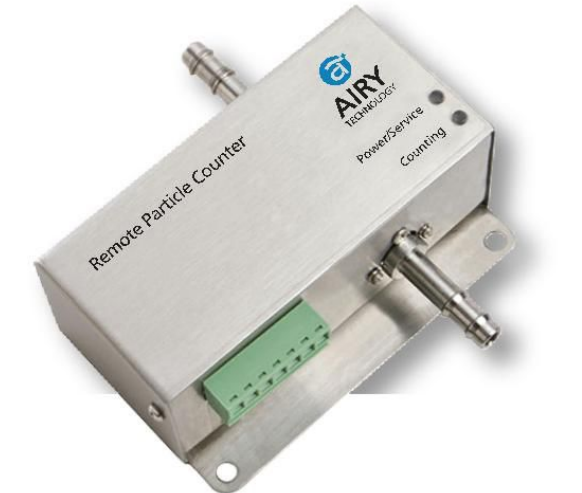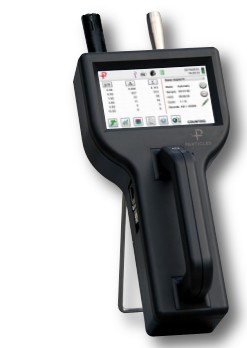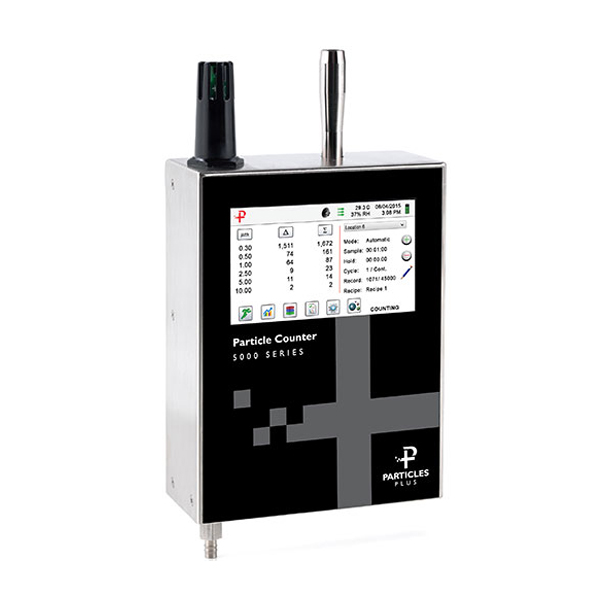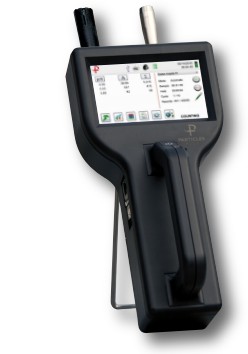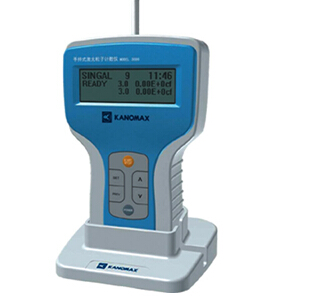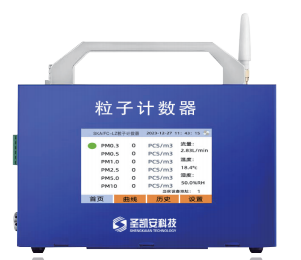
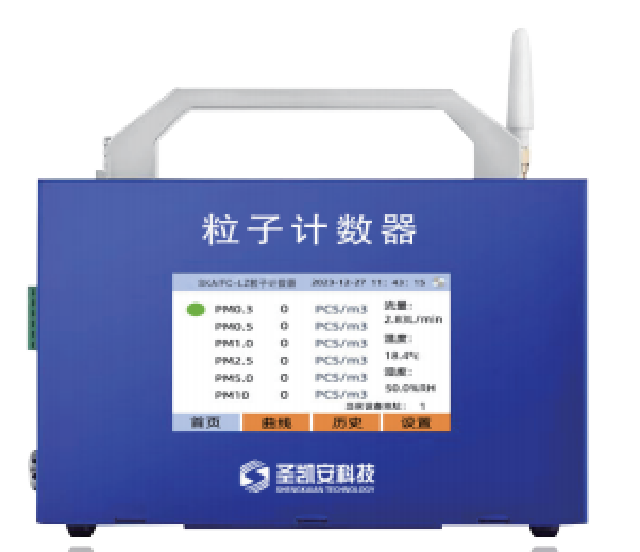
Laser Dust Particle Monitor Optical Lens Workshop Cleanliness Detection - SKA/LZ-JSQ
Measurement performance
• Detection principle: light scattering method
• Sampling flow rate: 2.83L/min (0.1cfm, most commonly used in clean workshops); optional 28.3L/min
• Particle size channels: standard 0.3μm, 0.5μm, 1.0μm, 2.0μm, 5.0μm, 10μm
• Measurement range: 0~999999 particles/L
• Repeatability: ±10%
• Sampling period: 1~60s adjustable
• Light source: laser diode
Product Introduction
Laser Dust Particle Monitor Optical Lens Workshop Cleanliness Detection - Product Overview
The laser dust particle monitor is a laser dust particle detection device used for optical lens workshop cleanliness detection. Search keywords: laser dust particle monitor, optical lens workshop cleanliness detection, dust particle counter. The instrument can continuously detect the number of dust particles of different particle sizes in the workshop, and is suitable for clean environment monitoring in industries such as optical lenses, lens assemblies, and optical thin films. In optical lens workshop cleanliness detection, the laser dust particle monitor can reflect cleanliness changes in real time, helping enterprises promptly identify pollution sources and take control measures.
Laser Dust Particle Monitor Optical Lens Workshop Cleanliness Detection - Working Principle
The laser dust particle monitor uses the principle of laser scattering. Air is introduced into the detection chamber through a sampling tube. When dust particles pass through the laser beam, they generate scattered light, which is received by a photodetector and converted into electrical signals to calculate particle size and concentration. In optical lens workshop cleanliness detection, the laser dust particle monitor can simultaneously measure multiple particle size channels such as 0.3μm, 0.5μm, 1.0μm, 3.0μm, 5.0μm, and 10μm. The instrument supports RS485, Modbus, and 4-20mA outputs and can be connected to a cleanroom monitoring system.
Laser Dust Particle Monitor Optical Lens Workshop Cleanliness Detection - Application Scenarios
The laser dust particle monitor is widely used in the grinding area, polishing area, cleaning area, and coating area of optical lens workshops. In optical lens workshop cleanliness detection, the laser dust particle monitor can be installed near key process equipment, personnel entrances and exits, and return air ducts. The instrument can be linked with air conditioning purification systems, audible and visual alarms, and monitoring platforms to achieve automatic adjustment and alarms. For lens workshops that require continuous monitoring, the laser dust particle monitor can also form a multi-point monitoring network and upload data uniformly to a control center.
Laser Dust Particle Monitor Optical Lens Workshop Cleanliness Detection - Technical Advantages
The laser dust particle monitor has advantages such as high detection accuracy, fast response speed, and good stability. In optical lens workshop cleanliness detection, the laser dust particle monitor adopts a long-life laser light source and anti-contamination optical design, making it suitable for long-term operation. The instrument supports data storage, printing, and remote communication, and is easy to maintain. When selecting a laser dust particle monitor, attention should be paid to particle size channels, sampling flow rate, detection range, accuracy, and communication methods to ensure it meets the needs of optical lens workshop cleanliness detection.
Main Application Areas
- Optical Lens Manufacturing — Monitoring particle contamination during lens production to ensure product quality and yield.
- Cleanroom Certification — Verifying cleanliness levels in cleanrooms according to ISO 14644 and other standards.
- Pharmaceutical Production — Ensuring aseptic conditions by monitoring airborne particles in clean areas.
- Electronics Assembly — Controlling particle contamination in sensitive electronic component manufacturing.
- Hospital Operating Rooms — Monitoring air quality to maintain sterile environments during surgical procedures.
Keywords:laser particle counter, dust particle monitor, cleanroom particle counter, airborne particle counter, optical particle counter, particle counting system, cleanroom monitoring, laser dust monitor