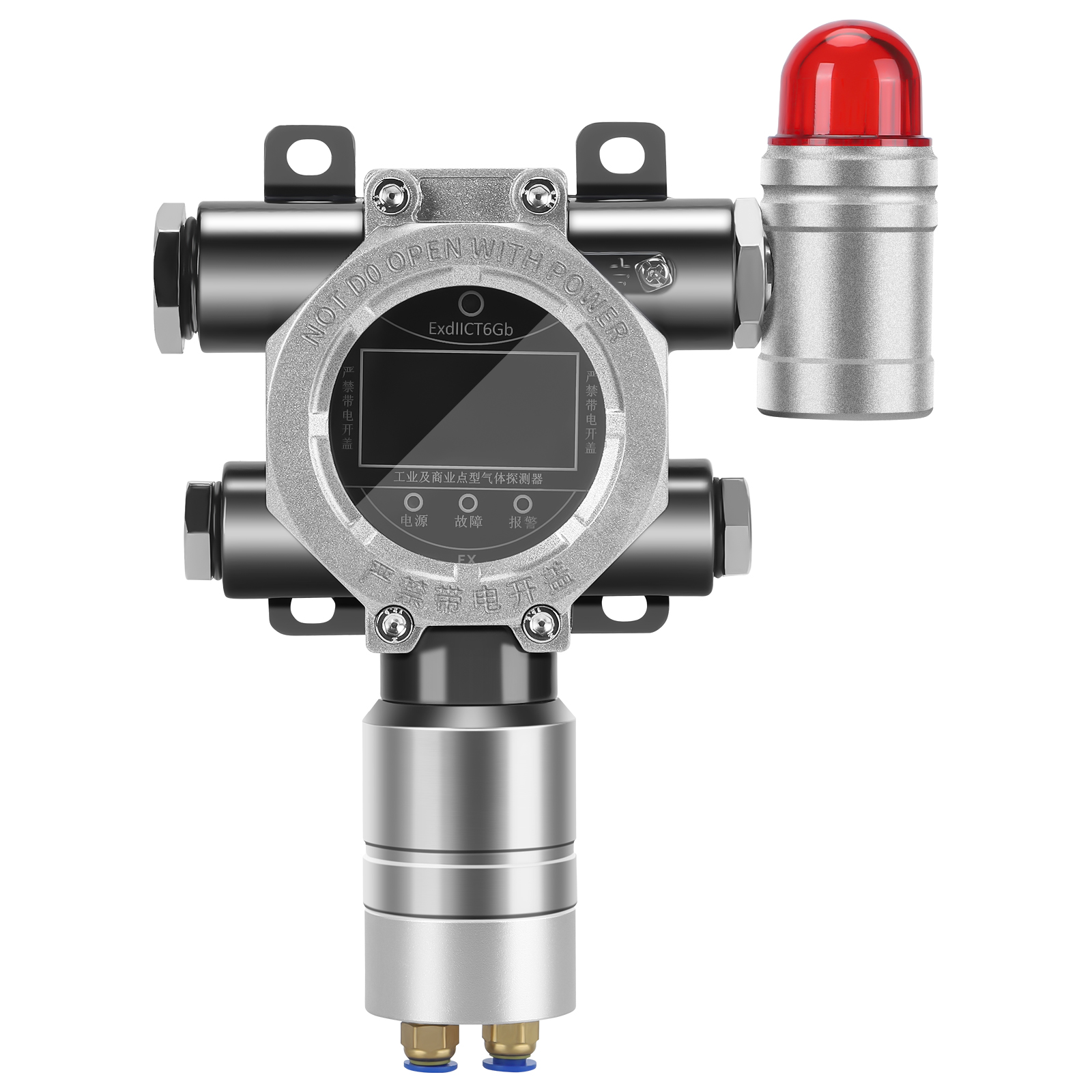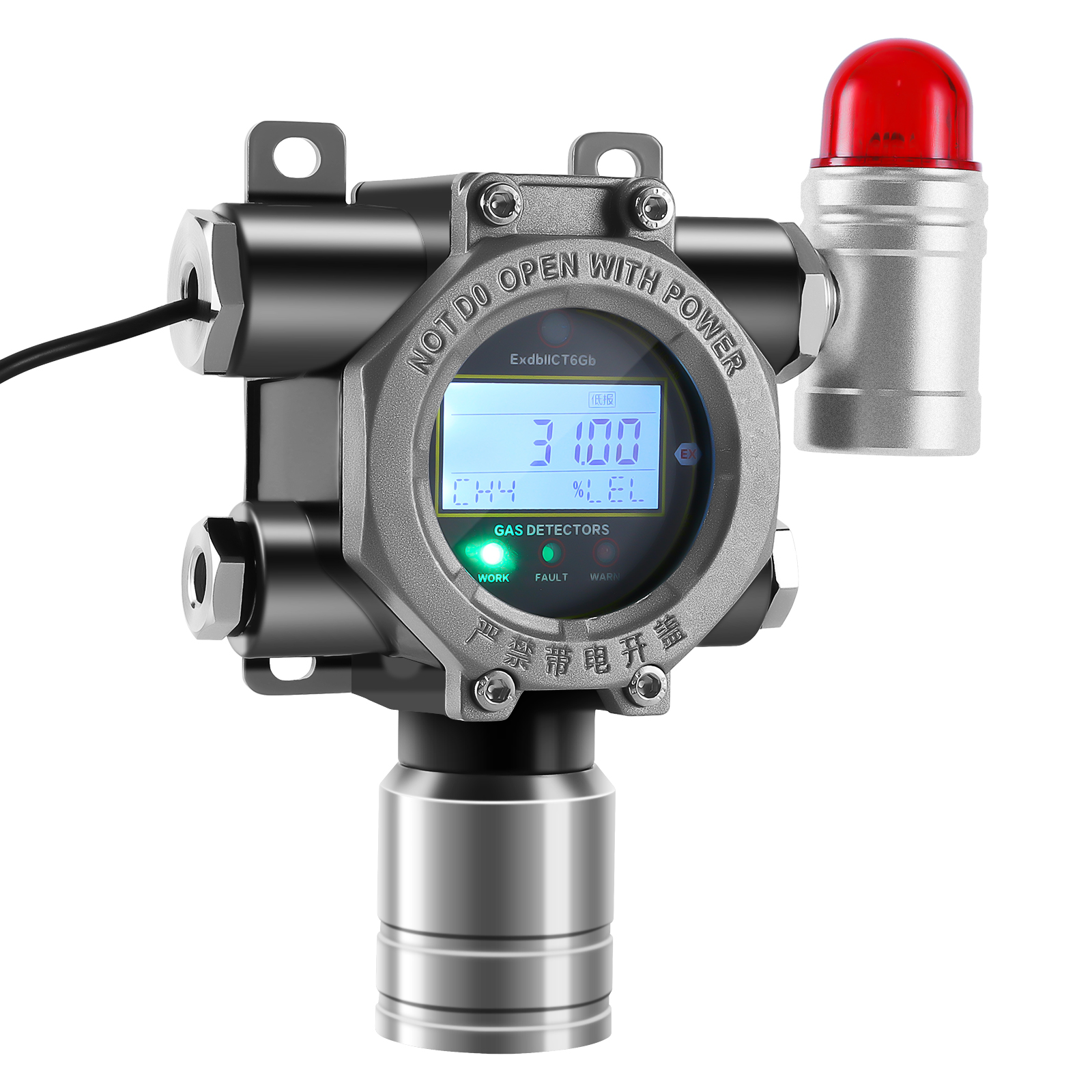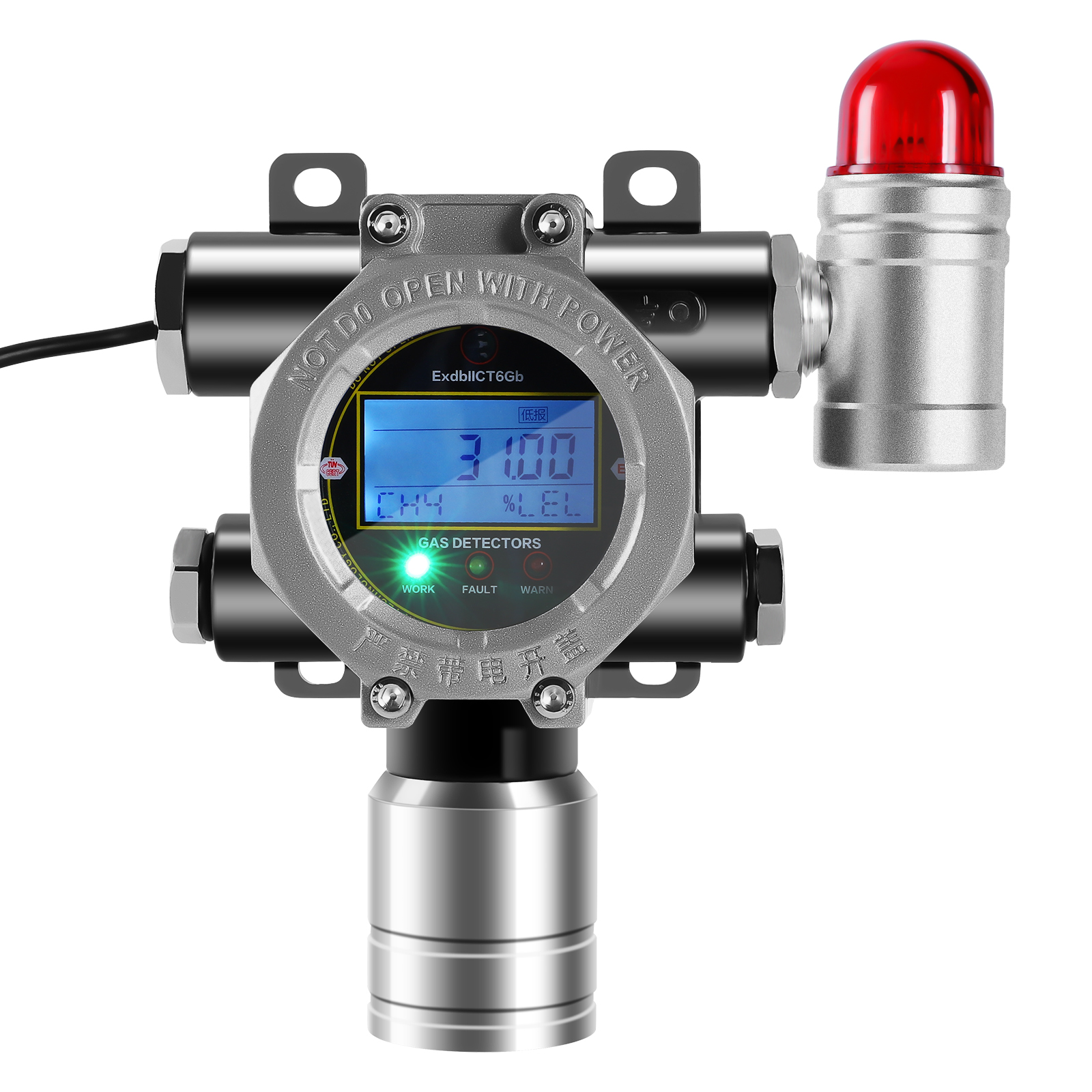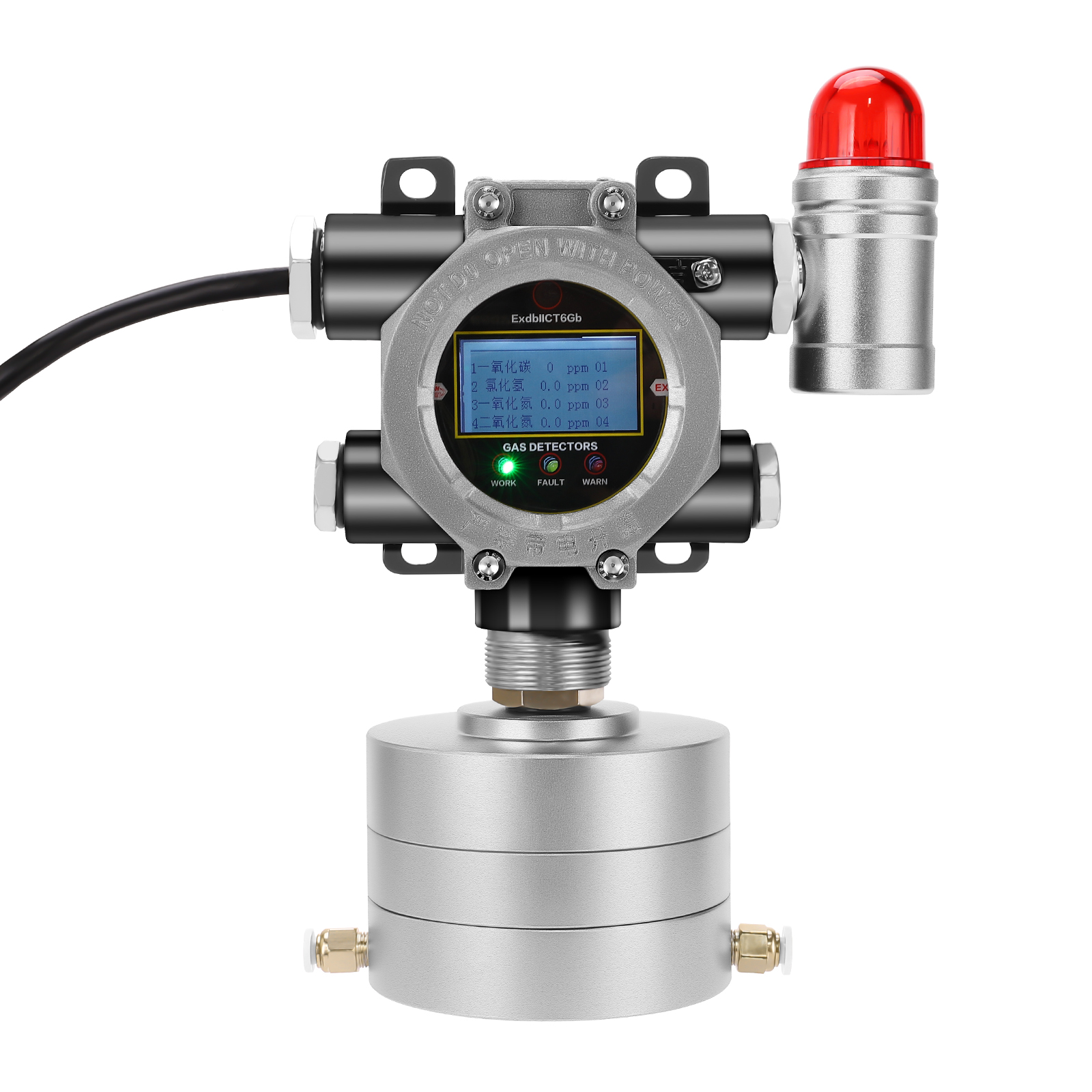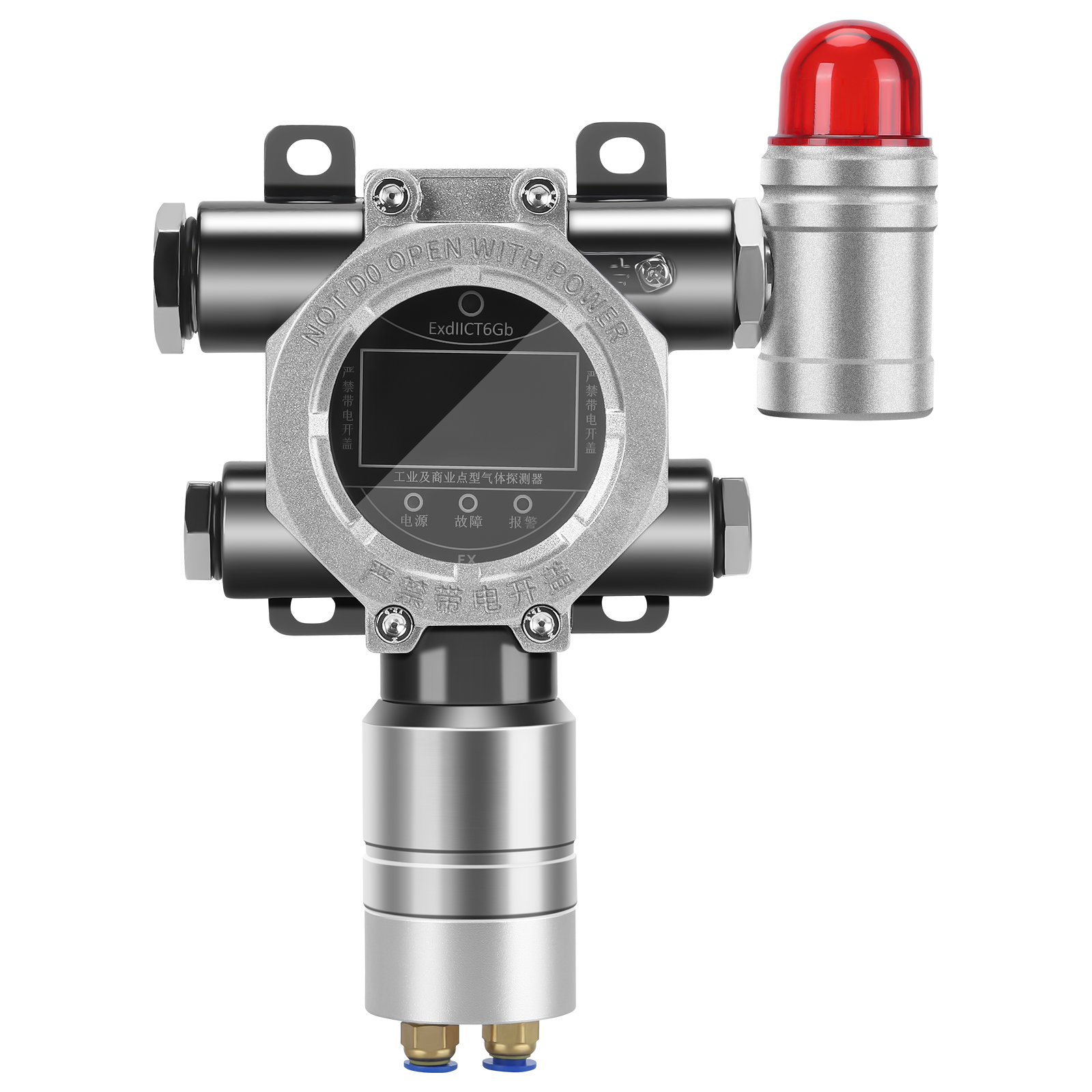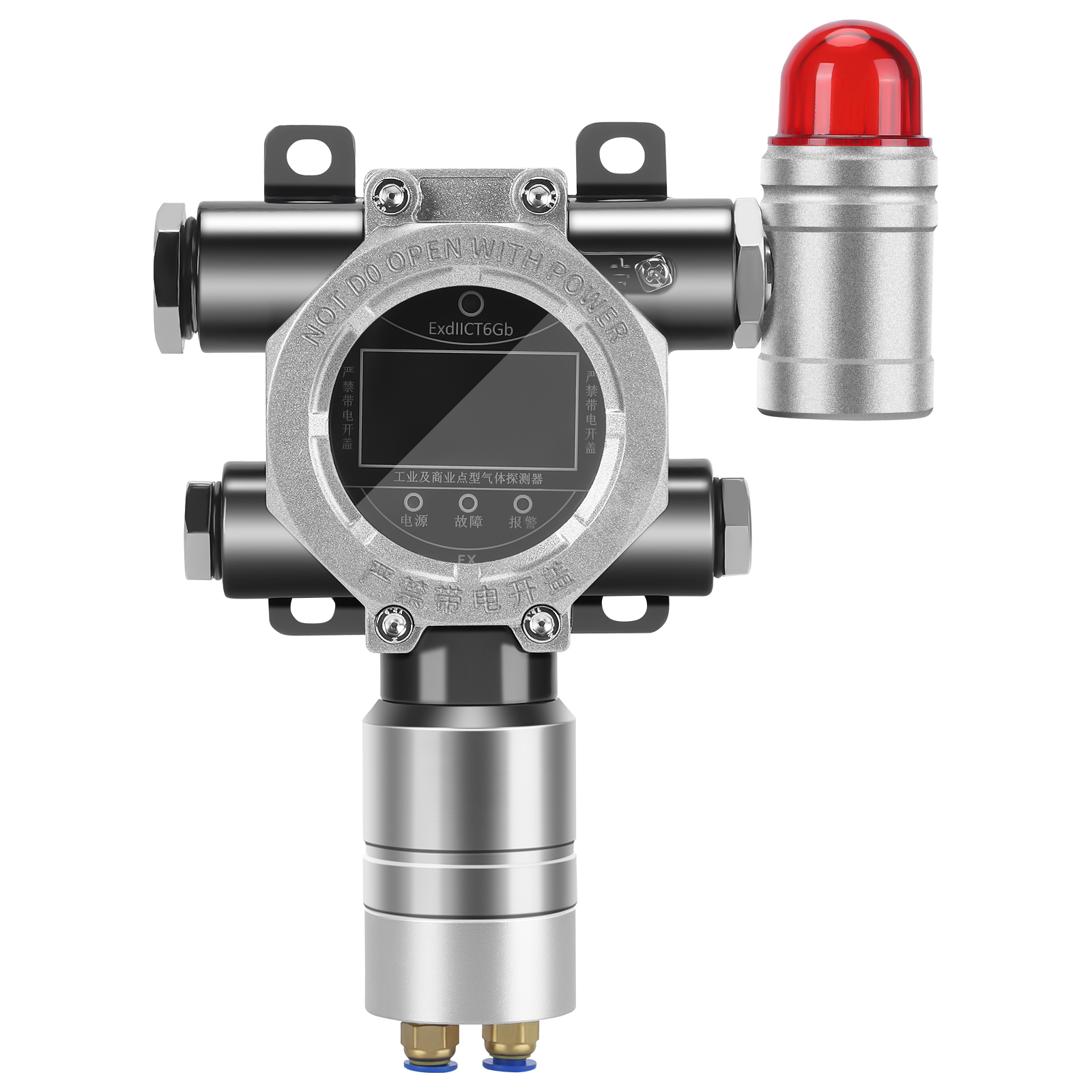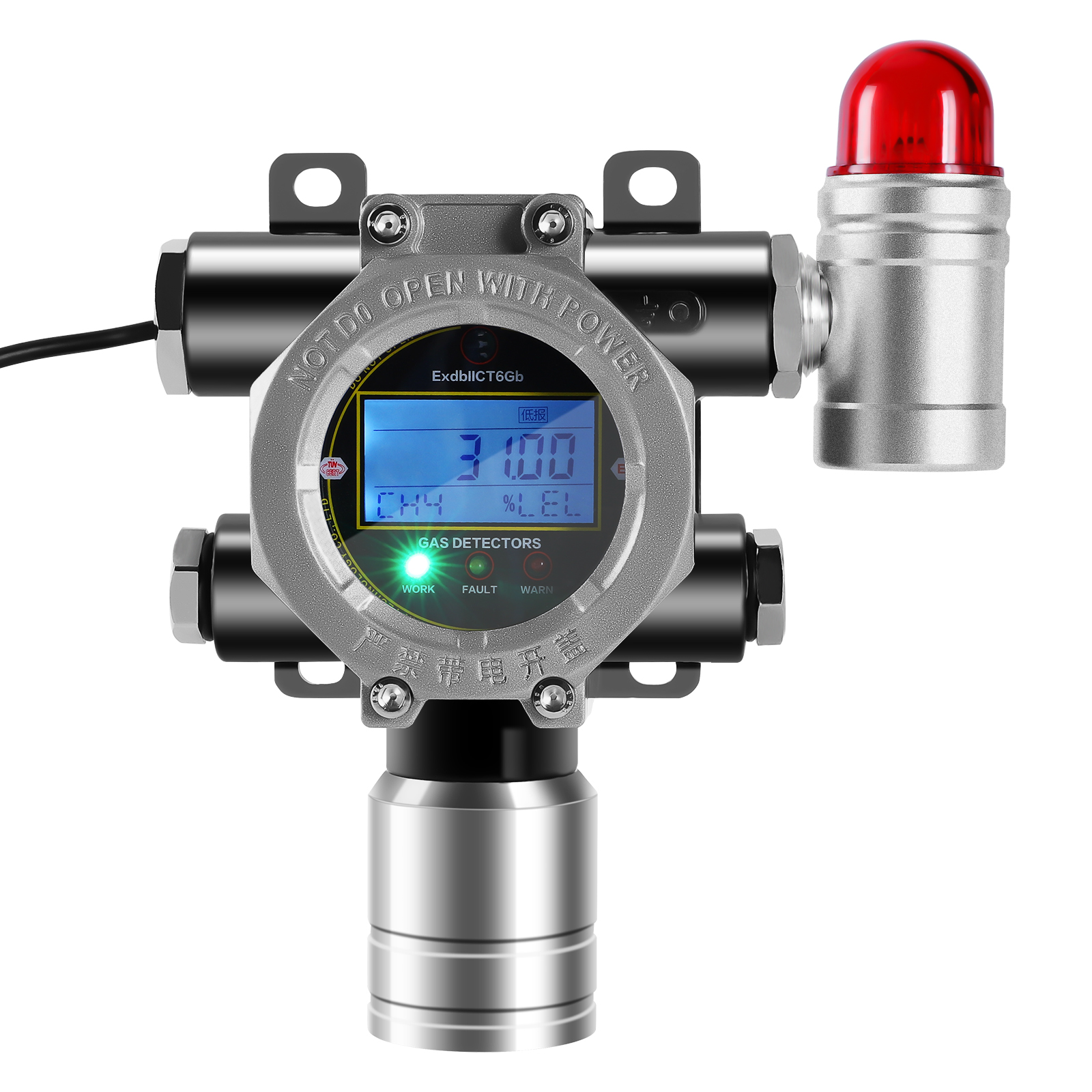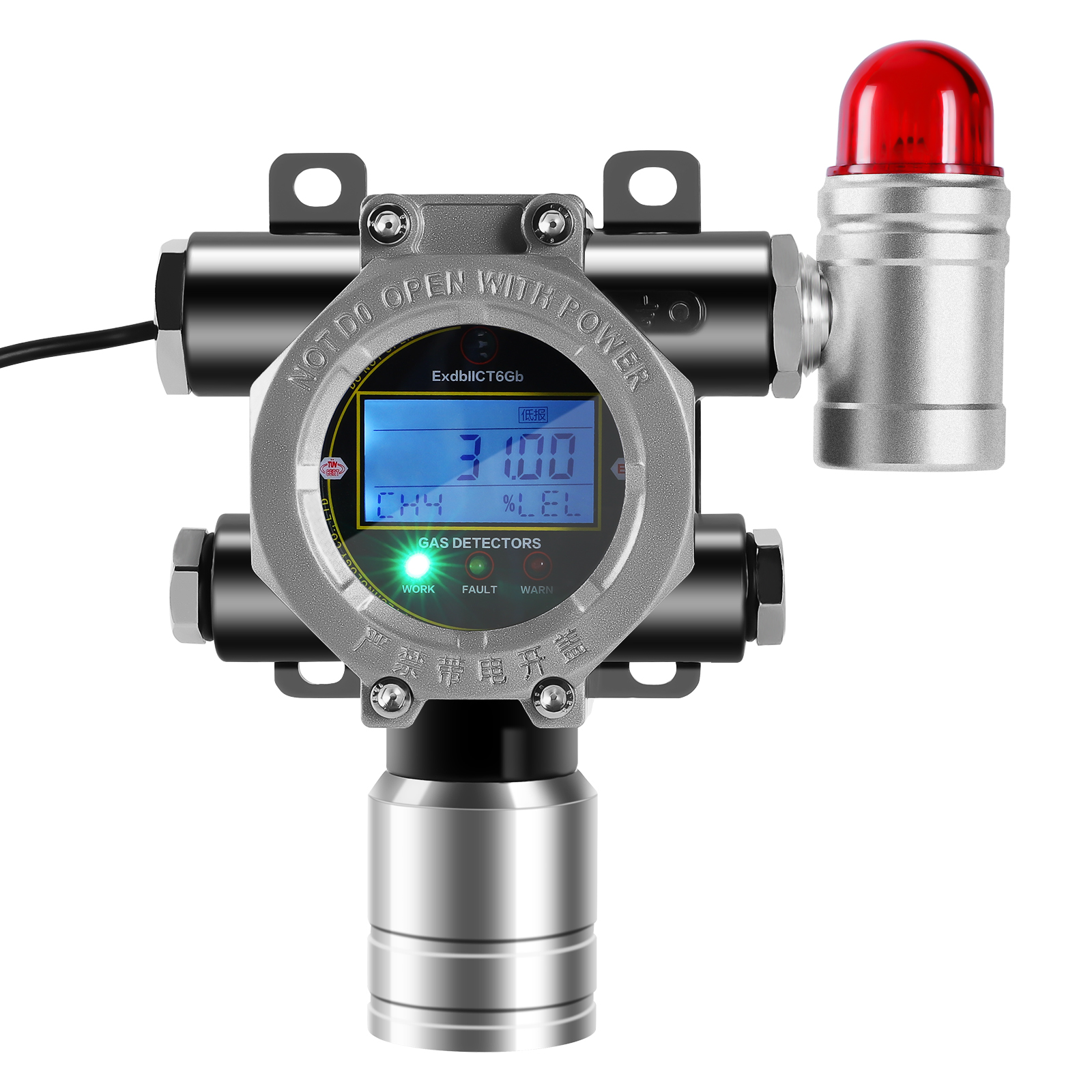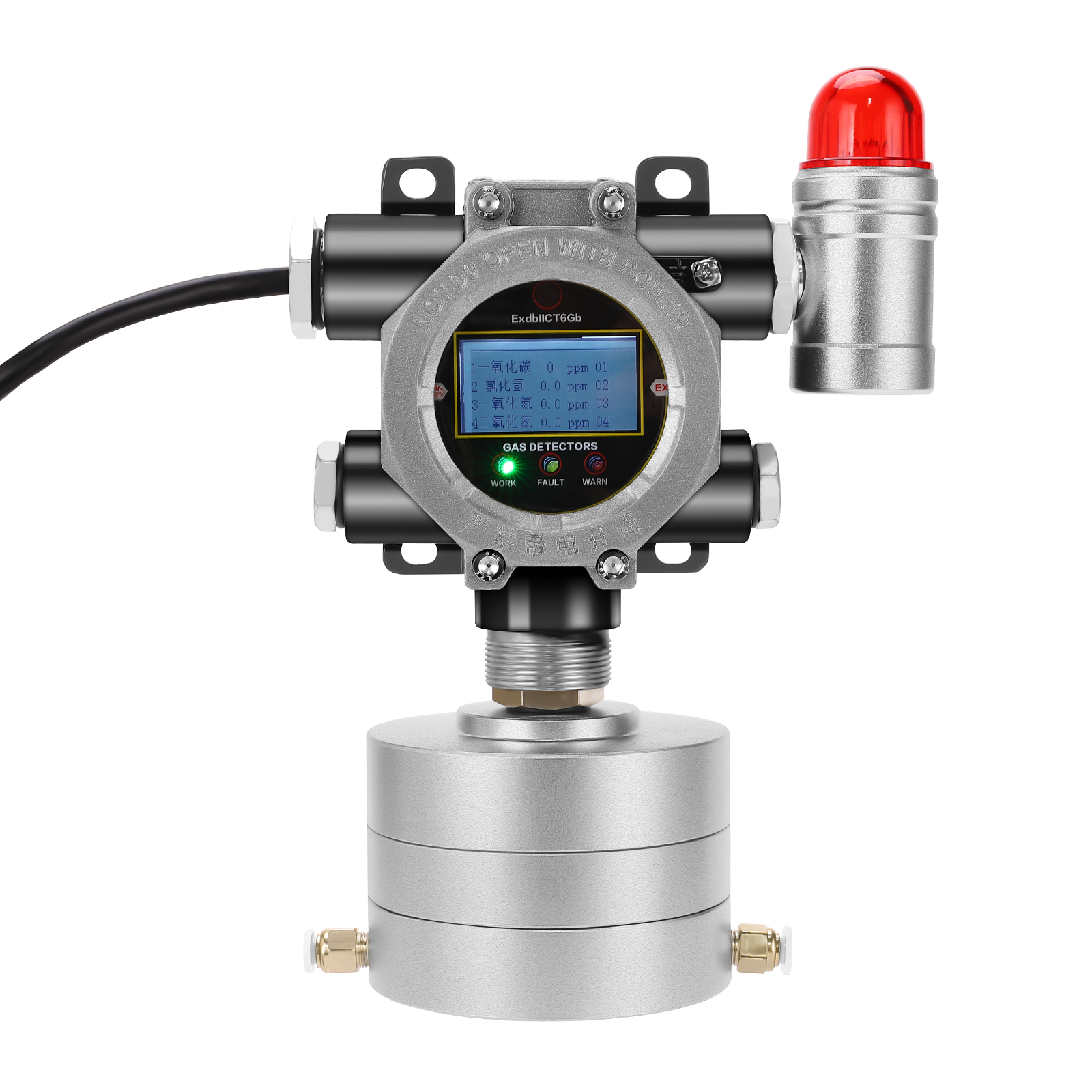
Methane Gas Detector Coal-to-Methanol Plant Area Safety Monitoring - SKA/CH4-BJQ
• Measuring range: 0~100%LEL
• Accuracy: ±3%FS
• Resolution: 0.1%LEL
• Output signal: 4~20mA, RS485 Modbus, relay alarm output
• Power supply: DC24V
• Medium temperature: -20℃~50℃
• Working pressure: 80~120kPa
• Protection rating: IP66
• Explosion-proof rating: Ex d IIC T6 Gb
• Response time: ≤30s
• Alarm setpoint: 25%LEL (adjustable)
• Installation method: wall-mounted
• Warranty: 1 year
Product Introduction
Methane Gas Detector Coal-to-Methanol Plant Area Safety Monitoring - Product Overview
The methane gas detector is a gas detection device used for safety monitoring in coal-to-methanol plant areas. Search keywords: methane gas detector, coal-to-methanol plant area safety monitoring, methane alarm. The detector can continuously detect methane concentration in the plant area. When the concentration exceeds the set value, it emits sound and light alarms and links ventilation and shutdown equipment. In coal-to-methanol plant area safety monitoring, the methane gas detector can reflect methane changes in gasification, shift conversion, and synthesis areas in real time, preventing leakage and explosion accidents.
Methane Gas Detector Coal-to-Methanol Plant Area Safety Monitoring - Working Principle
The methane gas detector uses a catalytic combustion sensor or infrared sensor to output an electrical signal by detecting methane concentration, and after circuit processing determines whether to alarm. In coal-to-methanol plant area safety monitoring, the methane gas detector supports 4-20mA, RS485, and Modbus outputs and can be connected to PLC, DCS, and gas alarm control systems. The detector has an explosion-proof enclosure and a high protection rating, suitable for high-temperature, high-dust, and corrosive environments in coal chemical industries.
Methane Gas Detector Coal-to-Methanol Plant Area Safety Monitoring - Application Scenarios
Methane gas detectors are widely used in the gasification furnace area, shift conversion area, synthesis tower area, and compression plant of coal-to-methanol production. In coal-to-methanol plant area safety monitoring, methane gas detectors can be installed near gasification furnaces, pipeline valves, and personnel inspection passages. The detector can be linked with exhaust fans, shutoff valves, and fire protection systems to achieve automatic handling. For large coal-to-methanol plants, methane gas detectors can also form a multi-point monitoring network and upload data uniformly to the control room.
Methane Gas Detector Coal-to-Methanol Plant Area Safety Monitoring - Technical Advantages
Methane gas detectors have advantages such as fast response, good stability, and convenient linkage. In coal-to-methanol plant area safety monitoring, methane gas detectors use industrial-grade sensors and explosion-proof design, suitable for long-term operation. The detector supports sound and light alarms, remote output, and fault self-diagnosis, and is easy to maintain. When selecting a methane gas detector, attention should be paid to detection range, accuracy, response time, explosion-proof rating, and output signal to ensure safe and effective coal-to-methanol plant area safety monitoring.