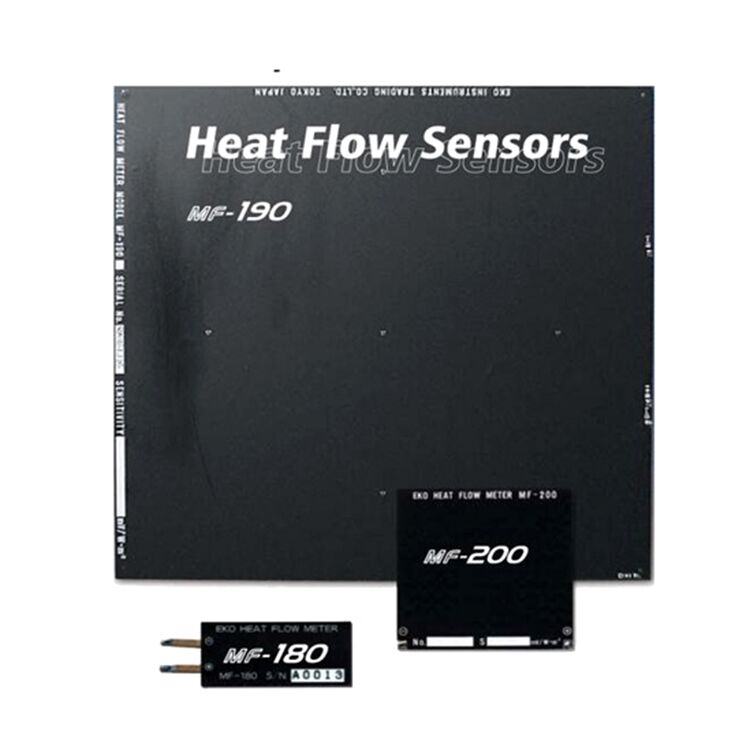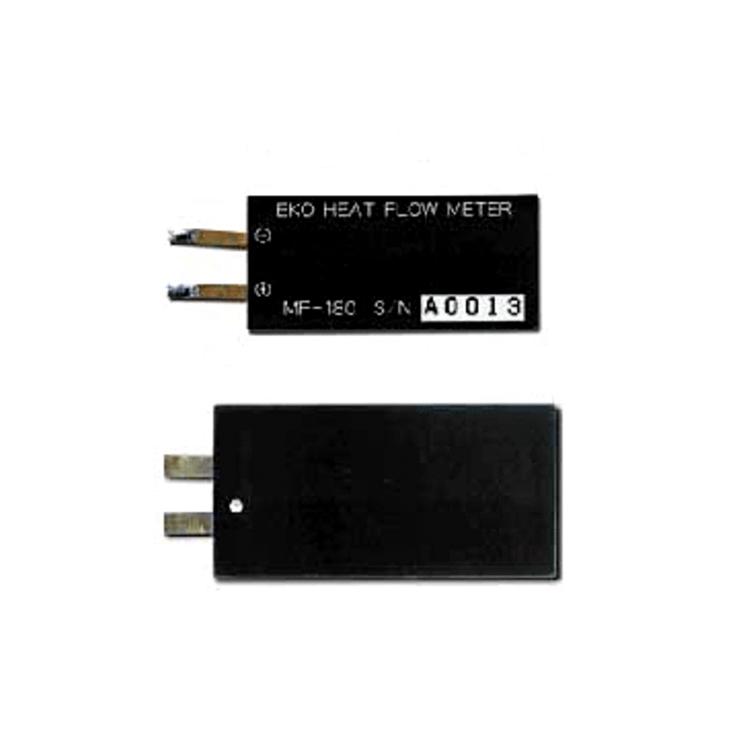


Japan EKO Heat Flux Sensor - MF-180
The EKO heat flux sensor is suitable for direct measurement of heat flow inside materials, as well as for measuring radiant flux of refrigerants. The testing principle
There are three modes of heat transfer: conduction, radiation, and convection. If the heat flux sensor is placed on the surface of a material, it measures the total heat from these three modes. If the sensor is placed inside the material, it directly measures heat transfer generated by conduction.
Product Introduction
I. EKO Heat Flux Sensor - MF-180 Description:
EKO Heat Flux SensorsThe MF-180 is suitable for direct measurement of heat flow inside materials, as well as for measuring radiant flux of refrigerants.
II. EKO Heat Flux Sensor - MF-180 Testing Principle:
There are three modes of heat transfer: conduction, radiation, and convection. If the heat flux sensor is placed on the surface of a material, it measures the total heat from these three modes. If the sensor is placed inside the material, it directly measures heat transfer generated by conduction.
QM=1/R
"QM" is the heat flux through two sensors
"R" is the thermal resistance
"R" is the difference in temperature across the sensor surface,
The temperature difference is measured with thermocouples, and the heat flux passing through can be directly measured. The coefficient 1/R is initially calibrated using a standard heat flux sensor. That is, in QM=KE, "K" is the calibration coefficient and "E" is the electromotive force, proportional to QM. However, the heat flux "QT" without a heat flux sensor is generally different from the aforementioned "QM". EKO thin-film heat flux sensors determine that "QT" and "QM" are almost identical.
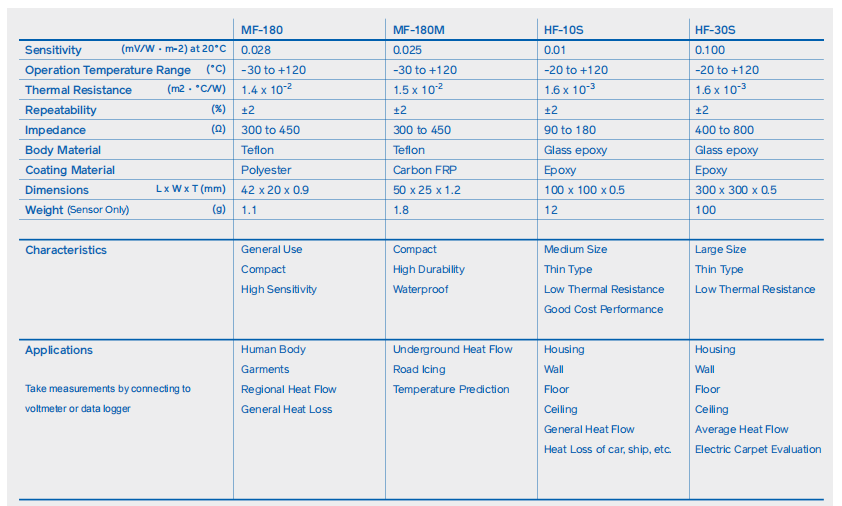
III. EKO Heat Flux Sensor - MF-180 Parameters