Water Environment Dissolved Oxygen Detection Smart Dissolved Oxygen Sensor - AMT-DO300
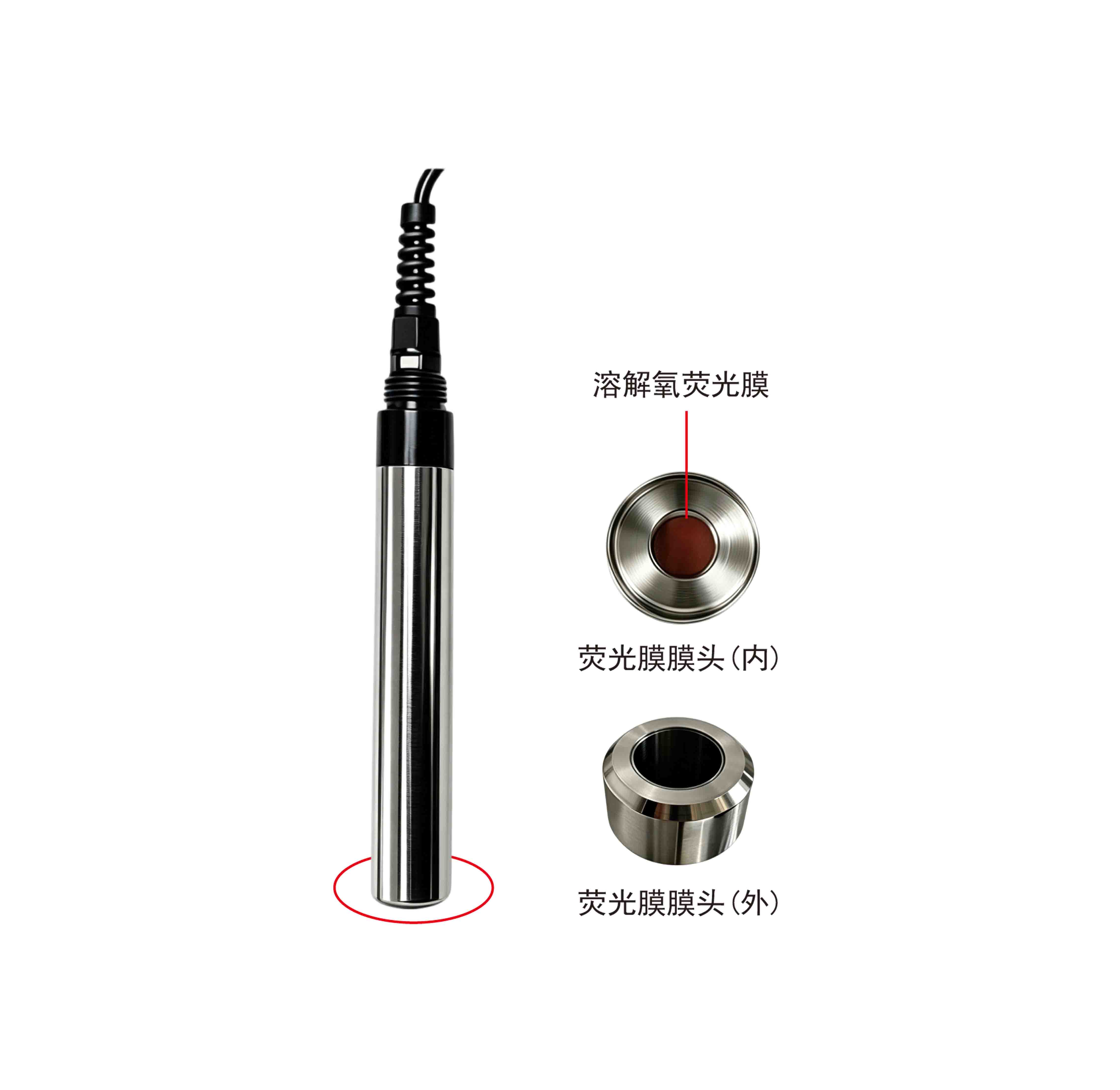
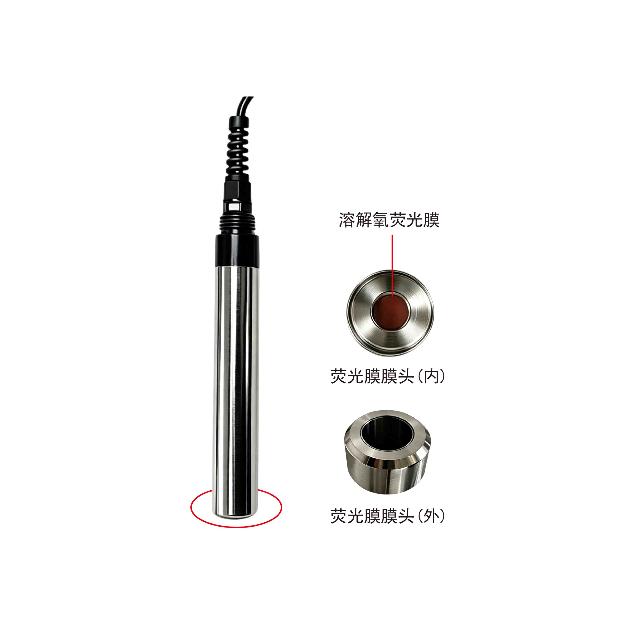
The fluorescent membrane at the probe tip is affected by blue light LED excitation produces red fluorescence; oxygen molecules in water quench the fluorescence. The higher the oxygen concentration, the shorter the fluorescence lifetime/phase difference.
Product Introduction
Water Environment Dissolved Oxygen Detection Smart Dissolved Oxygen Sensor
1. Working Principle
Mainstream types are divided into fluorescence quenching method (optical method, mainstream for smart sensors on the market) and smart polarographic (electrochemical), with fluorescence method accounting for the vast majority.
1. Fluorescence quenching principle (optical smart DO)
The fluorescent membrane at the probe tip is affected by blue light LED Excitation produces red fluorescence; oxygen molecules in water quench the fluorescence. The higher the oxygen concentration, the shorter the fluorescence lifetime / The shorter the phase difference. The sensor detects the fluorescence lifetime, and the built-in algorithm combines temperature and salinity for automatic compensation to directly calculate the dissolved oxygen concentration.
Features: measurement does not consume oxygen in the water, no water flow required, no electrolyte needed, and no polarization waiting time.
2. Smart polarographic (Clark electrode)
Based on electrochemical reduction reaction, internally integrated MCUAutomatic polarization, temperature compensation, digital output; still requires electrolyte and oxygen-permeable membrane, needs a certain water flow, and maintenance workload is greater than the fluorescence method.
Water Environment Dissolved Oxygen Detection Smart Dissolved Oxygen Sensor
II. Basic structure
Sensing probe: fluorescent membrane cap / Electrochemical electrode core sensing unit
Integrated temperature measurement module:NTC Temperature sensor for temperature compensation; some models have built-in salinity compensation
Embedded microprocessor: signal filtering, algorithm computation, calibration storage, fault diagnosis
Communication unit:RS 485(Modbus RTU) digital interface, some also come with 4 20mA Analog output
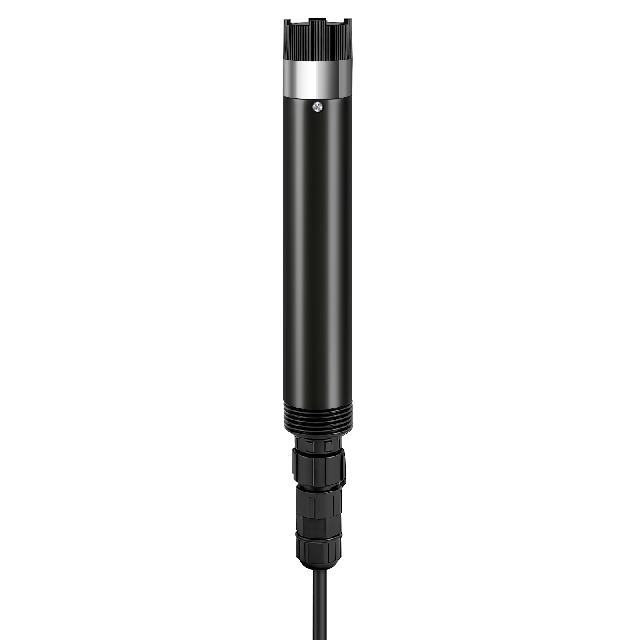
Mechanical housing:316L Stainless Steel / PPS Plastic,IP68 Waterproof submersible structure; high-end versions come with a self-cleaning mechanical brush to remove algae and sludge attachment.
III. Main technical features
Digital intelligent processing
The sensor completes signal computation locally and stores calibration parameters; supports automatic temperature, salinity, and pressure compensation to reduce environmental interference; comes with fault self-check and abnormal alarms, and can record working status.
Convenient communication, easy to connect to the Internet of Things
标准 Modbus 协议,可直接对接 PLC, data acquisition instruments, and cloud platforms, enabling remote reading and remote configuration without the need for an additional transmitter to convert signals.
Low maintenance (fluorescence type)
No electrolyte, no frequent electrolyte replacement; long calibration cycle; self-cleaning version greatly reduces manual wiping, suitable for long-term unattended online monitoring.
Measurement performance
Common measurement ranges:0 20 mg/L; some low-oxygen versions can reach μg/L 级别
Accuracy:±0.1~0.2 mg/L; resolution 0.01mg/L
T90 Response time:10 30s
Compared with traditional analog dissolved oxygen electrode
Table
Item Traditional analog dissolved oxygen electrode Smart dissolved oxygen sensor
信号输出 Analog current / Voltage RS485 Digital signal,Modbus
Computation and compensation Relies on external transmitter Sensor built-in algorithm for local compensation
Calibration data Stored in the transmitter Sensor locally stores calibration parameters
Installation and integration Complex wiring Simple wiring, directly connects to IoT systems
Self-diagnosis None Fault self-check, status feedback
Water Environment Dissolved Oxygen Detection Smart Dissolved Oxygen Sensor
IV. Typical application scenarios
Wastewater treatment: aerobic zone of biochemical tanks / Online monitoring of dissolved oxygen in anoxic zones, linked to the aeration system to control fan operation.
Water environment monitoring: surface water, reservoirs, rivers, lake buoy stations, groundwater monitoring.
Aquaculture: real-time monitoring of dissolved oxygen in fish ponds and shrimp ponds, linked to automatic aerators for intelligent aquaculture control.
Industrial processes: circulating cooling water, biological fermentation, food and pharmaceutical process water monitoring.
Seawater monitoring: supports salinity compensation, used for ocean and coastal monitoring.
Water Environment Dissolved Oxygen Detection Smart Dissolved Oxygen Sensor
V. Selection and usage precautions
For sewage and high-algae water bodies, prioritize fluorescence smart sensors with self-cleaning brushes to reduce drift caused by biological attachment.
The fluorescent membrane cap is a consumable part with a normal service life 6 18 months, and needs to be replaced upon expiration.
Although frequent calibration is not required, it is recommended to regularly compare and calibrate with standard methods to ensure data compliance.
Installation should avoid large bubble impact to prevent bubbles from blocking the probe and causing data fluctuations.
If you need, I can help you organize a smart dissolved oxygen sensor technical parameter template for proposals and bids.
Main Application Areas
- Aquaculture — Monitor dissolved oxygen levels in fish ponds and hatcheries to ensure optimal conditions for aquatic life.
- Environmental Monitoring — Track dissolved oxygen in rivers, lakes, and reservoirs to assess water quality and detect pollution events.
- Wastewater Treatment — Control aeration processes in sewage treatment plants by measuring DO in activated sludge basins.
- Industrial Process Control — Monitor dissolved oxygen in industrial water systems, such as cooling water or process water, to prevent corrosion and ensure product quality.
Keywords:dissolved oxygen sensor, DO sensor, water quality sensor, online DO meter, smart DO probe, aquaculture oxygen sensor, wastewater DO sensor, water environment monitoring