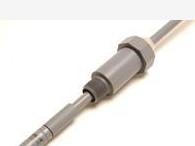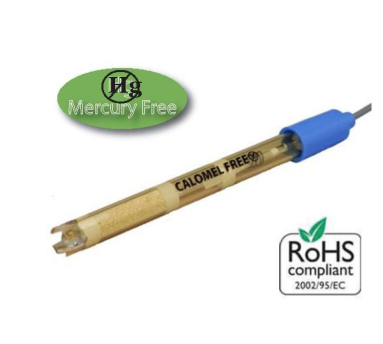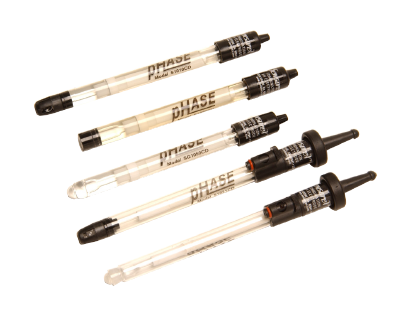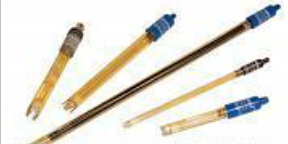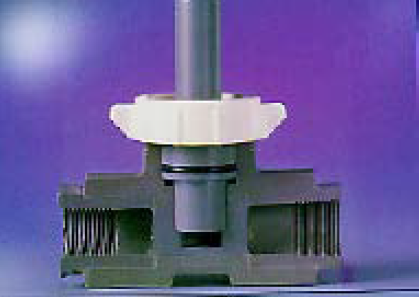

Water Quality Sensor (S600 pH Industrial Electrode - S645CD
Quick passage design saves time and cost
Easy installation without auxiliary tools
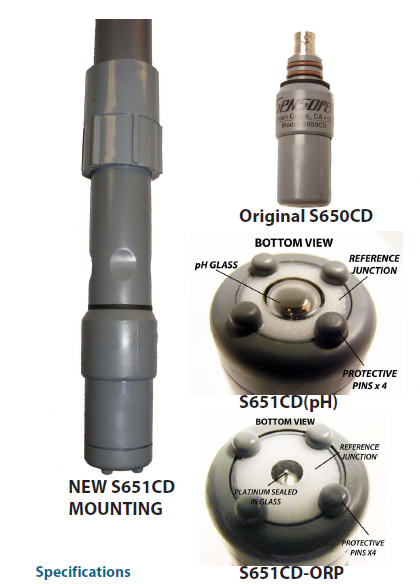
Anti-fouling flat surface design
Optional CPVC or PVDF material construction
Optional with or without temperature compensation
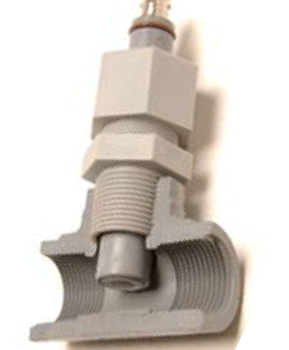
Bypass installation, especially suitable for food, dairy, or oil pipelines, can be isolated with a separate valve.
Product Introduction
Detailed introduction of Water Quality Sensor S600 pH Industrial Electrode - Bypass Installation
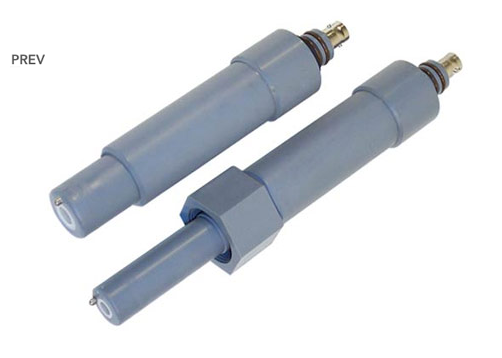
Model:S645CD, S645CD-HT, S645CD-ORP, S645KD, S645KDORP,S645KD-HT
Water Quality Sensor S600 pH Industrial Electrode - Bypass InstallationApplication:
pH industrial electrode - bypass installation is mainly used for sanitary samples and continuously running samples: for example, online pH measurement in the food industry, online pH measurement in the beverage industry, online pH measurement in the beer industry, and online pH measurement in oil products.
Water Quality Sensor S600 pH Industrial Electrode - Bypass Installation Parameters:
Measurement range: 0-14 pH (0-12 pH without sodium ions), ORP: +/-2000 mV
Wetted materials: CPVC/HDPE (for "-CD" models), PVDF (for "-KD" models)
Measuring electrode materials: pH glass (pH), graphite or platinum (ORP)
Temperature/Pressure range: (all "-CD" models) = 0°C* - 75°C (0-100 psig), 80°C (0-85 psig), (all "-KD" models) = 0°C* - 100°C (0-100 psig)
Reference electrode: silver or silver chloride, double junction
Water Quality Sensor S600 pH Industrial Electrode - Bypass Installation Features:
The bypass installation is well suited for samples containing oil substances or viscous liquids.
The flat surface design enables self-cleaning of the electrode tip by controlling the flow rate in the flow cell.
When used in viscous environments, although the flow rate is limited in such environments, even at low flow rates, accurate measurement can still be achieved as long as fresh sample flows over the measuring electrode.