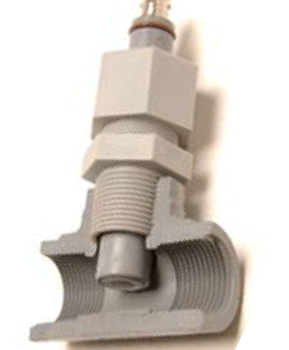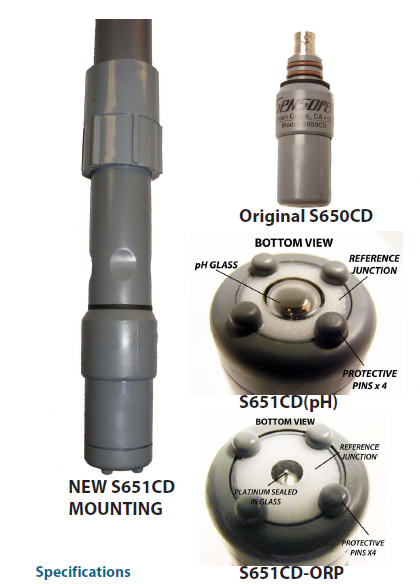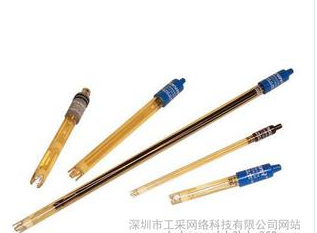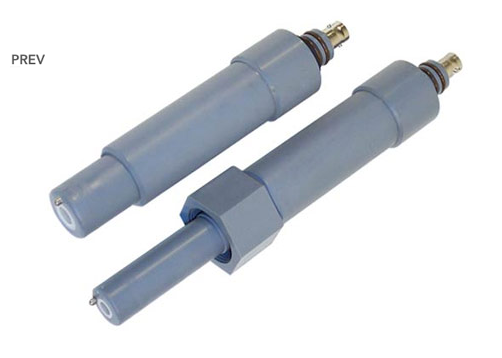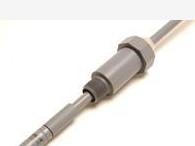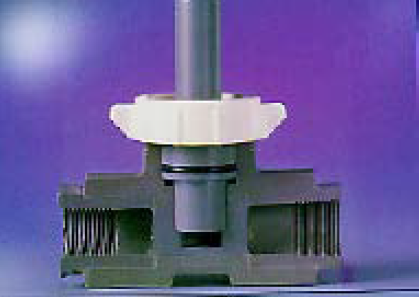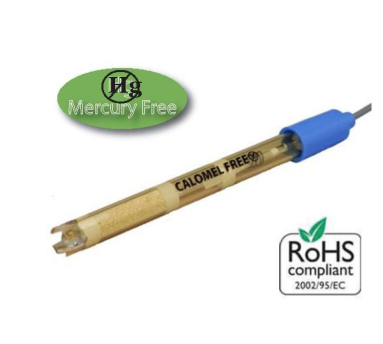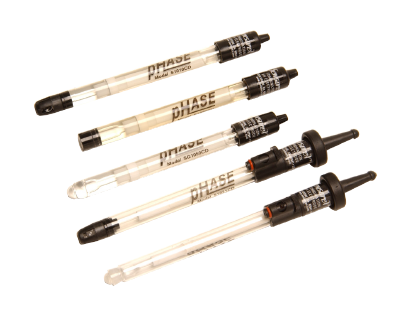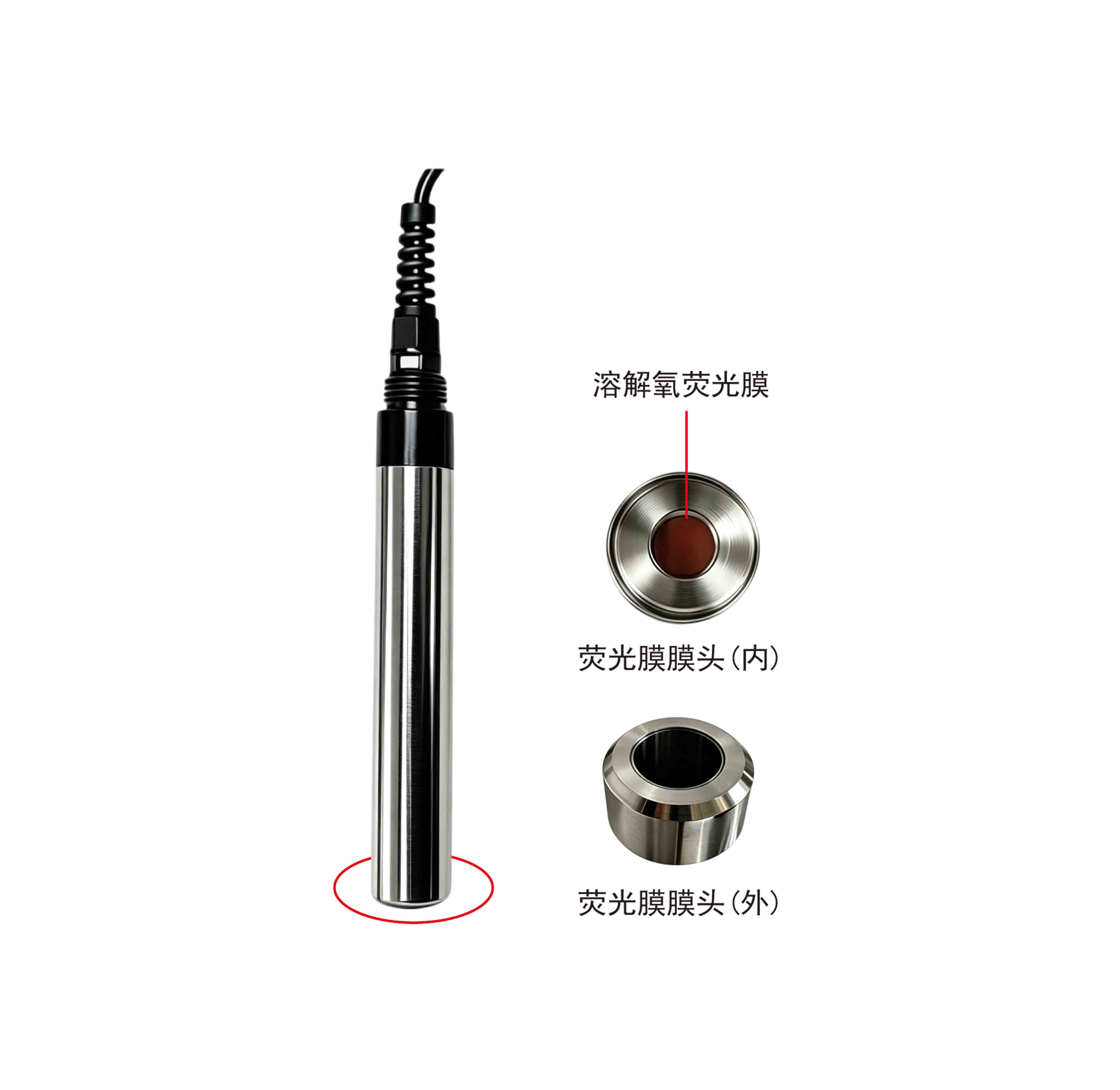

Intelligent dissolved oxygen water quality sensor dissolved oxygen online detector - AMT-DO300
-
Confirm measurement range: Select appropriate range based on application scenario (e.g., surface water or high-concentration industrial water).
-
Consider maintenance convenience: Prioritize models with long fluorescence cap life (e.g., 2 years) and support for self-cleaning brushes to significantly reduce later maintenance costs-3-5。
-
System integration requirements: Confirm whether the sensor signal output (RS485 Modbus) is compatible with your PLC, SCADA systems-6-9。
-
Environmental adaptability: In harsh water quality (e.g., high salinity, strong corrosion) environments, choose a full titanium alloy or 316L stainless steel shell and confirm IP68 protection rating
Product Introduction
Intelligent dissolved oxygen water quality sensor online dissolved oxygen detector
The intelligent dissolved oxygen water quality sensor is aFluorescence quenching principleA digital optical sensor used for real-time, continuous measurement of dissolved oxygen (DO) concentration in water-1-3. Its biggest difference from traditional electrochemical sensors (such as polarographic or galvanic methods) is:No electrolyte consumption, no membrane replacement, no frequent calibration, and not affected by water flow rate
Intelligent dissolved oxygen water quality sensor online dissolved oxygen detector
Core technical principle: Fluorescence quenching method
The core of the sensor is covered withFluorescent sensitive filmOptical probe (containing fluorescent substances such as ruthenium complexes)-2-10. Its working process is as follows:
-
Excitation: The built-in LED light source inside the device emits light of a specific wavelengthBlue light, irradiating the fluorescent film-2-4。
-
Fluorescence generation: Fluorescent substances are excited and emitRed light-2-4。
-
Quenching effect: When dissolved oxygen molecules in water contact the fluorescent film, they "quench" the fluorescence, i.e., take away energy, causing the red light toDecreased intensity, shortened lifetime-2-10。
-
Signal and calculation: The sensor detects the intensity or lifetime change of red light, followingStern-Volmer equation, combined with built-inTemperature, salinity, and air pressure compensationAlgorithm to accurately calculate dissolved oxygen concentration
-
Intelligent dissolved oxygen water quality sensor online dissolved oxygen detector
-
Traditional electrode method, intelligent fluorescence method sensors have significant advantages, which can be summarized in Table 7-10 below:
Characteristic dimension Intelligent fluorescence method sensor Traditional electrochemical method sensor
Measurement principle Physical fluorescence quenching, no chemical reaction-2-7 Electrode oxidation-reduction chemical reaction-2
Consumables No electrolyte required, no membrane replacement needed-4-5 Requires regular replenishment of electrolyte, replacement of membrane and electrode-7
Calibration and maintenance Basically maintenance-free, fluorescence cap life up to more than 2 years-3-4-5 Requires frequent calibration, electrode easily contaminated and aged-7
Affected by flow rate Not affected, stable measurement-4-10 Requires certain flow rate, consumes oxygen when stationary causing errors-4
Anti-interference capability Strong, not affected by sulfides, heavy metals, etc.-4-7 Weak, easily contaminated by sewage and chemicals-7
Response speed Fast (T90 usually <60 seconds, can reach 3-5 seconds)-7-8 Slower, requires polarization time-7
Signal output Intelligent digital output (RS485 Modbus), easy to integrate-3-6 Mainly analog signal (4-20mA)
Measurement accuracy High, e.g., ±0.1mg/L @ <5ppm-4-5 Greatly affected by environmental interference, accuracy prone to drift -
Intelligent dissolved oxygen water quality sensor online dissolved oxygen detector
-
🌊 Typical Application Scenarios
-
Due to its outstanding stability, low maintenance, and anti-interference capability, intelligent dissolved oxygen sensors are widely used in multiple fields-10:
Wastewater treatment: Monitoring dissolved oxygen in aeration tanks and anoxic tanks to optimize aeration control, ensure biological treatment efficiency, and save energy-5-10.
Aquaculture: Real-time monitoring of dissolved oxygen levels in fish ponds and shrimp ponds, linked with aeration equipment to prevent losses due to hypoxia-5-10.
Environmental monitoring: Used for water quality assessment and ecological health monitoring of surface water (rivers, lakes) and drinking water sources-10.
Industrial process control: Used for closed-loop dissolved oxygen control in pharmaceutical, chemical fermentation tanks, and food and beverage industries-5.
Power industry: Monitoring dissolved oxygen in boiler feedwater and circulating cooling water to prevent equipment corrosion-11.
📊 Key Technical Parameters (Typical Values)
Parameters vary slightly between different models and manufacturers, but are usually within the following ranges-3-5-6:Parameter item Typical indicator
Measurement range 0~20.00 mg/L (or 0~200% saturation)
Resolution 0.01 mg/L
Measurement accuracy ±0.1 mg/L (when <5 mg/L) or ±1%-2% of reading
Temperature compensation Automatic compensation (0~50℃), some support salinity compensation
Response time T90 < 60 seconds (some high-end models can reach within 30 seconds)
Communication interface RS485 (Modbus RTU protocol), some also support 4-20mA
Supply voltage DC 12V/24V
Protection rating IP68 (can work submerged for long periods)
Sensor material 316L stainless steel / titanium alloy and other corrosion-resistant materials
🔍 Selection and Usage Recommendations
Confirm measurement range: Select appropriate range based on application scenario (e.g., surface water or high-concentration industrial water).Consider maintenance convenience: Prioritize models with long fluorescence cap life (e.g., 2 years) and support for self-cleaning brushes to significantly reduce later maintenance costs-3-5.
System integration requirements: Confirm whether the sensor signal output (RS485 Modbus) is compatible with your PLC, SCADA systems-6-9.
Environmental adaptability: In harsh water quality (e.g., high salinity, strong corrosion) environments, choose a full titanium alloy or 316L stainless steel shell and confirm IP68 protection rating-5-8.
Main Application Areas
- Wastewater Treatment — Monitor dissolved oxygen levels in aeration tanks to optimize biological treatment processes and ensure efficient operation.
- Aquaculture — Maintain optimal oxygen levels in fish ponds and hatcheries to promote healthy aquatic life and prevent oxygen depletion.
- Environmental Monitoring — Measure DO in rivers, lakes, and reservoirs to assess water quality and detect pollution events.
- Industrial Process Water — Monitor dissolved oxygen in boiler feedwater or cooling water to prevent corrosion and ensure process efficiency.
Keywords:dissolved oxygen sensor,DO sensor,water quality sensor,online DO meter,fluorescence DO sensor,RS485 DO sensor,AMT-DO300,water treatment sensor