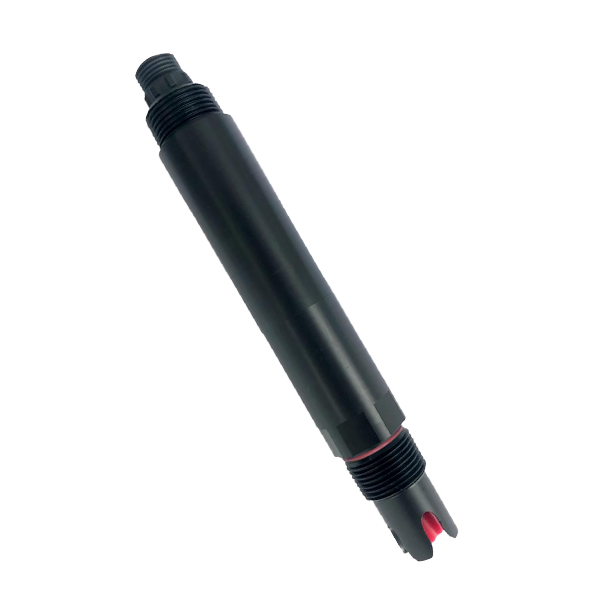
Industrial water residual chlorine sensor - AMT/YL-CGQ
Measurement parameters
• Measurement range: 0–2 mg/L; 0–5 mg/L; 0–10 mg/L (optional)
• Measurement accuracy: ±0.02 mg/L or ±3%FS (whichever is greater)
• Resolution: 0.001 mg/L
• Principle: constant voltage method (membrane electrode)
• pH effect: Recommended sample water pH 6.5–8.5; pH compensation required
• Response time: T90 ≤60s
Working conditions
• Medium temperature: 0–45°C
• Working pressure: 0–0.4 MPa (0–4 bar)
• Flow rate: 100–300 mL/min (flow-through installation, stable flow rate)
• Housing material: PVC / PVDF (optional)
Product Introduction
Industrial water residual chlorine sensor: industrial water treatment monitoring
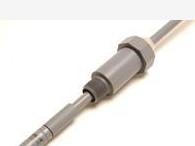
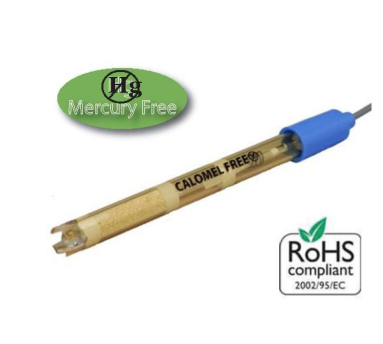
Industrial water residual chlorine sensors are specially designed for industrial water treatment systems. Search keywords: industrial water residual chlorine sensor, industrial residual chlorine monitoring, industrial water treatment residual chlorine sensor. The sensor is suitable for residual chlorine monitoring in cooling water, circulating water, boiler make-up water, and process water. In industrial water processes, excessive residual chlorine can corrode equipment, while too little cannot inhibit microbial growth, so continuous monitoring is required. Industrial water residual chlorine sensors adopt an industrial-grade design, with a corrosion-resistant housing and a protection rating of IP65 or IP68.
Industrial water residual chlorine sensor: supports automatic control
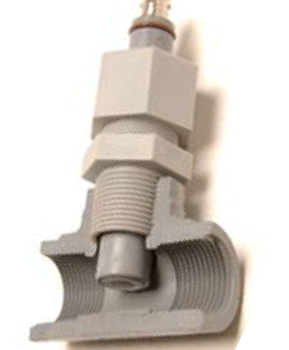
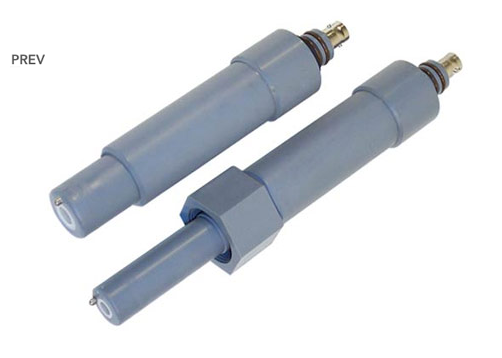
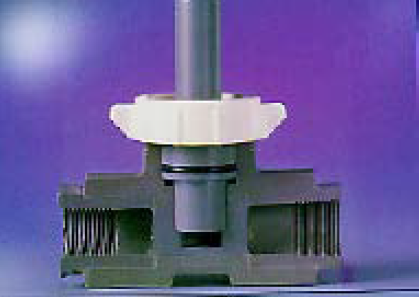
Industrial water residual chlorine sensors support RS485, 4-20mA, and Modbus outputs, and can be connected to DCS, PLC, and SCADA systems. Sensor installation methods include pipeline, immersion, and flow-through types, suitable for different industrial site conditions. Industrial water residual chlorine sensors help operation and maintenance personnel control chlorine dosing, preventing equipment corrosion and the growth of bacteria and algae. The sensors feature fast response, good stability, and low maintenance. Industrial water residual chlorine sensors are widely used in the chemical, power, metallurgy, and manufacturing industries.
Industrial water residual chlorine sensor: improve operating efficiency
Industrial water residual chlorine sensors can be used in combination with other industrial water treatment instruments to form a complete monitoring solution. The sensors help industrial enterprises save water and chemical costs and achieve green production. Industrial water residual chlorine sensors can continuously reflect changes in water quality and provide decision-making basis for operation and maintenance personnel. Reasonable use of industrial water residual chlorine sensors can improve the operating efficiency of industrial water treatment systems.
Industrial water residual chlorine sensor: stable and durable
Industrial water residual chlorine sensors perform stably in high-temperature, high-humidity, and strong electromagnetic interference environments. Proper calibration and maintenance can ensure accurate data. The long-term stable operation of industrial water residual chlorine sensors is of great significance to the safe operation of industrial water treatment systems.
Industrial water residual chlorine sensor: easy maintenance
Industrial water residual chlorine sensors usually require regular cleaning and calibration to ensure measurement accuracy. Choosing industrial water residual chlorine sensors that are easy to maintain can reduce operating costs. Industrial water residual chlorine sensors help enterprises improve water quality management.
Main Application Areas
- Cooling Water Systems — Monitors residual chlorine to prevent corrosion and microbial growth in cooling towers and heat exchangers.
- Circulating Water Treatment — Ensures optimal chlorine levels to maintain water quality and system efficiency in recirculating loops.
- Boiler Feedwater — Controls chlorine concentration to protect boiler internals from corrosion and scaling.
- Process Water — Provides continuous chlorine monitoring for industrial processes requiring precise water quality.
Keywords:residual chlorine sensor, industrial water sensor, chlorine analyzer, water quality sensor, amperometric chlorine sensor, online chlorine monitor, industrial water treatment, chlorine measurement