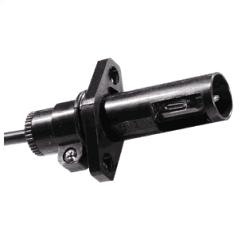

Product Introduction
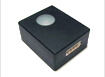
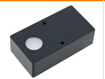
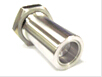
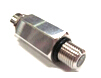
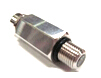
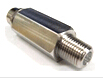
Introduction to UV Sensor FD1/S
- Depending on the fuel type, the combustion process generally emits more or less light radiation in the ultraviolet, visible, or infrared spectrum.
- Indeed, gas oil combustion will produce a very bright flame, easily detectable by ordinary sensors using photocells; however, gas oil combustion also produces many incompletely burned (unburned) substances, which gradually pollute and dirty the combustion chamber.
- By properly adjusting the combustion, this problem can be solved and the flame quality improved, making it similar to gas, natural gas, or propane combustion (blue flame).
- Since photocells are not sensitive to blue flame light, flame detection in most gas burners is achieved through the ionization principle; to achieve this, it is sufficient to simply 'immerse' an electrode (electrically insulated metal rod) in the flame.
- However, applying this principle in gas burners is not simple, because the electrode immersed in the flame easily gets dirty (eventually leading to failure) and also changes the turbulence in the combustion chamber, causing serious problems.
- For the above reasons, it is necessary to detect the presence of flame through UV-sensitive detectors.
- It has been verified that the FDx/S sensor is also suitable for gas applications where electrodes cannot be used (e.g., high-temperature environments).
Description of UV Sensor FD1/S
- The FDx/S sensor uses a silicon pre-amplified active element, specifically designed for blue flame burner applications; the sensor's UV light detection limit is 310nm.
- The appropriate electronic interface inside the device makes it compatible with all BRAHMA devices for gas applications. This sensor is especially suitable for use with DS11, DS11P, DSM11, DSM11P, and SM592N/S.
- For single-electrode applications DSM11 and DSM11P, this sensor is strongly recommended.
- To meet the broad market requirements, this sensor is available in two versions: FD1/s (front view) and FD1/S (side view). In applications where the flame is far from the detection point, a high-sensitivity sensor is required.
- Please note that the FDx detector is sensitive to the ultraviolet part of visible light, so it is recommended to install it in a closed combustion chamber equipped with a burner, or in applications where visible light is completely shielded.
Features of UV Sensor FD1/S
- - Supply Voltage: 220-240V @ 50/60Hz
- On request: 110-120V @ 50/60Hz
- - Power Consumption: 1VA
- - Visible Light Band: 290-350nm
- - Acceptance Angle: 8°
- - Output Current: 50∝A
- - Operating Temperature: -20~ +60℃
- - Humidity: 95%
Main Application Areas of UV Sensor FD1/S
In the industrial field, flame detectors are widely used in large enterprises. Infrared and ultraviolet flame detectors are widely used in enterprise quality and fire protection, flame monitoring, and temperature detection.
When fuel (oil, gas, coal gas, natural gas, coal powder, etc.) burns,
the flame produces a certain intensity of ultraviolet, visible light, and infrared. According to the flame spectrum distribution of different fuel combustion, the corresponding flame detector is selected.
UV detectors have good stability, high sensitivity, and strong anti-interference capability. Generally, UV detectors are often selected.
Recommended Products