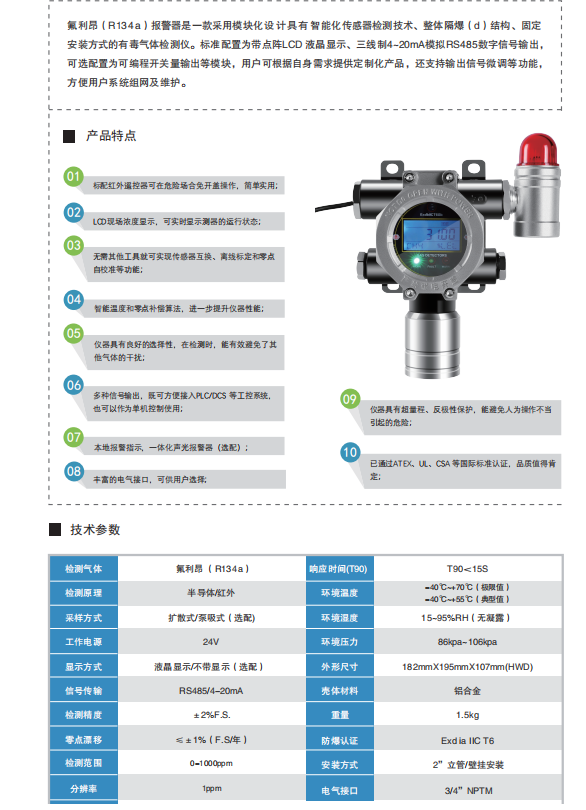
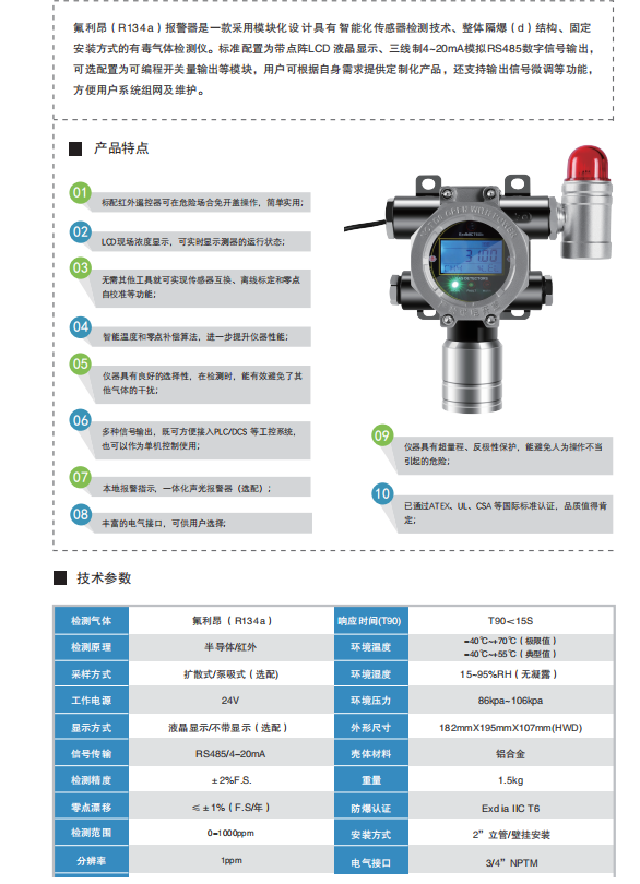
Product Introduction
1. System composition (fixed)
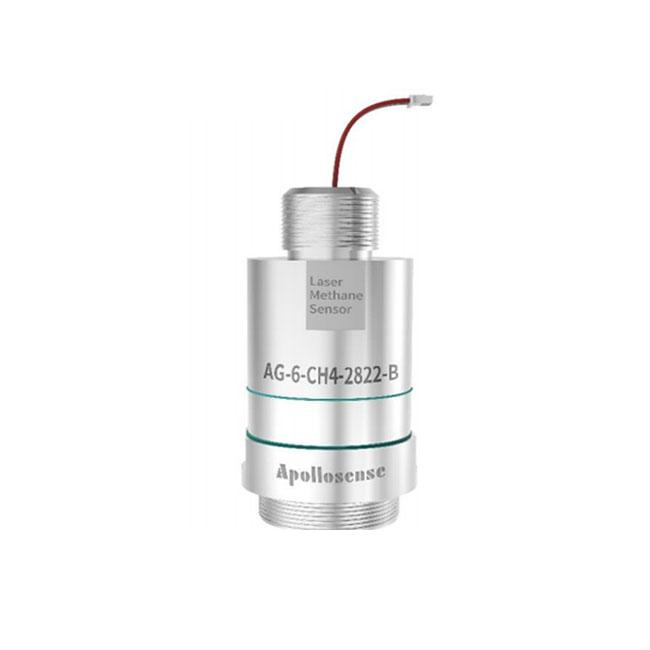
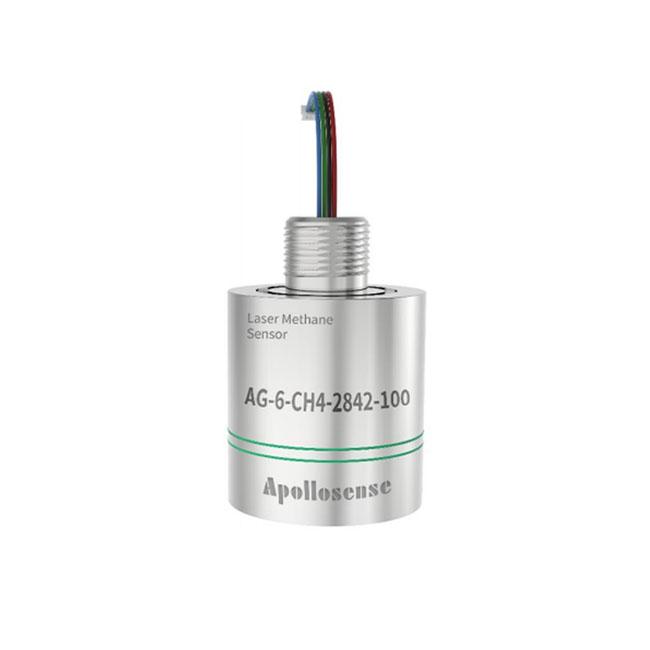
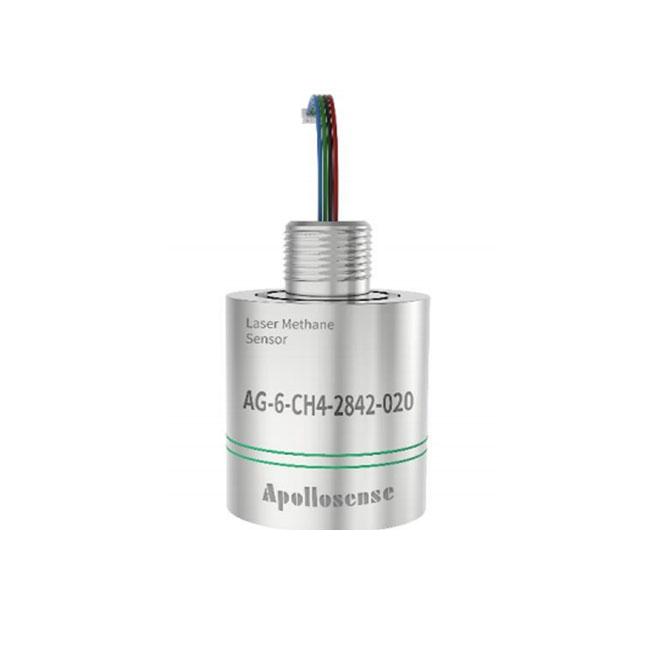
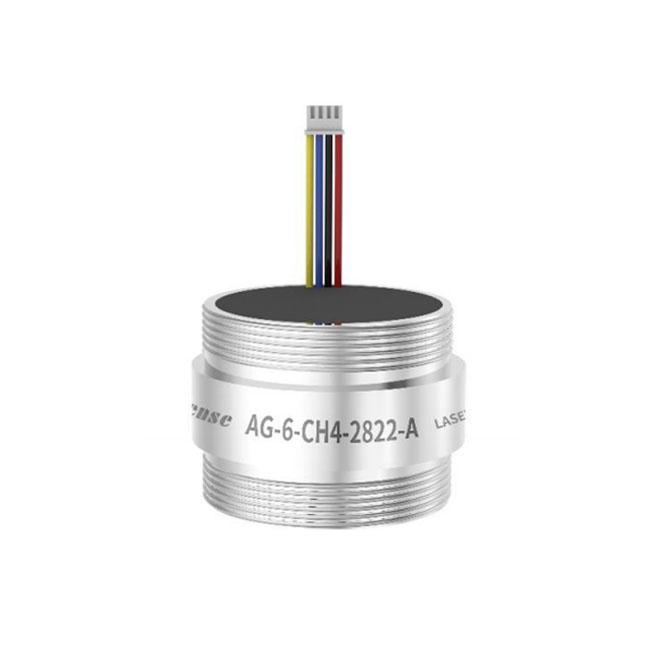
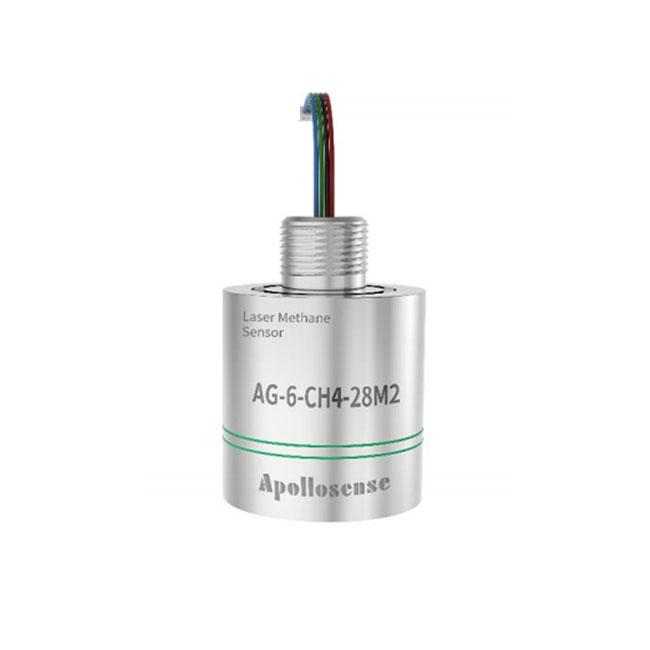
- Detector (probe): Installed on site, collects gas concentration; explosion-proof type for refrigeration machine rooms, cold storage, and other industrial sites.
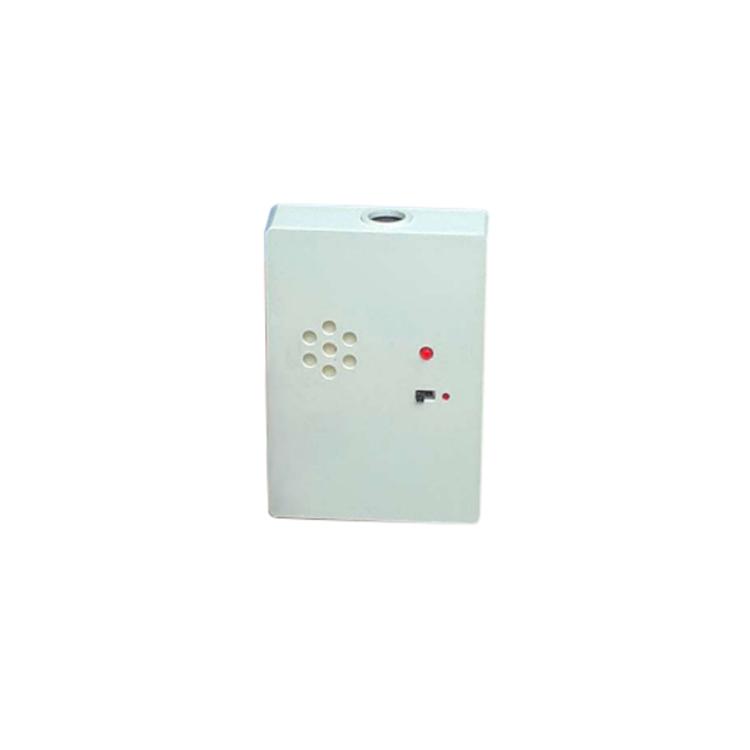
- Alarm controller host: Installed in the duty room, displays concentration in real time, audible and visual alarm, can link exhaust fans and solenoid valves, supports 4-20mA / RS485 signal output, can connect to PLC and IoT platforms.
2. Sensor type comparison
Table
| Sensors | Advantages | Disadvantages | Lifespan | Applicable scenarios |
|---|---|---|---|---|
| Infrared NDIR | Not affected by moisture or oil contamination, good stability, no poisoning | Higher price | 3-5 years | Cold storage, high-humidity refrigeration machine rooms (priority recommendation) |
| Semiconductor | Cheap price | Easy to drift, many false alarms | 1-2 years | Simple auxiliary monitoring |
| Electrochemical | Medium cost | Easily affected by humidity and other gases | 1-3 years | Ordinary dry machine rooms |
Industrial refrigeration, cold storagePrioritize infrared sensorsAnti-condensation, anti-moisture, more worry-free in the long term.
3. Range and alarm settings (industry common)
Common ranges:0‑1000ppm
- Level 1 early warning: 200 ppm (detect leak, patrol and inspect)
- High alarm level 2: 500 ppm (activate exhaust, evacuate personnel)
Different refrigerants have different national standard limits. R125 PC-TWA=1000ppm, PC-STEL=1250ppm; R134a has no clear national standard in China, so reference industry experience values are used.
4. Installation points (key)
Freon density > air, leaks settle downward
- Probe installation height:30-60cm from the ground, sensor facing downNear valves, flanges, and unit areas prone to leakage.
- Avoid: direct fan blowing, air outlets, oil fume and moisture, and high vibration locations.
- Explosion-proof areas: Use Exd IIC T6 explosion-proof grade detectors; ordinary household models cannot be used as substitutes.
- Wiring: Keep signal lines away from strong current cables; 4-20mA transmission distance ≤800m, 485 bus ≤1000m.
5. Application scenarios
- Refrigeration machine rooms, central air conditioning main engine rooms, cold storage, cold chain warehouses
- Data center cooling systems, refrigerant charging workshops, laboratories, hospital refrigeration equipment rooms
6. Maintenance requirements
- At least once a yearCalibrate once, ensure accuracy, can be sent to third-party metrology.
- Sensors need replacement when reaching lifespan; infrared has the longest lifespan.
- Regularly clean the probe dust cover and condensed water.
- After alarm, ventilate first, find the leak point, do not directly reset.
7. Fixed vs portable leak detectors
- Fixed alarm: 24-hour continuous online monitoring, automatic audible and visual alarm when exceeding limits + linked exhaust, used for safety duty in machine rooms and cold storage.
- Portable leak detector: Handheld inspection, used toLocate the exact leak pointSuitable for maintenance personnel to detect leaks, not for long-term online monitoring.
Purchase tips
- Confirm your on-site refrigerant model (R134a/R410A/R22/R404A); some sensors have different sensitivity to specific refrigerants.
- For cold storage high-humidity environments, do not choose cheap semiconductor probes; false alarm probability is high.
- Explosion-proof places must have explosion-proof certificates.
If you tell me the purpose (cold storage / central air conditioning machine room), refrigerant model, and whether exhaust linkage is needed, I can help you prepare a simple selection parameter list.
Main Application Areas
- Cold Storage Facilities — Monitors refrigerant leaks in large cold storage rooms to prevent oxygen displacement and ensure worker safety.
- HVAC Systems — Detects leaks in commercial and industrial HVAC systems, enabling timely maintenance and preventing refrigerant loss.
- Food Processing Plants — Ensures safety in facilities using refrigeration for food preservation, alerting to leaks that could contaminate products or harm staff.
- Industrial Refrigeration Units — Provides continuous monitoring for ammonia-free refrigerant leaks in industrial chillers and freezers, reducing downtime and risk.
Keywords:freon gas alarm, refrigerant leak detector, R134a gas monitor, freon leak alarm, refrigerant gas sensor, HVAC gas detector, industrial gas alarm, fixed gas detection system