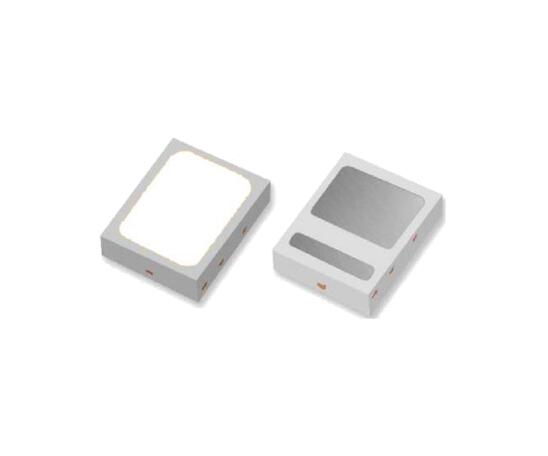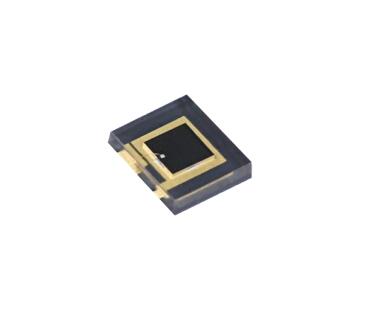

Product Introduction
Most wearable devices use Photoplethysmography (PPG) to measure heart rate and other biometric indicators. PPG is a method that shines light into the skin and measures the light scattering caused by blood flow. This method is very simple. Optical heart rate sensors work on the following principle: when hemodynamics change, such as pulse rate (heart rate) or blood volume (cardiac output), the light entering the body undergoes predictable scattering.
Optical heart rate sensors use four main technical components to measure heart rate:
Light Emitter -Typically consists of at least two light-emitting diodes (LEDs) that emit light waves into the skin.
Photodiode and Analog Front End (AFE) -These components capture the light refracted by the wearer and convert these analog signals into digital signals for calculating usable heart rate data.
Accelerometer -The accelerometer measures motion and, combined with the optical signal, serves as input to the PPG algorithm.
Algorithm -The algorithm processes signals from the AFE and accelerometer, then superimposes the processed signals onto the PPG waveform, thereby generating continuous, motion-tolerant heart rate data and other biometric data.
1. Features of Heart Rate Sensing Signal Receiving Chip - PD-S488FM-LH12:
Especially suitable for 940nm applications
Short switching time
2. Applications of Heart Rate Sensing Signal Receiving Chip - PD-S488FM-LH12:
Optical modules
Infrared remote control for various devices
Smart bracelets, watches
Headphone heart rate and blood oxygen health monitoring