
Product Introduction
Most wearable devices use Photoplethysmography (PPG) to measure heart rate and other biometric indicators. PPG is a method that shines light into the skin and measures the light scattering caused by blood flow. This method is very simple. Optical heart rate sensors work on the following principle: when hemodynamics change, such as pulse rate (heart rate) or blood volume (cardiac output), the light entering the body scatters in a predictable manner.
Optical heart rate sensors use four main technical components to measure heart rate:
Light emitter - typically consists of at least two light-emitting diodes (LEDs) that shine light waves into the skin.
Photodiode and analog front-end (AFE) - these components capture the light refracted by the wearer and convert these analog signals into digital signals for calculating practical heart rate data.
Accelerometer - the accelerometer measures motion and, combined with the optical signal, serves as input to the PPG algorithm.
Algorithm - the algorithm processes signals from the AFE and accelerometer, then superimposes the processed signals onto the PPG waveform, thereby generating continuous, motion-tolerant heart rate data and other biometric data.
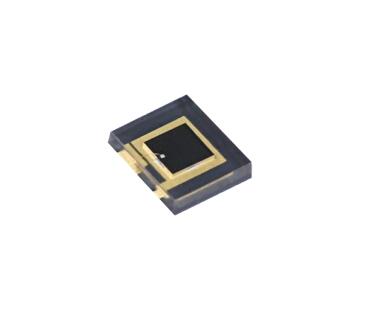
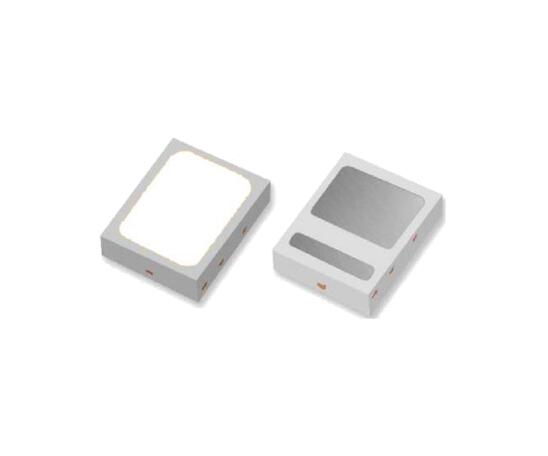
I. Wearable Heart Rate Light Emission Chip- Features of PG-S216JK-G20:
2.0mm x 1.6mm SMD LED, thickness 0.55mm
Low power consumption
Wide viewing angle
Packaging: 4000 pcs/reel
Lead-free certified
II. Wearable Heart Rate Light Emission Chip- Applications of PG-S216JK-G20:
Smart bracelets, watches
Earphone heart rate and blood oxygen health monitoring