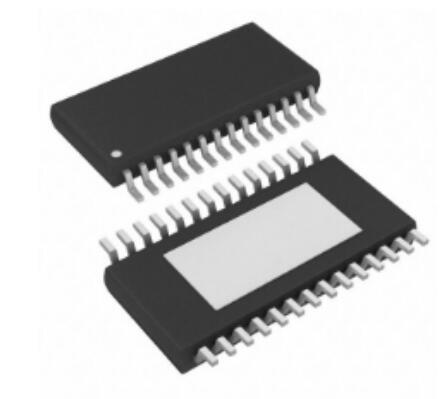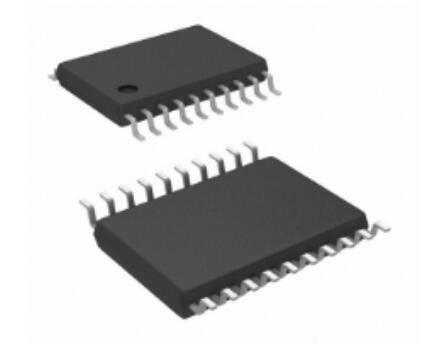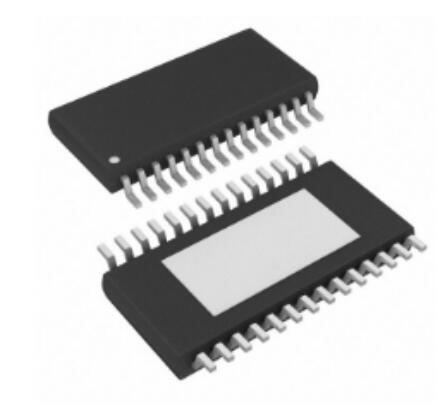

High-Speed Digital-to-Analog Converter Chip - MS9708
Integral nonlinearity error is defined as the maximum error between the actual analog output and the ideal output, where the ideal output line is the straight line from zero to full scale.
Used to measure small-signal nonlinearity error. Calculation method: the change in analog output between the current input code and its preceding input code minus 1 least significant bit (LSB) size.
The analog output must increase as the digital input increases.
Offset error is the analog output when the input code is zero.
Gain error is defined as the difference between the ideal full-scale curve and the actual curve after the offset error has been reduced to zero.
Output exceeding full scale can cause nonlinearity errors.
Temperature drift is defined as the difference between the value at 25°C and the value at TMIN or TMAX. The unit is parts per million of full-scale value per degree.
Parts per million per degree.
Product Introduction
MS9708/MS9710/MS9714Is a8-Bit/10-Bit/14-BitHigh-speed, low-powerD/AConverter. When samplingSampling rate reaches125MSPSWhen,MS9708/MS9710/MS9714Also provides superiorACandDCPerformance.
1. Characteristics of high-speed DAC chip MS9708:
Integral nonlinearity error is defined as the difference between the actual analog output and the ideal outputrelativelyMaximum error, the ideal output line is the straight line from zero to full scale.
Used to measure small-signal nonlinearity error. Calculation method: the change in analog output between the current input code and its preceding input code minus 1relativelyLeast significant bit (LSB) size.
The analog output must increase as the digital input increases.
Offset error is the analog output when the input code is zero.
Gain error is defined as the difference between the ideal full-scale curve and the actual curve after the offset error has been reduced to zero.
Output exceeding full scale can cause nonlinearity errors.
Temperature drift is defined as the difference between the value at 25°C and the value at TMIN or TMAX. The unit is parts per million of full-scale value per degree.
Due to inconsistent switching times, the output may have glitches. The unit for measuring glitch area ispV-s 。
Spurious-free dynamic range(SFDR)Refers to the ratio between the fundamental or carrier component and other non-fundamental and non-carrierrelativelyLarge spurious frequency components(availableCan be harmonics or distortion waves)The ratio, in units ofdB。