
pH and ORP (Oxidation-Reduction Potential) Combination Sensor - pH and ORP Combination Sensor
Zero point calibration:
Due to manufacturing tolerances of the pH sensor, it must be adjusted according to the corresponding pH transmitter. Depending on the application's operating conditions, the adjustment interval ranges from a few days to eight weeks.
Product Introduction
1 Overview
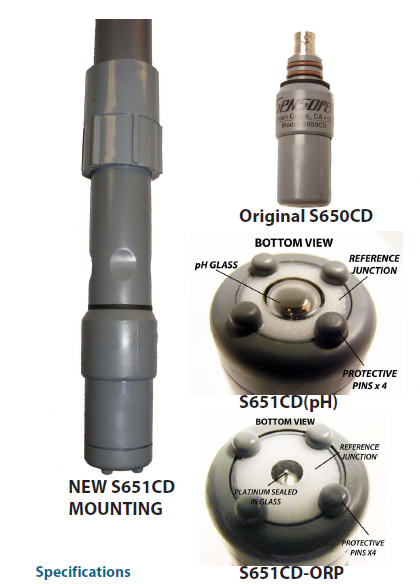
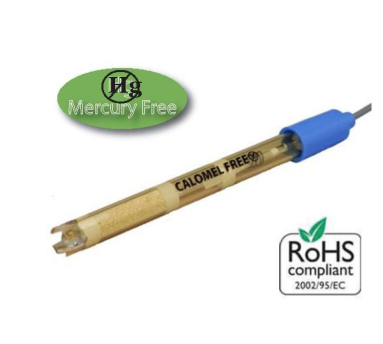
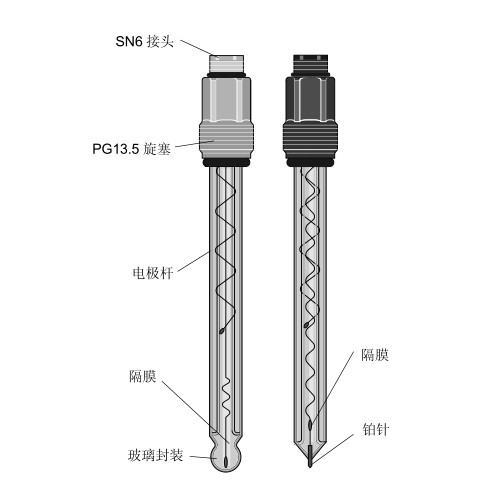
The combination sensor for measuring pH value and oxidation-reduction potential consists of measuring electrodes (a glass electrode for pH measurement, a platinum electrode for ORP measurement) and a reference electrode (surrounding the measuring electrodes).
2 Commissioning
Before use, the protective cap or sheath must be removed from the glass or metal electrode. The glass or metal electrode must not be contaminated with oil, grease, or other dirt. Similarly, the diaphragm of the reference electrode must be free from scaling, dirt, or crystals. Therefore, do not touch the electrodes with your hands. If the electrodes are contaminated, refer to Chapter 4 'Sensor Cleaning and Maintenance' for cleaning and maintenance.
3 Sensor Calibration and Inspection
3.1 Calibrating the pH Sensor
Zero point calibration: Due to manufacturing tolerances of the pH sensor, it must be adjusted according to the corresponding pH transmitter. Depending on the application's operating conditions, the adjustment interval ranges from a few days to eight weeks.
After connecting the sensor to the transmitter (connector and cable must be kept completely dry), immerse the probe into a pH 7 standard solution and adjust the transmitter to read exactly this value.
Remove the sensor, rinse with clean water (distilled water is recommended), and wipe dry with a soft, lint-free tissue.
3.2 Checking the ORP Sensor
After connecting the sensor to the transmitter (connector and cable must be kept completely dry), immerse the probe into a standard solution with an ORP of 465 mV.
Within 30 seconds, the reading must reach and exceed this value. If the reading rises slowly or drops by more than 20 mV, clean the sensor according to the instructions in Chapter 4 and recalibrate. If it still fails, replace the sensor with a new one.