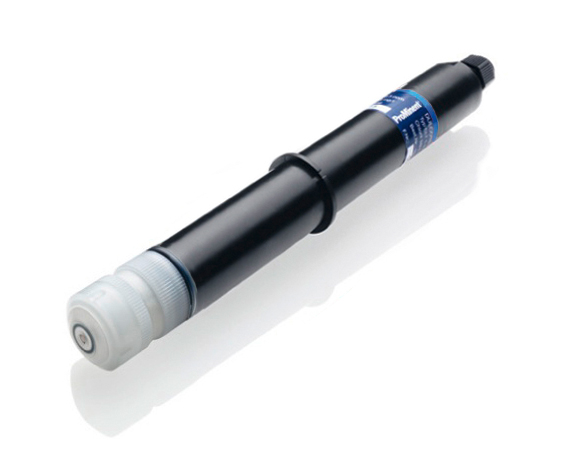

Residual Chlorine Sensors - CLE3-m, CLE3-DMT, CLE2.2-4
Measurement Range:
Residual chlorine HOCL, OCL-, CL2. Chlorine gas CL2, sodium hypochlorite. HOCL and hypochlorite are collectively called active residual chlorine. Almost all disinfection using hypochlorous acid is carried out within the working range of the CLE probe, pH 5.5-8. The residual chlorine sensor only detects the hypochlorous acid value. Part of the active residual chlorine, hypochlorite, as a disinfectant, is only 1% as effective as hypochlorous acid and is not detected.
Product Introduction
I. Structure of CLE Residual Chlorine Sensor
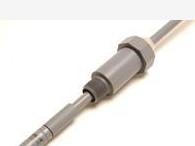
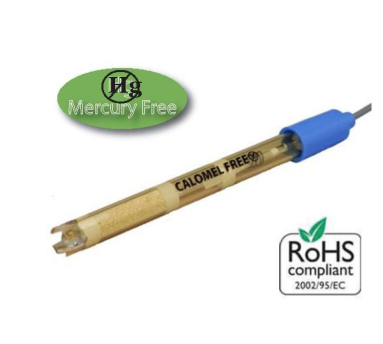
This CLE residual chlorine sensor is a two-electrode amperometric sensor with a membrane. It basically consists of a membrane cap and an electrode rod. The membrane cap filled with electrolyte forms the detection chamber. The membrane of the cap is covered with micropores that allow gas from the sampled water to enter the detection chamber. The electrode on the electrode rod extends into the detection chamber. An amplification electronic circuit is installed on the electrode inside the rod, with electrical connectors on the circuit. A temperature-compensated detector is integrated at the lower end of the electrode rod.
II. Measurement Range of CLE Residual Chlorine Sensor
Residual chlorine HOCL, OCL-, CL2. Chlorine gas CL2, sodium hypochlorite. HOCL and hypochlorite are collectively called active residual chlorine. Almost all disinfection using hypochlorous acid is carried out within the working range of the CLE probe, pH 5.5-8. The residual chlorine sensor only detects the hypochlorous acid value. Part of the active residual chlorine, hypochlorite, as a disinfectant, is only 1% as effective as hypochlorous acid and is not detected.
III. Functions of CLE Residual Chlorine Sensor
The residual chlorine sensor is a two-electrode amperometric sensor with a membrane. The gold cathode is the working electrode, while silver chloride serves as the corresponding anode. When the probe is connected to the controller, a fixed polarity voltage is applied to the electrodes. Hypochlorous acid penetrates the membrane and counteracts the electrode polarity, generating a current flow that neutralizes the polarity current. Under constant conditions, this current is proportional to the hypochlorous acid concentration. The sensor's electronic circuit converts it into a standard output signal of 4-20mA, which is displayed via a detection device or controller.
The equilibrium concentration of the HOCL/OCL- system is highly dependent on pH. As shown in Figure 1, the concentration of HOCL decreases rapidly as pH increases. For example, at pH 7, hypochlorous acid accounts for 77% of active residual chlorine, while at pH 8 it is 25%. Since CLE only detects hypochlorous acid, the detection signal is also pH-dependent.
IV. Technical Parameters of CLE Residual Chlorine Sensor: