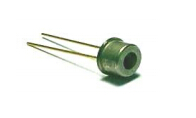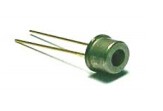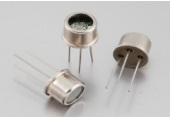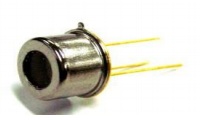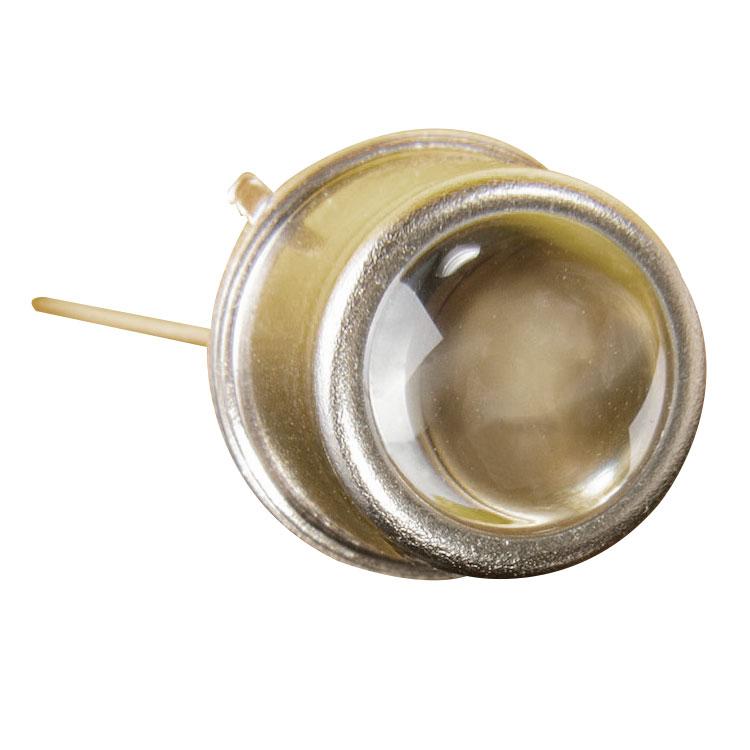


German SGLUX UV Photodiode - SG01D–5LENS
Broadband UVA+UVB+UVC, high chip stability reported by PTB, for flame detection
Radiation sensitive area A = 11.0 mm2
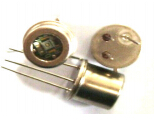
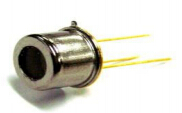
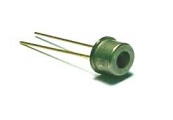
TO5 sealed metal housing and condenser lens, 1 insulated pin and 1 ground pin
10µW/cm2 peak radiation generates approximately 350 nA current
Product Introduction
German SGLUX UV Photodiode SG01D–5LENS Description About Material Silicon Carbide (SiC)
SiC has unique characteristics, can withstand high-intensity radiation, is almost insensitive to visible light, produces low dark current, fast response speed and low noise. These characteristics make SiC a very good material for visible-blind semiconductor UV detectors. SiC detectors can operate continuously at temperatures up to 170°C (338°F). The temperature coefficient of the signal (responsivity) is also very low, < 0.1%/K. Due to low noise (dark current at fA level), it can effectively detect very low UV radiation intensity. Please note that this device requires a corresponding amplifier. (See typical circuit on page 3).
German SGLUX UV Photodiode SG01D–5LENS Options
SiC photodiodes are available in seven different effective sensitive areas, ranging from 0.06 mm2 to 36 mm2. The standard version is broadband UVA-UVB-UVC.
Four filtered versions result in stricter spectral response ranges. All photodiodes have sealed metal housings (TO type), either TO18 housings with a diameter of 5.5mm or TO5 housings with a diameter of 9.2mm. Further options are 2 pins (1 insulated, 1 ground) or 3 pins (2 insulated, 1 ground).
German SGLUX UV Photodiode SG01D–5LENS Features
Broadband UVA+UVB+UVC, high chip stability reported by PTB, for flame detection
Radiation sensitive area A = 11.0 mm2TO5 sealed metal housing and condenser lens, 1 insulated pin and 1 ground pin
10µW/cm2 peak radiation generates approximately 350 nA current
German SGLUX UV Photodiode SG01D–5LENS Parameters
| Parameter |
Symbol |
Value |
Unit |
| Spectral Characteristics |
|||
| Typical Responsivity at Peak Wavelength |
S |
0,130 |
aw |
| Wavelength of Spectral Responsivity |
Λ |
280 |
nm |
| Response Wavelength Range (S=0.1*Smax) |
- |
221-358 |
nm |
| Visible Blindness (Smax/S>405nm) |
VB |
> 1010 |
- |
| General Characteristics (T=25°C) |
|||
| Sensitive Area (Chip Size = 0.50 mm2) |
A |
11,0 |
mm2 |
| Dark Current (1V Reverse Bias) |
Id |
1,7 |
fa |
| Capacitance |
C |
125 |
pF |
| Short Circuit (at 10µW/cm2 Peak) |
Io |
350 |
nA |
| Temperature Coefficient |
Tc |
< 0,1 |
%/K |
| Ratings |
|||
| Operating Temperature |
Topt |
-55...+170 |
°C |
| Storage Temperature |
Tstor |
–55 … +170 |
°C |
| Soldering Temperature (3s) |
Tsold |
260 |
°C |
| Reverse Voltage |
VRmax |
20 |
V |