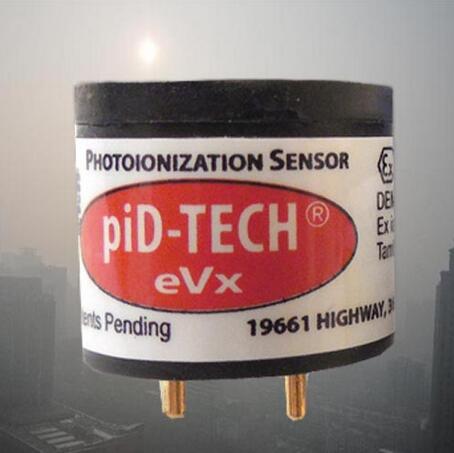

Product Introduction
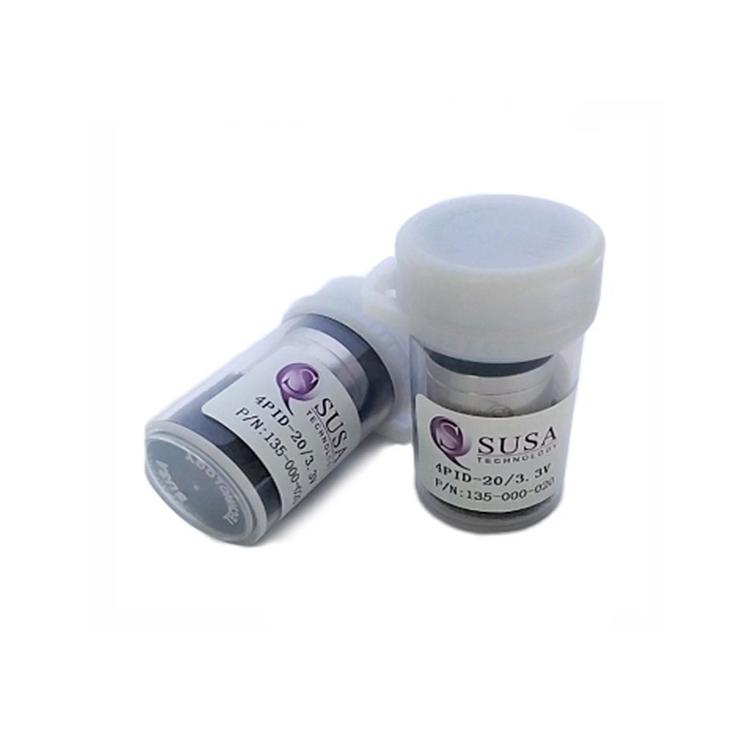
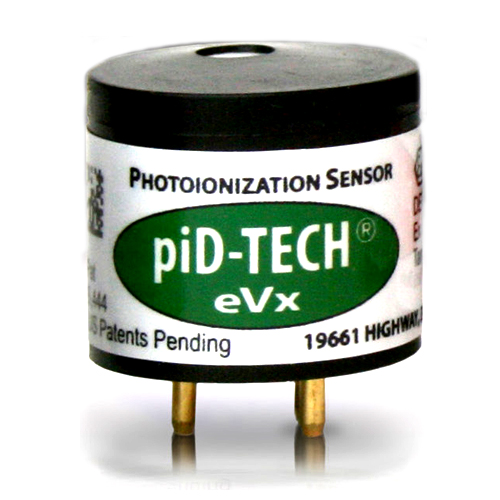
New high-performance piD-TECH eVx Photoionization Detector (PID)
PID-200 photoionization gas sensor upgrades include:
• Minimum detection limit of 0.5 ppb• Negligible temperature response
• Very low humidity response
• Integral shielding
• Reduced and improved response time
• Low cost
Intrinsically safe design and 4-series size for installation in portable or fixed gas detectors.
PID-200 photoionization gas sensor features and benefits:
• Intrinsically safe• Saves time and money in R&D and product design
• 4-series product structure
• Various ranges and lamp energies
• Fast lamp ignition circuit
• Long-life lamp
• Input voltage regulation for greater stability
• Easy cleaning and convenient field service
• Guaranteed sensor replacement procedure
PID-200 photoionization gas sensor applications:
• Industrial hygiene & safety monitoring
• Confined space entry
• Soil contamination and remediation
• Hazardous material leaks
• Low concentration leak detection
• Indoor air quality
| Part Number | 045-010 | 045-011 | 045-012 | 045-013 | 045-014 |
| Range | 10000ppm | 2000ppm | 200ppm | 20ppm | 2ppm |
| Minimum Detection Limit | 1000ppb | 500ppb | 50ppb | 5ppb | 0.5ppb |
PID-200 photoionization gas sensor physical characteristics:
The complete sensor includes detection unit, UV lamp, lamp driver, amplifier, and sampling filter membrane.
| Weight | <8 g |
| Package Structure | 4-series structure |
| Sensor Components | Lamp, detector unit, filter membrane (2), cap, gasket |
| Lamp Life | Guaranteed 6000 hours - typical life is longer |
| On-board Filter Membrane | Filters dust and condensed water |
All sensors are calibrated with isobutylene
PID-200 photoionization gas sensor electrical parameters:
| Supply Voltage | 3.2~5.5 V (including input voltage regulator) |
| Current | 24~36mA |
| Power Consumption | 80~200 mW (depending on supply voltage) |
| Output Signal | 0.045~2.5 V |
PID-200 photoionization gas sensor operating conditions:
| Temperature Range | -20~60°C (-4~104°F) |
| Relative Humidity | 0~90% RH non-condensing |
| Humidity Response | <=1%@90%RH |
| Humidity quenching effect | <=15%90%RH |
Recommended Products