

Product Introduction
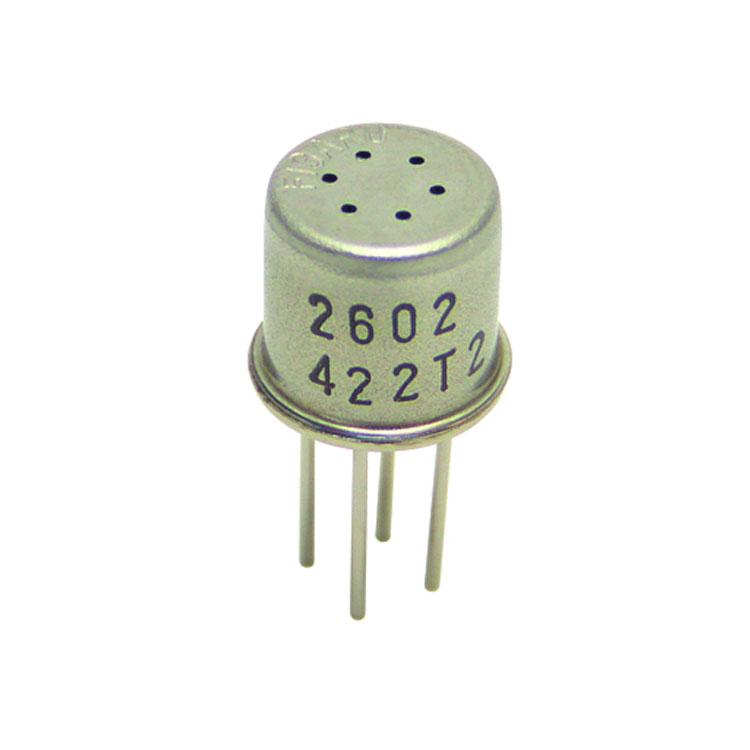
1. Air Quality Sensor (Formaldehyde Sensor) TGS2602 Description
The sensing element is composed of an integrated heater and a metal oxide semiconductor on an alumina substrate. If the target gas is present in the air, the higher the gas concentration, the higher the sensor's conductivity. With a simple circuit, the change in conductivity can be converted into a signal output corresponding to the gas concentration.
The air quality sensorTGS2602has high sensitivity to low-concentration odor gases, enabling detection of gases such as ammonia and hydrogen sulfide produced by waste in office and home environments. This sensor also has high sensitivity to volatile organic compounds (VOCs) such as toluene from wood finishing and building materials. Due to miniaturization, the heater current is only 56mA, and the housing uses a standard TO-5 metal package.
2. Air Quality Sensor (Formaldehyde Sensor) TGS2602 Features:
* High sensitivity to VOCs and odors
* Low power consumption
* High sensitivity to polluted air
* Long service life
* Simple application circuit
* Small size
3. Air Quality Sensor (Formaldehyde Sensor) TGS2602 Applications:
* Air purifier control
* Ventilation control
* Air quality monitoring
* VOC monitors
* Odor monitors
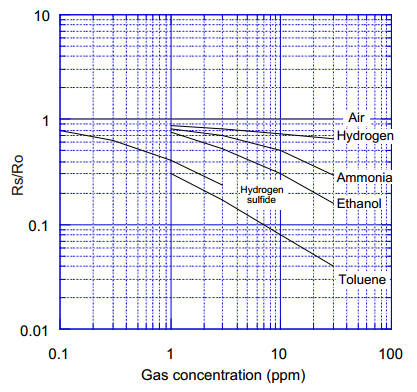
4. Air Quality Sensor (Formaldehyde Sensor) TGS2602 Sensitivity Characteristics:
The figure below shows typical sensitivity characteristic curves, measured under our company's standard test conditions (see back).
The vertical axis represents the sensor resistance ratio Rs/Ro, where Rs and Ro are defined as follows:
Rs = Sensor resistance value in various gas concentrations
Ro = Sensor resistance value in clean air
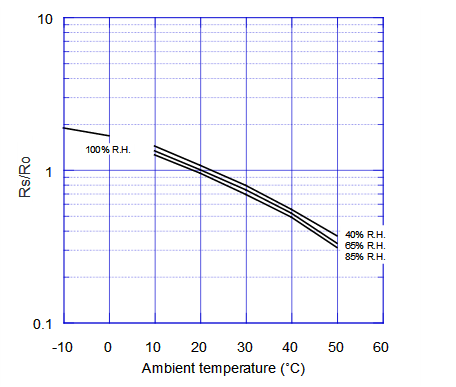
5. Air Quality Sensor (Formaldehyde Sensor) TGS2602 Temperature and Humidity Characteristics:
The figure below shows typical characteristic curves affected by temperature and humidity.
The vertical axis represents the sensor resistance ratio Rs/Ro, where Rs and Ro are defined as follows:
Rs = Sensor resistance value in clean air at various temperatures/humidities
Ro = Sensor resistance value in clean air at 20°C / 65% R.H.