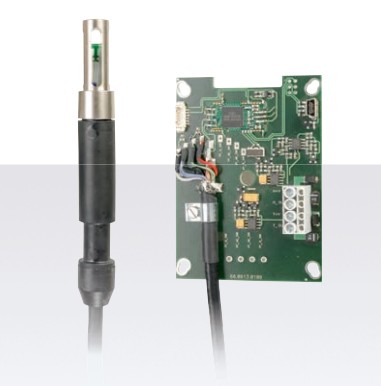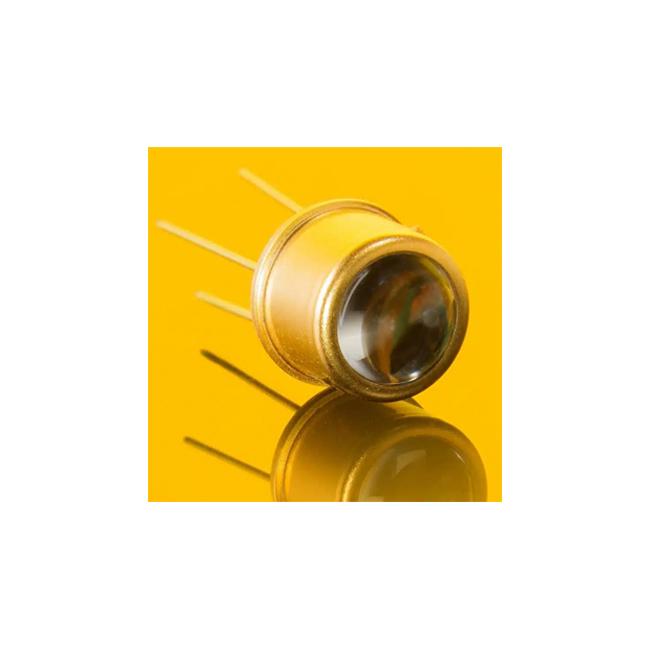


German Sglux UV sensor UV photodetector hydrogen flame detection - TOCON_F
Silicon carbide-based UV photodetector with integrated logarithmic amplifier
Based on silicon carbide junction diode, linear measurement range extended to 2.100mV, while silicon diode linear measurement range stops at 300mV.
Designed for flame detection in hydrogen burners
0...1V signal output, also available with 4...20mA current loop output
Typical irradiance from 0.05 nW/mm2 to 10 nW/mm2
Complies with EN289 standard
Can replace UV sensors SFH530 and UVTRON tubes
Product introduction
German SgluxUVUV sensor UV photodetectorHydrogenFlame detection TOCON_F description:
This requires corresponding modifications to heaters. One major change is modifying the flame detection function in compliance with EN298 standard. Currently, ionization sensors are used to detect petroleum gas flames - a robust, reliable, and inexpensive method. However, when hydrogen is added to petroleum gas or the gas consists entirely of hydrogen, these ionization sensors will no longer work. This is due to changes in reaction kinetics, causing these traditional sensors to be unable to detect ionization effects. This challenge can be overcome by using photoelectric UV sensors. These sensors can reliably detect various flames while 'capturing' their characteristic emission spectra in the UV range. Since UV sensors are more expensive than ionization detectors, they are currently only used in high-priced industrial burners, not household burners. However, based on current knowledge, there is no other method besides photoelectric UV sensors that can reliably detect hydrogen flames.
Since 2006, we have produced TOCON ABC1 and ABC2 compliant with EN298 standard for petroleum gas flame detection in household burners.
Our new TOCON_F series is specially designed for hydrogen flame detection.
German SgluxUVUV sensor UV photodetectorHydrogenFlame detection TOCON_F features:
- Silicon carbide-based UV photodetector with integrated logarithmic amplifier
- Based on silicon carbide junction diode, linear measurement range extended to 2.100mV, while silicon diode linear measurement range stops at 300mV.
- Designed for flame detection in hydrogen burners
- 0...1V signal output, also available with 4...20mA current loop output
- Typical irradiance from 0.05 nW/mm2 to 10 nW/mm2
- Complies with EN289 standard
- Can replace UV sensors SFH530 and UVTRON tubes
German SgluxUVUV sensor UV photodetectorHydrogenFlame detection TOCON_F parameters:
| Parameter |
Symbol |
Value |
Unit |
| Spectral characteristics |
|
|
|
| Typical sensitivity at 313 nm |
VOH |
5200 |
mV/nW/mm2 |
| Maximum spectral response wavelength |
λmax |
280 |
nm |
| Response range (S=0.1*Smax) |
– |
221 … 358 |
nm |
| Visible blindness (Smax/S>405nm) |
VB |
>1010 |
– |
| General characteristics (supplyT=25°C, V =+5 V) |
|
|
|
| Supply voltage |
VSupply |
2.5 … 5 |
V |
| Dark offset voltage at 1 MOhm load |
VOffset |
1 |
mV |
| Typical temperature coefficient at peak |
Tc |
< +-0.3 |
%/K |
| Current consumption |
Imax |
35 |
uA |
| Typical rise time (10-90%) |
trise |
0.01 ....12 |
ms |
| Typical fall time (90-10%) |
tfall |
4 .... 70 |
ms |
| Maximum ratings
|
|
|
|
| Operating temperature |
Topt |
–40 … +85 |
°C |
| Storage temperature |
Tstor |
–40 … +100 |
°C |
| Maximum soldering temperature (3 seconds) |
Tsold |
300 |
°C |