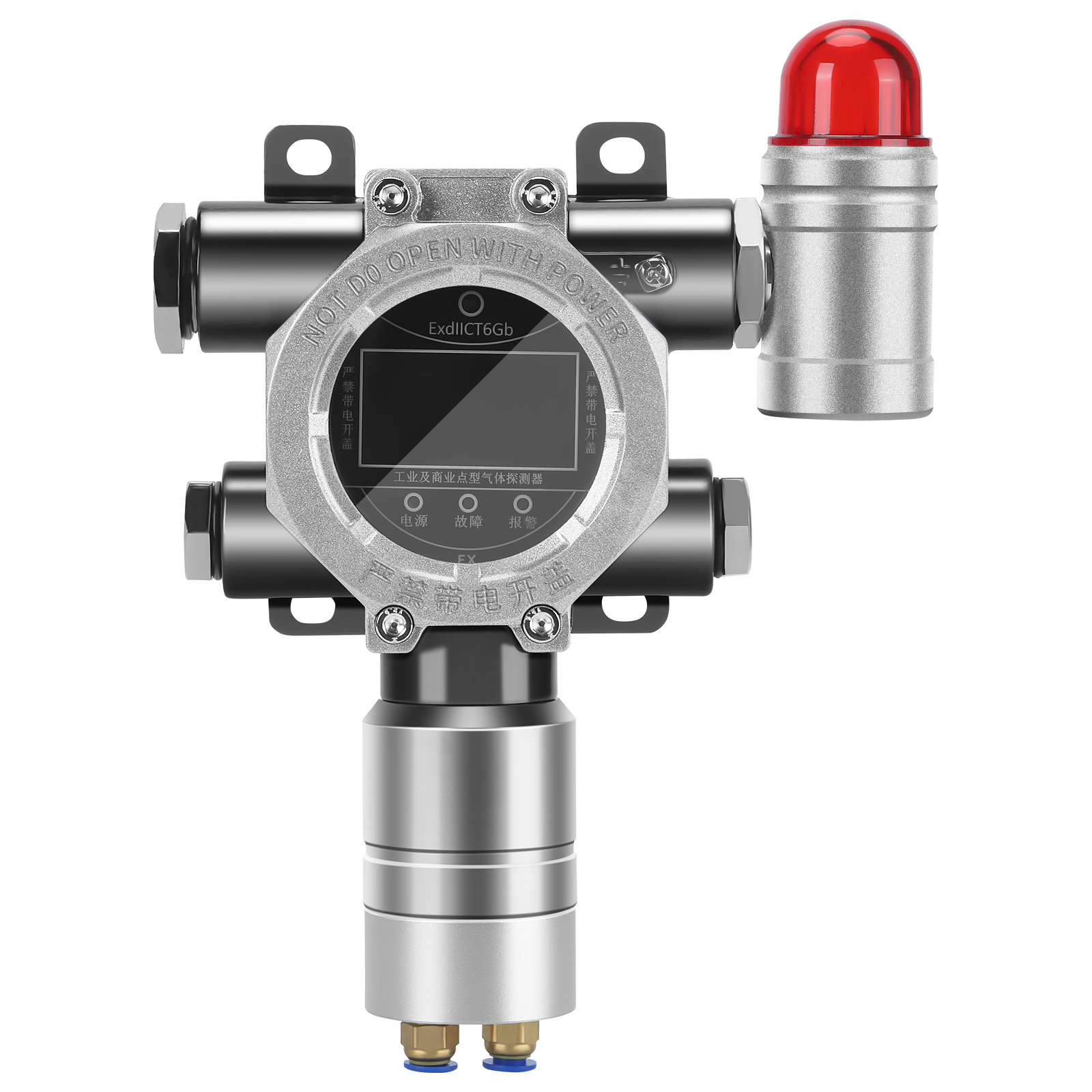
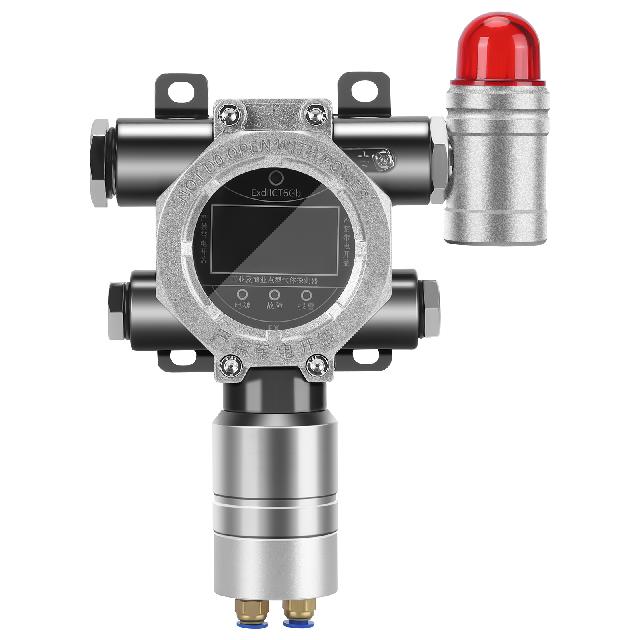
Infrared NDIR Refrigerant Detector - SKA/NE-301 (R134a)
- The maximum protection radius of a single detector is ≤7.5m; avoid direct airflow from fans, moisture, oil fumes, and strong electromagnetic interference, and reserve space for calibration and maintenance.
- The controller should be wall-mounted at a height of 1.4-1.6m, placed in an area with personnel on duty.
- Alarm linkage: low alarm activates emergency ventilation; high alarm triggers ventilation plus shutdown, and the alarm signal is transmitted to the duty room.
Product Introduction
Freon Gas Alarm (Refrigerant Leak Alarm)
for detection R22、R134a、R410A、R404A、R32 Refrigerant leaks,Prevent suffocation and poisoning in enclosed spaces,R32 etc. also pose explosion risks, widely used in refrigeration rooms, cold storage, central air conditioning rooms, cold chain workshops, in compliance with theGB50072 2021 Cold Storage Design Standard" mandatory requirement by China Academy of Building...。
1. System composition
- Detector (probe): installed at leak points, collects gas concentration, explosion-proof type for on-site machine rooms.
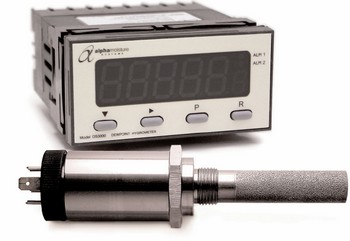
- Alarm controller host: placed in duty room, real-time concentration display, audible and visual alarm, relay can be linkedExhaust fan, compressor shutdown, solenoid valve。
- Signal output:4 20mA、RS485, can be connected toPLC/DCS; some with IoT remote upload.
2. Sensor principle comparison
Table
| Sensors |
Advantages |
Disadvantages |
Applicable scenarios |
| NDIR infrared (recommended for industrial) |
Long lifespan, resistant to water vapor interference, good selectivity, unaffected by oxygen |
Higher price |
Cold storage, refrigeration rooms,R134a/R410A/R32 and most other refrigerants |
| Semiconductor |
Low price, fast response |
Susceptible to alcohol, oil contamination, large drift |
Simple leak detection, portable |
| Catalytic combustion |
Specifically for detecting flammable refrigerants (R32、R290) |
Requires oxygen, cannot detect inert refrigerants |
Flammable refrigerant conditions |
✅ Industrial refrigeration rooms prioritizeInfrared principle detector, good stability, convenient for annual inspection and calibration.
3. Installation points (national standard GB/T50493 2019、GB50072 2021)
- Most Freon (R134a/R410A/R22) heavier than air: probe installedAbove the ground 0.3 0.6m, sensor facing downward, arranged at low points under compressors, valves, flanges, pipes, with emphasis on trench locations. China Academy of Building...。
- R32 Lighter than air: probe installedUnder ceiling 0.3 0.6m High places, gas accumulates upward.
- Maximum protection radius per detector≤7.5m; avoid direct fan airflow, water vapor, oil fume, strong electromagnetic interference, reserve space for calibration and maintenance.
- Controller wall-mounting height 1.4 1.6m, placed in areas with personnel on duty.
- Alarm linkage: low alarm activates exhaust fan; high alarm activates exhaust + Shutdown, alarm signal transmitted to duty room.
4. Alarm threshold reference
Different refrigerant limits vary, based on the refrigerant used SDS and GBZ2.1-2019 as the standard
- R125:PC TWA=1000ppm, first-level alarm≤1000ppm, second-level≤2000ppm
- R134a No national occupational limit, common engineering: low alarm200 1000ppm, high alarm3000 5000ppm
- R32 Flammable: set according to flammable gas, low alarm25% LEL, high alarm50% LEL
5. Key selection parameters & qualifications
- Confirm the refrigerant model to be detected,R32 Must also consider flammable detection.
- Explosion-proof: select for hazardous areas in machine roomsEx d IIC T6 Gb; protection level≥IP65(cold storage humid condensation environment).
- Required certificates: explosion-proof certificate,CMC Measurement certificate; engineering acceptance projects also requireCPA Type approval certificate.
- Range: common 0 1000ppm、0 5000ppm, flammable refrigerants0 100% LEL。
- Distinguish:Fixed (long-term online monitoring) / Portable (inspection leak detection)
Main Application Areas
- Refrigeration Rooms — Continuous monitoring of refrigerant leaks in industrial refrigeration systems to prevent oxygen deficiency and toxic exposure.
- Cold Storage Facilities — Ensures safety in cold storage environments by detecting refrigerant leaks early, protecting personnel and products.
- Central Air Conditioning Rooms — Monitors HVAC systems for refrigerant leaks, preventing system inefficiency and safety hazards.
- Cold Chain Logistics — Used in refrigerated transport and warehousing to detect leaks, ensuring product integrity and worker safety.
Keywords:refrigerant leak detector,R134a detector,NDIR refrigerant sensor,refrigerant gas monitor,cold room gas detector,HVAC refrigerant leak detector,R134a gas alarm,refrigerant safety system